Asgard, and how to build a Thor shelf
Thor debuted in Journey into Mystery #83, cover-dated August 1962, by Stan Lee, Larry Lieber and Jack Kirby. The Asgard corner of Marvel has since grown into one of the best themed collecting shelves available, because the cast shares a mythology, a design language and a single object that keeps changing hands.
Most Marvel corners are held together by a city or a team. Asgard is held together by a mythology and a hammer, and that turns out to be much stronger glue. Everyone on this shelf is connected to everyone else by blood, oath, grudge or the question of who is currently worthy.
August 1962
Thor arrived in Journey into Mystery #83, cover-dated August 1962, credited to Stan Lee, Larry Lieber and Jack Kirby. The early issues are strange reading now. A disabled doctor finds a stick in a cave in Norway, strikes it on a rock, and becomes a Norse god, and for a while the comic cannot decide whether it wants to be a monster book, a war book or a superhero book.
What settled it was Kirby drawing Asgard.
Kirby’s Asgard is some of the most influential architecture in comics, and it did not look like anything else on the racks. Enormous scale, impossible geometry, machinery that read as ancient and futuristic at once, gold everywhere. He was not illustrating Norse mythology so much as inventing a place that mythology could have come from. Every screen version since has borrowed from those pages, and so has most of the fantasy-adjacent superhero art of the last sixty years.
The inscription on the hammer showed up early and did more structural work than anyone could have predicted. Whosoever holds this hammer, if he be worthy, shall possess the power of Thor. That one sentence is a plot generator. It means the lead character can be disqualified, and it means anyone at all can qualify. Marvel has been pulling that lever ever since.
Loki, and why the shelf needs him
Loki turned up in Journey into Mystery #85 in 1962, almost immediately, because a god with a hammer needs someone to make bad decisions at him. Odin was there in the same first year, running the place, disapproving of everything.
That early completeness is why Asgard collects so well. Most Marvel casts accumulated over decades of editorial accident. This one arrived nearly whole, with the family structure already in place, so the pieces have always belonged together. The Loki hub and the Odin hub cover both, and they sit either side of a Thor piece as naturally as any three figures in comics.
Loki has done the most drifting of anyone in the line. Villain, antihero, occasional protagonist, occasionally a different gender, occasionally a child. If you want a single character whose versions vary wildly while still reading as one person, he is a stronger candidate than anyone in the Asgard cast including Thor.
Thor #337, and the best swerve Marvel ever ran
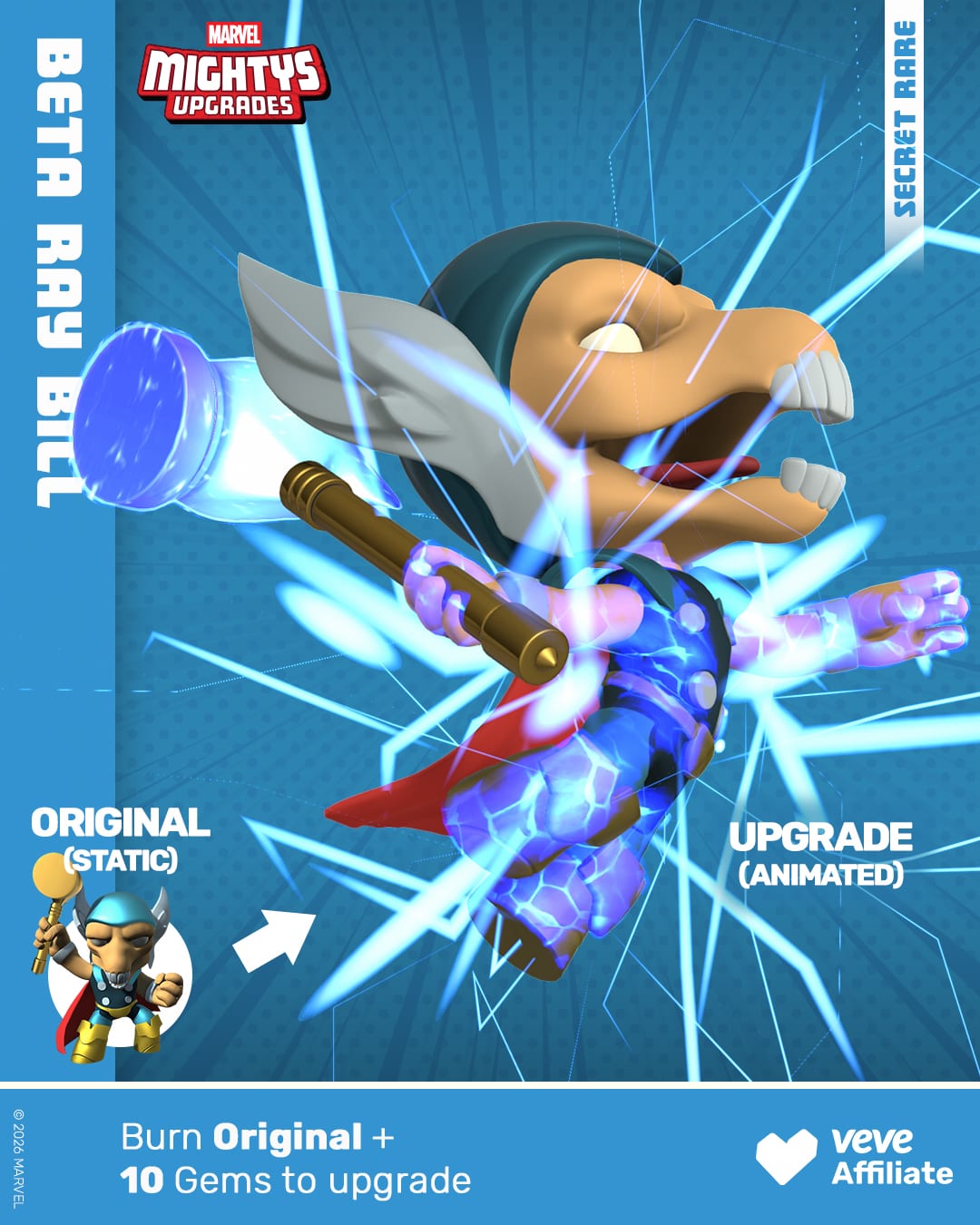
In November 1983, Walt Simonson took over Thor and put something on the cover of issue #337 that readers did not believe they were seeing. An alien with a horse-like face, holding Mjolnir, having just lifted it.
Beta Ray Bill was not a joke and the story refused to treat him as one. He was the last champion of a dying people, cybernetically rebuilt for the job, and he picked up the hammer because he was worthy, full stop. The comic then had to deal with the consequences honestly, which meant Odin arbitrating, a formal duel, and eventually a second hammer, Stormbreaker, forged so that Bill would not have to give up what he had earned.
Simonson’s run from 1983 to 1987 is widely considered the high point of the character, and Bill is the clearest proof of why. He took the one rule the comic had been carrying since 1962 and asked what would happen if somebody unexpected passed the test. The answer turned a gag premise into one of Marvel’s most respected characters, and forty years later people who have never read the issue know the cover.
The Beta Ray Bill hub has the pieces, and he is the one I would tell a new Asgard collector to look at first, because the design is genuinely unlike anything else on a Marvel shelf.
Jane Foster picks it up
Jane Foster had been in the books since the beginning as a supporting character, and in 2014 Jason Aaron and Russell Dauterman handed her the hammer. She was undergoing cancer treatment at the time, and the run built its central problem out of that: every transformation into Thor purged the medicine from her body, so being a god was actively killing her, and she kept doing it anyway.
That is a serious idea to put in a superhero comic and the run earned it. Dauterman’s design work is also some of the cleanest Asgardian art anyone has produced since Kirby, which matters if you are choosing pieces by how they look rather than by who is under the helmet. The Jane Foster hub covers her.
Valkyrie
The Valkyrie identity first appeared in The Avengers #83 in 1970 and the concept has passed through several hands since, which is appropriate for a role rather than a person. Brunnhilde is the version most collectors mean, and she brings something the rest of the shelf lacks: a character whose job is specifically the dead, the battlefield and who gets carried off it.
She widens the mythology without diluting it. A shelf of Thor, Loki and Odin is a family. Add Valkyrie and Beta Ray Bill and it becomes a world with jobs in it.
Building the mythology shelf
The reason Asgard works as a theme is that the pieces argue with each other. That is the test I would apply to any themed row. If the figures have a relationship, the display tells a story. If they just share a franchise logo, it is a pile.
A workable Asgard shelf looks something like this:
- One Thor, whichever version you actually like looking at
- Loki, because the row needs a problem in it
- Odin for scale and authority at one end
- Beta Ray Bill as the outsider who passed the test
- Jane Foster or Valkyrie, or both, for the two other ways to be worthy
That is five or six pieces and it covers sixty years of publishing, three answers to the worthiness question, and a family argument that has been running since 1962. Hard to do better in six slots. The themed collection guide goes deeper on the method if you want to apply the same thinking to another corner of the Marvel line.
One practical note on sequencing. Build the relationships before you chase completeness. Thor and Loki together say more than Thor plus two other Thors, and a shelf that reads clearly at three pieces will still read clearly at ten.
What Kirby actually built
The odd thing about Asgard is how little it has changed. Kirby drew a golden city with impossible towers in the early sixties, and every version since, in comics, in animation, on film, is recognisably the same place. Designers have added detail and subtracted gold, but nobody has replaced it, because nobody has come up with anything better.
Sixty years is a long time for a design to survive without revision. Kirby got it right the first time, and everyone after him has essentially been redecorating.