Amazing Spider-Man #6 and the tragedy of the Lizard
Amazing Spider-Man #6, cover-dated November 1963, is the first appearance of the Lizard. Dr. Curt Connors is a one-armed surgeon whose reptile regeneration serum transforms him, and Spider-Man wins by mixing an antidote rather than by winning a fight.
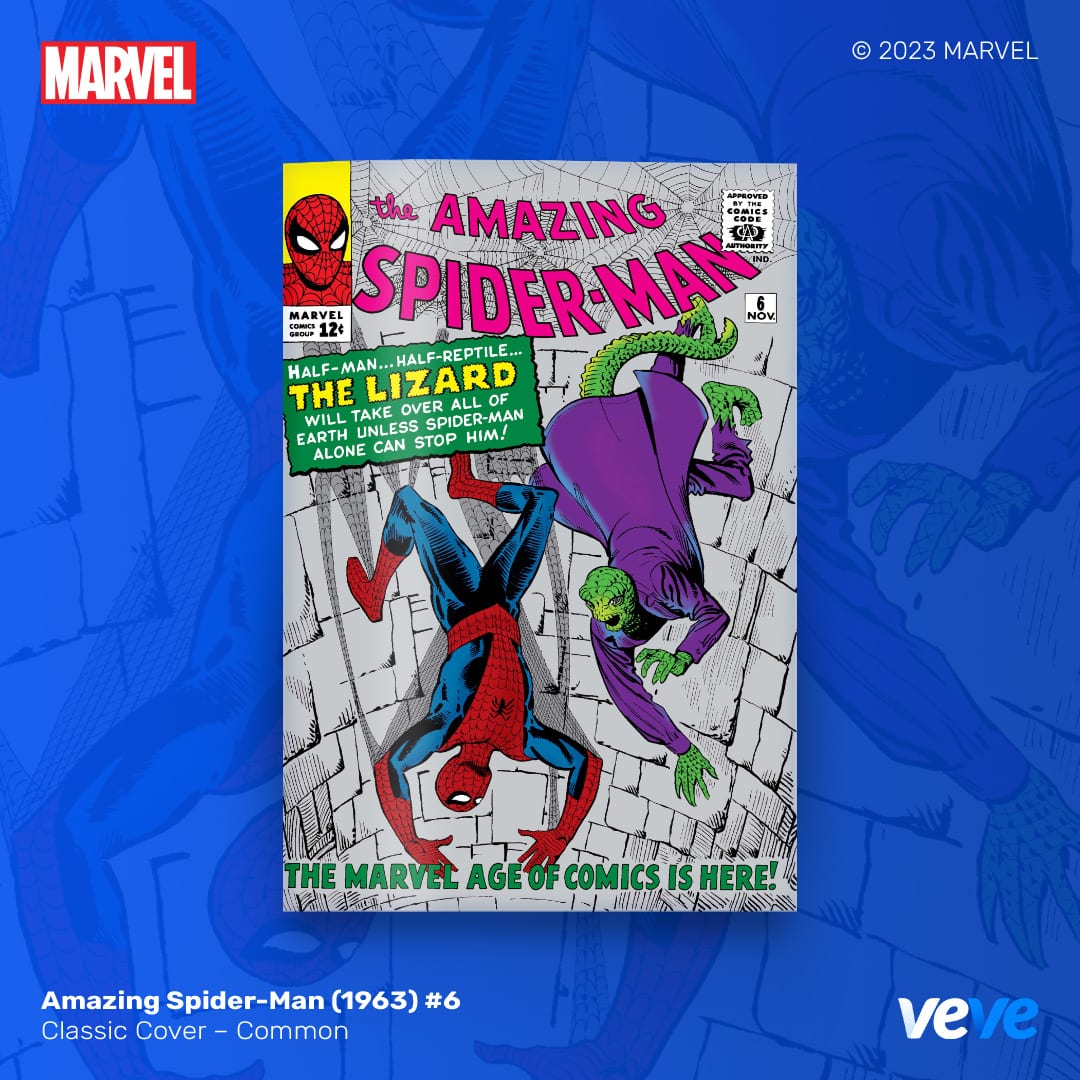
Curt Connors lost his right arm as an army surgeon, and the first thing the reader learns about him is that he has spent years trying to get it back. Lizards regrow limbs. He is a scientist, he is stubborn, and he tests the serum on himself because there is nobody else to test it on. That is the entire moral architecture of the character, set up in a handful of panels, and Marvel has been mining it since November 1963.
Amazing Spider-Man #6 is the issue, by Stan Lee and Steve Ditko, and it is the one where the book leaves New York and goes to the Florida Everglades. Sixteen pages of swamp, which Ditko draws with a sort of dense, scratchy patience that looks nothing like his rooftops.
What happens in the swamp
Reports come out of Florida about a giant reptile terrorising the area. Jameson wants photographs, Peter wants the assignment, and for once his job and his other job point the same direction. What he finds is not a monster from nowhere. It is a man with a wife and a young son who took a dose of his own research and could not come back from it.
The fight is beside the point and Lee seems to know it. Spider-Man cannot solve this by hitting a reptile harder, so he gets into Connors’ lab, works out what went wrong with the formula, and mixes something that reverses it. The climax of the issue is chemistry. That was an unusual thing for a superhero comic to do in 1963, and it is the reason this issue reads better today than a couple of the ones on either side of it.
The first Spider-Man villain who is a victim
The Vulture is a thief. Doctor Octopus is an egomaniac. The Sandman, who had arrived two issues earlier, was a convict before he was anything else. Connors did nothing wrong except try to fix himself, and once the change takes hold the man is gone and something else is using his body.
Marvel had already run one version of this. The Hulk had launched the year before, in an issue cover-dated May 1962, on exactly that engine of a decent man who becomes a monster he cannot control, and you can read about that debut in our piece on Incredible Hulk #1. What ASM #6 did was import the structure into a book with a fixed hero and a permanent supporting cast, which changes what it can do. The Hulk’s tragedy is his own story. Connors’ tragedy becomes Peter’s problem, over and over, because Peter is the one who has to decide what to do about a friend who periodically becomes a predator.
That is the engine, and Marvel has reused it constantly since. The cure that does not hold. The relapse. The scientist who knows exactly what he did and cannot stop doing it. Half the company’s sympathetic monsters run on parts taken from this issue.
Why the design works better than it should
A man-sized green lizard in a torn lab coat is not an obvious keeper, and yet:
- The lab coat is the whole idea, because it keeps the human on the page while the body stops being human.
- The proportions stay mostly anatomical, so he reads as a person who went wrong rather than as a dinosaur.
- He is the only major early Spider-Man villain with no costume at all, which sets him apart on a shelf of purple and green outfits.
Ditko keeps drawing Connors’ face under the snout. That choice does more emotional work than any dialogue in the issue, and every artist who has taken a run at the character since has had to decide how far from the human face they are willing to travel.
Rhys Ifans played him in The Amazing Spider-Man in 2012, a film that took over $750 million worldwide, and the version people remember from it is the missing arm and the temptation, not the creature. The character survives adaptation because the idea underneath survives adaptation.
What happened to the paper
Comics in 1963 sold for twelve cents off wire spinner racks in drugstores, supermarkets and bus stations. Copies that did not sell were not warehoused. The distributor stripped the covers, sent those back for credit, and pulped the rest, which is why unsold inventory from that era mostly does not exist in any form. The direct market, where a shop buys non-returnable and a collector buys to keep, was still a decade away.
Everything about that supply chain works against high grades. Newsprint tans, staples rust, spines roll, and the readers were children. Professional grading only started in 2000, so any copy sitting in a high-grade holder today survived roughly forty years of nobody knowing it needed protecting.
Prices follow that logic tightly. The character’s benchmark belongs to his debut rather than his series: a CGC 9.6 copy of Amazing Fantasy #15 sold for $3.6 million at Heritage Auctions in September 2021. Early issues of the ongoing run trade far below that and still reach five and six figures at the top of the scale, while mid-grade copies with a crease and honest colour remain the normal way people own this era. Our broader look at key issues and first appearances sets out how that pattern repeats across the Silver Age.
The licensed digital edition
VeVe publishes officially licensed Marvel digital comics, this issue among them. A licensed digital edition is a numbered copy from a fixed edition, read full-screen in the app in printed page order, with the edition number written to a public ledger so a specific copy stays identifiable.
The practical case is simple. A graded physical copy is sealed and unreadable by design, and this is an issue whose best material is in the quiet panels, Connors at the bench, the family in the doorway, the face under the snout. Reading it beats owning a sealed one you will never open. Our walkthrough of reading digital comics on VeVe covers how the pages behave, and if you are working through the rogues gallery in order, the Spider-Man villains guide maps who arrived when.
Connors is the one who never gets a clean ending
Most villains can be locked up and that counts as resolution. Connors cannot, because the only real win is a cure and the cure never holds. Every writer who returns to him has to decide how much of the man is left, and the answer keeps getting smaller.
There is something quietly brutal in that for Spider-Man, who has to keep saving a person who will need saving again. He goes down to Florida in 1963 for a photo assignment and comes home with a permanent obligation. Sixty-three years later it is still open.