Action Comics #1 and the first superhero
Action Comics #1, cover dated June 1938 and published by National Allied Publications, contains the first appearance of Superman by writer Jerry Siegel and artist Joe Shuster. Roughly 200,000 copies were printed and around 100 are known to survive. Heritage Auctions sold an unrestored copy for $6 million in April 2024.
A man in a red cape holds a green sedan over his head and smashes it into a rock. Three men run. One of them is down on his hands and knees in the foreground with his mouth open, and the whole composition is so top-heavy it should not work. Joe Shuster drew it for the cover of Action Comics #1, cover dated June 1938, and no other drawing in American comics has been copied, parodied and reprinted as often.
What was actually inside
The book was an anthology, and a cheap one. Sixty-four pages, ten cents, published by National Allied Publications, the company that would eventually rename itself after one of its other titles. Superman got the cover and the thirteen-page lead story. Everything else was filler of the kind every publisher ran in 1938: a western strip called Chuck Dawson, Zatara the Master Magician doing stage-magic detective work, a boxing feature, an adventure serial about Marco Polo, and a gag strip about a kid with sticky fingers.
Nobody at the company knew which of those features was moving copies. The issue sold, reorders came in, and it took a newsstand survey some months later to establish that readers were buying the thing for the man in the cape. That detail matters more than it sounds. The most consequential character in the medium was, for the better part of a year, a line item that the publisher could not identify.
The Superman in those thirteen pages is not quite the one you know. He does not fly. He leaps an eighth of a mile, lifts enormous weights, and outruns a train, and the story spends a paragraph explaining the physics by way of an ant and a grasshopper. There are no aliens. He stops a wrongful execution, terrifies a man who beats his wife, and carries a corrupt lobbyist up the side of a building to get the truth out of him.
Clark Kent takes a job at the Daily Star, which would not become the Daily Planet until 1940. Lois Lane appears, turns him down, and is unimpressed. It reads less like a superhero comic than like a pulp story about a very angry social worker.
Five years of rejection, then a deadline
Siegel and Shuster were two teenagers from Cleveland who had been carrying this character around since 1933. The first version was a villain, a bald telepath in a short prose piece Siegel wrote for his own fanzine. They rebuilt him as a hero, drew up newspaper strip samples, and spent roughly five years being turned down by every syndicate that would open the envelope.
The break was administrative. Vin Sullivan at National needed a lead feature for a new anthology and needed it fast. Siegel and Shuster took the rejected strip samples, cut them apart, and pasted the panels into comic-book page proportions. If you look closely at the printed pages, the tier structure still reads like a newspaper strip, because that is exactly what it is.
So the founding document of the superhero genre exists in this form because a deadline needed filling and two young men had a drawer full of work nobody wanted. Every other origin story in the industry is a variation on that one.
The $130
On the first of March, 1938, the two of them signed a release assigning all rights to Superman to the publisher. The payment was $130. That was not a buyout figure anyone sat down and negotiated. It was the page rate, ten dollars a page for thirteen pages, and the rights transfer was a clause on the same piece of paper as the check. The check itself resurfaced decades later and sold at auction in 2012 for $160,000, which is a fact you can put next to the $130 without needing to add commentary.
What followed is the moral center of the whole industry, and it took fifty years to play out. Siegel and Shuster sued in 1947. They lost Superman. A settlement in 1948 paid them $94,000 and closed off their remaining claims, and they were dropped as creators on the character they had made. Shuster’s eyesight failed and he did delivery work in New York. Siegel wrote where he could, sometimes on Superman titles under other arrangements, sometimes not at all.
The turn came in 1975. With the first Superman film in production and a lot of money visibly about to be made, Jerry Robinson and Neal Adams ran a public campaign on their behalf that made the story impossible for Warner to ignore. The company granted both men annual pensions and, more durably, the credit line. Since then every Superman comic, film, cartoon and toy has carried the words “Superman created by Jerry Siegel and Joe Shuster.” Shuster died in 1992 and Siegel in 1996. Their heirs kept litigating into the next century, and the Ninth Circuit decided the last major round in the company’s favor in 2013.
You cannot write the history of American comics without that sequence. Read enough about how the collecting habit formed around these books and you notice the same pattern repeating with different names.
Roughly a hundred left
Print estimates put Action Comics #1 at around 200,000 copies. Something close to one hundred are known to exist today in any condition at all, and the number of unrestored copies above mid-grade is far smaller than that.
The reasons are boring and total. This was a ten-cent newsstand item printed on cheap wartime-adjacent pulp stock, bought by children, read flat on the floor, and thrown out. Paper drives during the war took a lot of what was left. Nobody was bagging comics in 1938 because there was no reason to. The idea that a comic book might be worth keeping arrived about twenty-five years too late for this one.
The auction record has climbed in steps that are easy to track:
- A CGC 9.0 copy sold for $3.2 million in 2014, the first comic to clear the three million mark.
- Heritage Auctions sold an unrestored CGC 8.5 copy for $6 million in April 2024, setting the record for any comic book.
Those numbers sit at the top of every list of the most valuable comics ever sold, and they say as much about grading as about the character. The gap between one grade and the next on a 1938 pulp book comes down to corner wear and spine color, and it is worth seven figures. If that sounds absurd, the vocabulary collectors use to describe condition is worth an hour of your time, because none of the rest of it makes sense otherwise.
What a first appearance actually is
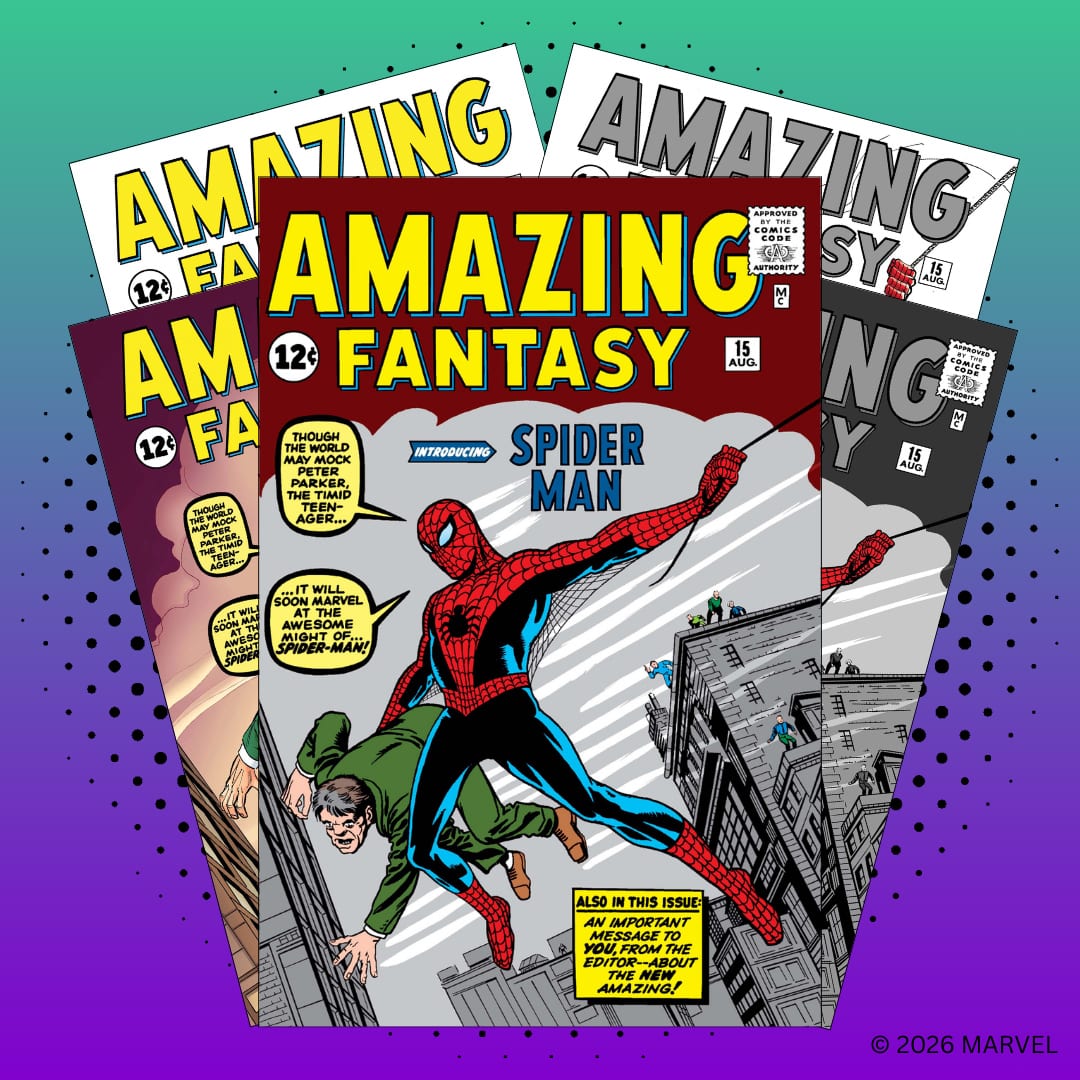
Action Comics #1 set the template for the idea that a hobby is organized around debuts. A year later the same publisher put a man in a cape and a cowl in Detective Comics #27, and twenty-four years after that a different company put a teenager on the cover of Amazing Fantasy #15 and got the same result. The first-appearance logic that runs through every corner of collecting starts here.
Here is the part worth sitting with. A first appearance is not the best story about a character, and it is usually not close. The thirteen pages in Action Comics #1 are crude, rushed, and structurally a newspaper strip wearing a comic book’s clothes. What the object holds is the transition. On one side of that print run the idea does not exist, and on the other side it does, and there is no third state. That is the whole appeal, and it is why a mediocre story in a filler anthology is the most important comic ever published.
Two teenagers had the idea. They signed it away for $130 and spent the rest of their lives arguing about it. Everything else in this industry is downstream of that afternoon.