How to Read Digital Comics on VeVe
VeVe comics are read inside the VeVe app itself. Open the comic from your collection, tap to enter the reader, and swipe through the issue cover to cover. You can read full screen, zoom into panels, and display the cover in augmented reality. Comics come as limited numbered editions and as open digital copies, and new collectors can claim a free Marvel comic when they set up an account.
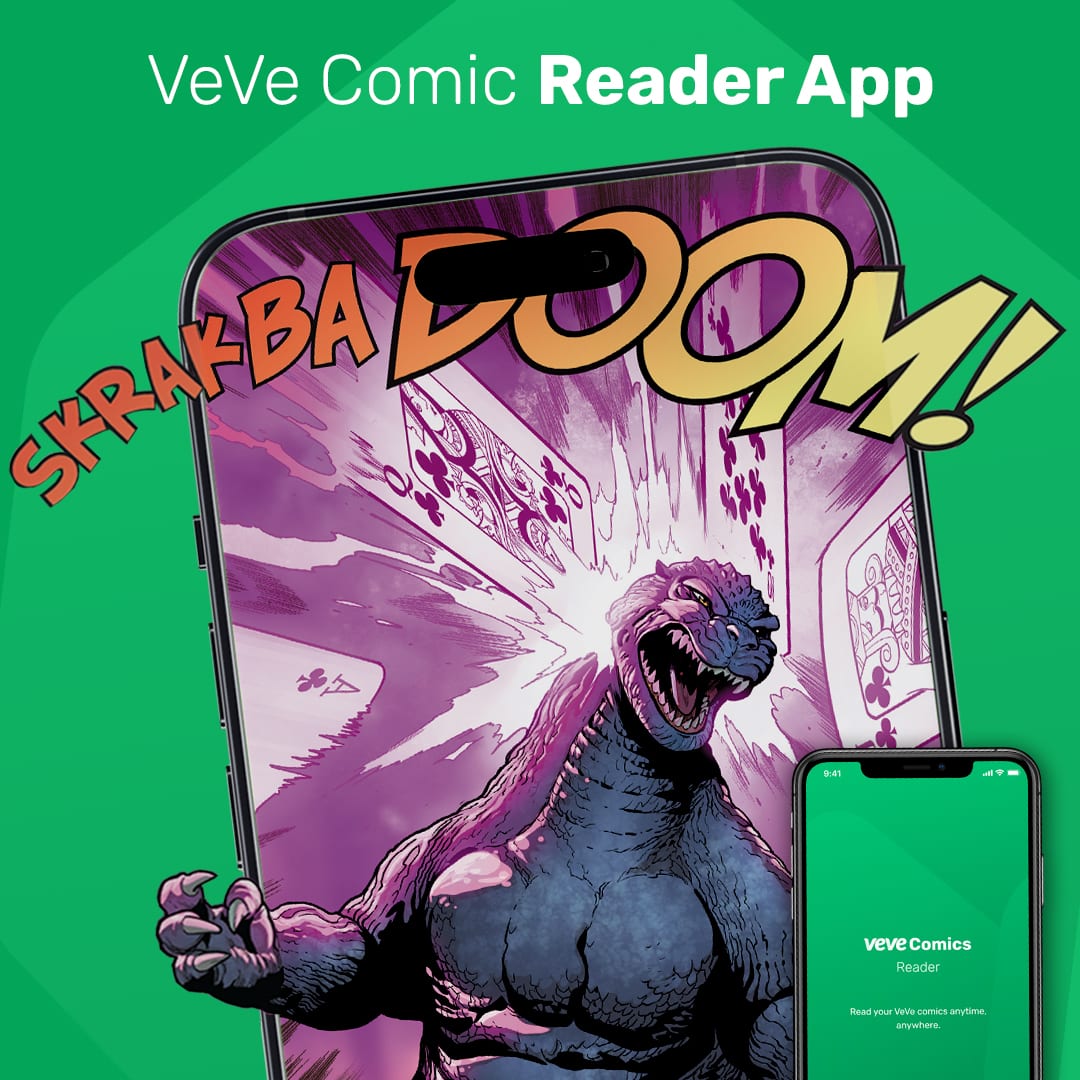
Most people arrive at VeVe for the statues and figures, then discover the comics section by accident and get quietly stuck there for an hour. That was my route in. The reader is better than it has any right to be, and the release schedule is genuinely strange in a good way.
Here is how reading actually works, what the different comic types mean, and what I would open first if I were starting today.
Where do you read a VeVe comic?
Inside the app. There is no separate reader app, no download, no export to another platform. You open VeVe, go to your collection, tap the comic, and it opens in the built-in reader.
That sounds obvious, but it trips up people who expect a digital comic to behave like a file you own on a hard drive. A VeVe comic is a licensed edition that lives in your VeVe collection, and the reading happens where the collection lives. If that model bothers you, the tradeoffs are laid out honestly in our digital comics versus physical comics comparison.
Once you are in the reader, the controls are the ones you would guess. Swipe to turn pages. Pinch to zoom on a panel. Tap once to hide the interface and go full screen so the art fills the phone with nothing else on the glass. On a tablet this is close to ideal, because the page lands at something near real comic proportions.
What is the AR part actually for?
The cover. You can place a VeVe comic cover on your wall in augmented reality, at something like poster scale, and walk around it.
I was ready to write this off as a demo feature. It is not, and the reason is specific: comic covers were designed to be seen from across a shop, competing for your attention on a rack. Reading a cover at phone size loses everything that art was built to do. Hang it at two feet tall on a real wall and the composition suddenly works the way the artist intended.
Whether that changes how you feel about the medium is personal. We went deeper on the sensation in reading comics in AR, which is worth a read if you are undecided about whether digital comics can feel like anything.
Same-day releases, which is the weird part
Here is the detail that surprises comic readers: VeVe frequently releases digital editions the same day the print issue hits shops.
If you came up in comics, you know that digital has historically meant waiting. The print run goes out on Wednesday, and the digital version shows up later, sometimes much later, as a kind of afterthought. VeVe runs a different schedule for a lot of its Marvel releases, with the digital edition available on release day.
Practically, that means new comic day can be a thing you do without leaving the house, and the copy you get is a numbered edition rather than a generic license. Check the drop calendar for what is scheduled. Comic releases sit on the same calendar as figures and statues, and they are easy to miss if you are only scanning for character names.
Limited numbered editions versus open digital copies
This is the distinction that confuses newcomers most, so let me be direct about it.
Some VeVe comics are limited numbered editions. There is a fixed number of copies, each one carries a mint number, and yours is recorded as a specific copy in that run. If you own number 412 of a print run of 10,000, that is your copy and the record says so. Mint numbers have their own culture and their own collectors, which we mapped in what do mint numbers mean.
Other comics are open digital copies with no fixed edition size. These are for reading. They exist so you can catch up on a run, follow a story, or try a series without the scarcity layer sitting on top of the experience.
Both open in the same reader. The difference is what you hold afterward, not how the pages turn. A limited edition is a collectible you also read. An open copy is a comic you also happen to store in VeVe. Neither is better, and choosing between them is really a question of whether you want to collect the issue or just read it.
The glossary has the short definitions if the vocabulary is piling up faster than you can sort it.
Exclusive covers
Comic collecting has run on variant covers for decades. Same story inside, different art on the front, and collectors chase specific artists the way other people chase autographs.
VeVe carries that tradition forward with exclusive digital covers, which are editions with artwork that exists only on the digital release. If you have ever hunted a ratio variant at a shop, you know the pull instantly. If you have not, the short version is that the cover is its own collectible, separate from the story behind it, and people absolutely collect by cover artist alone.
It is also a natural entry point for a themed collection, which is a habit I recommend to nearly everyone. More on that in how to build a themed collection.
The free Marvel comic
New VeVe accounts are offered a free Marvel comic during setup. No purchase, no card, it just lands in your collection.
Do not skip past this. It is the fastest way to see whether the reader works for you, on your device, with your eyes, before you have spent anything at all. Open it, read the whole thing, put the cover on your wall in AR, and then decide if the format is for you. That is a complete evaluation of the product for zero dollars.
Exactly which comic is on offer can change, so check the app when you sign up rather than trusting anything you read on a blog from a few months ago, including this one. The how to start guide walks the signup flow step by step.
What should a first-time reader open first?
My honest advice: read your free comic first, in full, in one sitting. Not skimming for the art. All of it. The reader either clicks for you or it does not, and skimming will not tell you which.
After that, pick by character rather than by list. Comics reading falls apart when you approach it as homework, and the surest way to bounce off is to start with something you picked because it was important rather than because you wanted it. Browse the characters pages, find someone you already care about, and read their book.
If you want the landmark issues instead, the comics hub covers first appearances and key issues and why those specific books carry so much weight in the hobby. Those make excellent collecting targets. They make slightly worse first reads, because a first appearance is often a short chapter buried in an anthology, and that is a strange place to meet a character for the first time.
One more thing worth knowing: not every comic that appears in the app is in the marketplace at all times, and availability shifts. Check the app for what is live rather than assuming.
Reading Your First VeVe Comic
If you have never opened a comic in the VeVe reader, it costs nothing to find out whether you like it. New collectors get US$10 in free credit, no card required, and the free Marvel comic is separate from that. Between the two you can read an issue, hang a cover on your wall, and browse a drop or two before deciding whether this hobby is yours.