Amazing Spider-Man #1, the issue that made Spider-Man a series
Amazing Spider-Man #1, cover-dated March 1963, is the first issue of Spider-Man's own series by Stan Lee and Steve Ditko. It follows Amazing Fantasy #15 after that anthology was cancelled, and it gives us the first appearances of J. Jonah Jameson and the Chameleon.
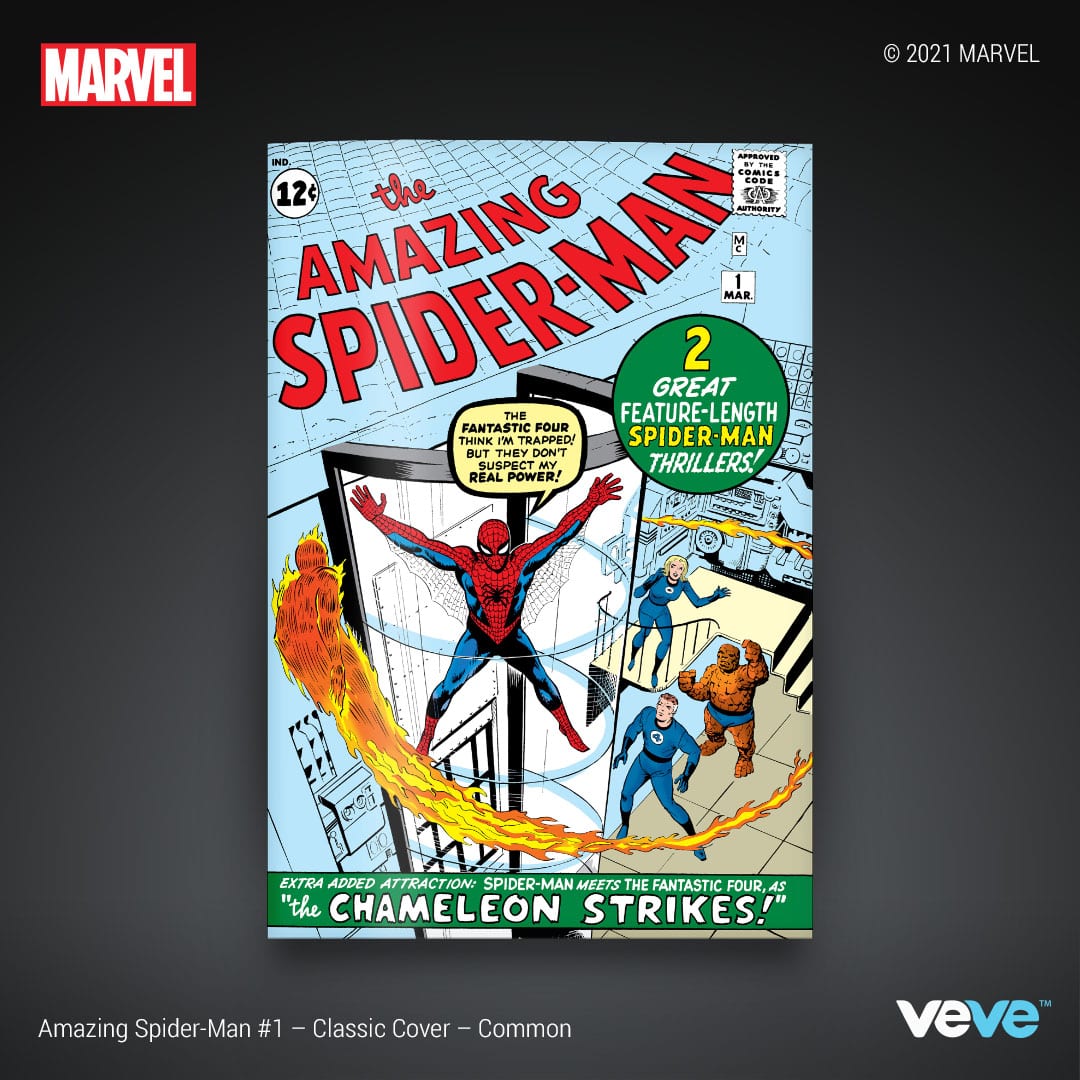
Twelve cents got you a Marvel comic in early 1963, and for twelve cents you could buy the first issue of a title the company had no particular reason to expect much from. Amazing Spider-Man #1 carries a March 1963 cover date. Stan Lee wrote it, Steve Ditko drew the interiors, and the cover was penciled by Jack Kirby over Ditko’s inks, which is why the figure work on the front looks slightly wrong to anyone who knows Ditko’s Spider-Man by heart.
The book had already happened once. Amazing Fantasy #15 had come and gone the previous August as the last gasp of a dying anthology. This was the follow-up nobody had planned in advance.
What twelve cents actually bought
Two stories, not one. The first runs Peter Parker straight into the wall that would define him: money. His aunt cannot pay the rent, his costume act has collapsed because nobody will cash a cheque made out to a masked man, and a newspaper publisher named J. Jonah Jameson has started a public campaign calling him a menace. Peter rescues Jameson’s astronaut son from a failing space capsule and gets smeared in print for it anyway.
Then, in the back half of that story, he goes to the Baxter Building and asks the Fantastic Four for a job. A paying one. He fights his way in to prove he is worth hiring, and Reed Richards explains that the team is a non-profit outfit and there is no salary on offer. It is a wonderful scene and a strange one, because it is a brand new character openly auditioning for the company’s established hit. Marvel was not shy about cross-promotion even then, and Fantastic Four #1 was barely eighteen months old at that point.
The second story introduces the Chameleon, a master of disguise who impersonates Spider-Man to steal defence plans and leaves him holding the blame. Sixty years of Spider-Man stories about a ruined reputation start there.
Why this issue and not the one before it
Amazing Fantasy #15 is the first appearance. That is not in dispute and never has been. But a first appearance in a cancelled anthology is a dead end unless somebody orders a follow-up, and that decision was not automatic. Marvel’s distribution in the early 1960s ran through Independent News, which was owned by the parent company of its main competitor, and the arrangement capped how many titles Marvel could put on the racks each month. Every new book cost the company a slot.
So Amazing Spider-Man #1 is the issue where Spider-Man stops being an experiment and becomes a commitment. It is also the issue that sets the machinery running: the newspaper job, the publisher who hates him, the pattern of a costumed thief making the hero look guilty. Amazing Fantasy #15 gave us an origin. This one gave us a format that could run indefinitely, and it has.
The supporting cast did more work than the villain
Jameson is the real first appearance here. The Chameleon has had a long career, but he has never carried a decade of stories the way Jameson has, and a publisher who prints lies about the hero is a far better engine than any man in a rubber mask. He gives Peter a job, an antagonist he cannot punch, and a reason the city stays suspicious no matter how many people he saves.
That is the trick of the whole run. The villains rotate. The pressure does not. Peter is broke in #1 and he is still broke a hundred issues later, and the money problem is what separated him from every other hero on the stands. Go read the next few issues in order and you can watch Lee and Ditko find the rhythm in real time, from the Vulture in #2 through the Sandman in #4.
The cover is the design, not the drawing
The front of ASM #1 splits itself. A boxed panel hands one section to the Fantastic Four while Spider-Man occupies the main image, and the layout tells you exactly what the publisher was thinking: here is the new kid, here are the stars, buy the new kid because the stars are on the cover. Commercially it is a little shameless. Visually it works, because the split gives the page two focal points and a reader scanning a spinner rack from four feet away sees both of them.
Ditko’s own covers later in the run are stranger and better. This one is a sales pitch, and it did its job.
What the newsstand did to the survivors
Comics in 1963 were not collected. They were sold off wire racks in drugstores and bus stations, read, traded, folded into back pockets, and thrown out. Unsold copies did not go into a warehouse. The distributor stripped the covers off, returned those for credit, and pulped the rest, which is why so few pristine copies of anything from that era exist. The direct market, where shops bought comics non-returnable and collectors bought them to keep, did not arrive until the 1970s.
Layer on newsprint that yellows, two staples that rust, and a target audience of ten-year-olds, and you get the modern grading reality:
- Reader copies of early Amazing Spider-Man issues turn up regularly and always have.
- Anything above a 9.0 is genuinely uncommon, because almost nobody in 1963 was storing comics flat in a dark room.
- Professional grading only started in 2000, so every high-grade copy on the census survived roughly forty unsupervised years first.
The prices follow the scarcity. Amazing Fantasy #15 holds the headline result for the character, a CGC 9.6 copy that sold for $3.6 million at Heritage Auctions in September 2021. Top-grade copies of ASM #1 trade at the major houses in six figures. Mid-grade copies with a crease and a tanned spine are a different and much friendlier conversation, and always have been.
Reading it as a licensed digital edition
VeVe releases officially licensed Marvel digital comics, and Amazing Spider-Man #1 is one of them. A licensed digital edition is a numbered copy in a fixed edition that you read full-screen in the app, page by page, with the edition number recorded on a public ledger so anyone can check which copy is which. Same pages, same panels, same Ditko art, no staples.
It is a different object from a 1963 newsstand copy and it does not pretend otherwise. What it does offer is the reading, which is the part most people actually want and the part a slabbed 9.4 specifically denies you, since opening the case destroys the grade. If you have never read a comic that way, our walkthrough of digital comics on VeVe covers how the pages behave, and what mint numbers mean explains how the numbering works.
Start a free VeVe account if you want to look through the Marvel comics shelf yourself. New collectors get US$10 in credit toward a first piece, no card required, and the details are on our free credit page.
Sixty-three years of a kid who cannot catch a break
The thing that makes this issue hold up is how small it is. A teenager tries to get paid, fails, gets called a criminal in the morning edition, and goes home. That is the story. Every enormous thing that has happened to Spider-Man since, every film, every crossover, every symbiote, sits on top of a first issue about a boy who could not make rent.