The Incredible Hulk #1 and the monster who was the hero
The Incredible Hulk #1, cover-dated May 1962, was created by Stan Lee and Jack Kirby and featured a grey Hulk who transformed at nightfall rather than in anger. Printing problems with the grey pushed the color to green by issue #2, and the series was canceled after six issues.
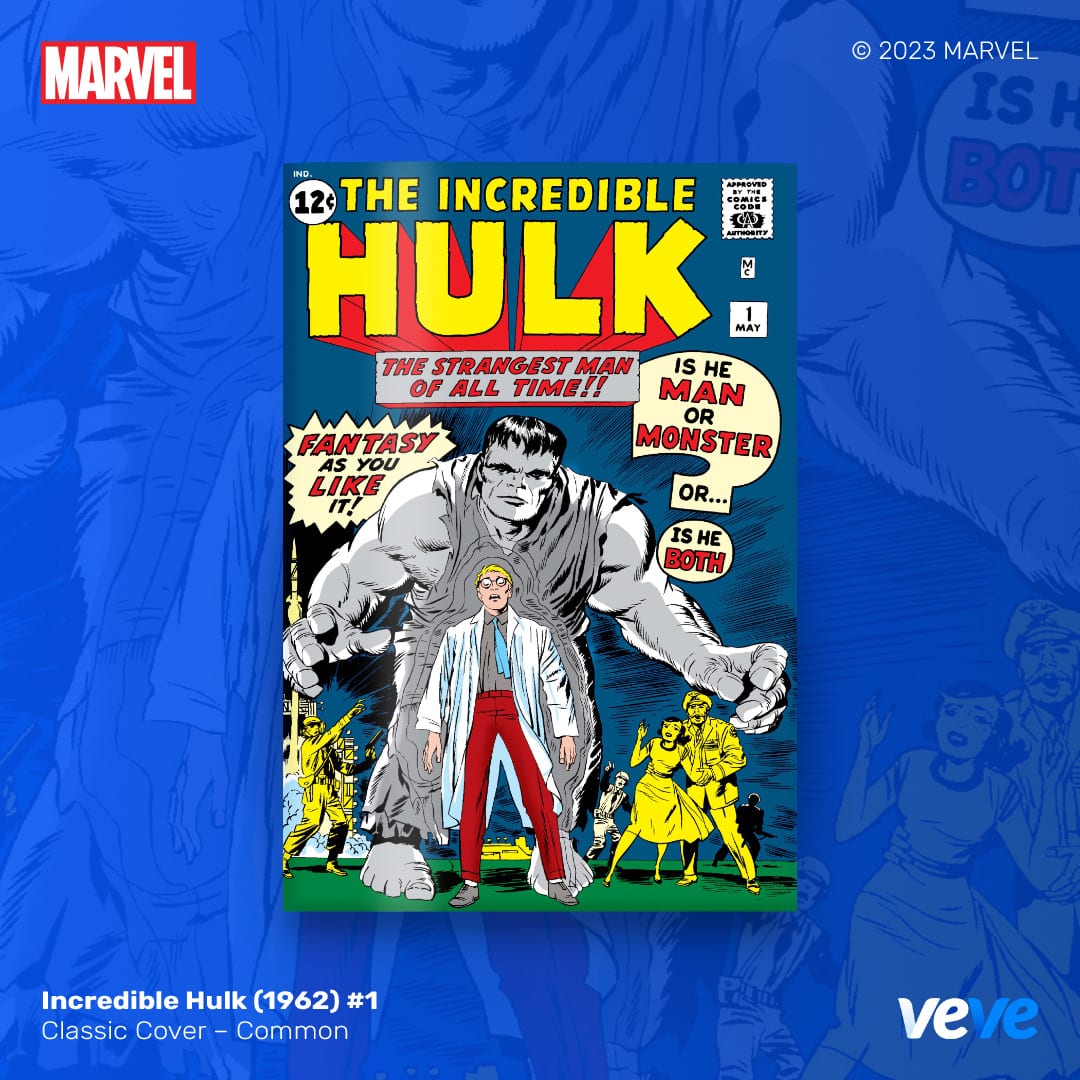
Grey was the plan. Stan Lee wanted a color with no real-world association attached to it, and grey is about as neutral as a color gets. What Lee had not accounted for was 1962 newsprint, four-color separation and a printing process that treated a flat grey tone as a suggestion rather than an instruction.
A gamma bomb and a kid on a dare
The Incredible Hulk #1 carried a May 1962 cover date and a twelve-cent price. Lee wrote, Jack Kirby penciled, Paul Reinman inked. The setup is lean: Dr. Bruce Banner, a physicist with the posture of a man who has not slept, is minutes from detonating a gamma bomb at a New Mexico test site. A teenager named Rick Jones drives onto the range on a dare. Banner runs out to get him, shoves him into a protective trench, and takes the blast himself.
General Thaddeus Ross is there to disbelieve him, his daughter Betty is there to worry about him, and Igor, the spy on the base, is there to make sure the countdown does not stop. All four of them are still in use sixty years later, which is a decent hit rate for a first issue.
Here is the part that gets forgotten: in issue #1 the change is not triggered by anger. Banner transforms at nightfall, like a werewolf, and turns back at sunrise. The rage trigger arrived later, once the character had been handed around enough writers for somebody to work out what he was actually about.
Four things in that first issue did not survive the decade:
- The grey skin, gone by issue #2.
- The nightfall trigger, replaced by anger.
- Igor the saboteur, a Cold War fixture the book dropped quickly.
- Banner’s own intelligence inside the Hulk, which came and went for years before the simpler version won.
The color that would not print
Stan Goldberg was coloring Marvel’s line at the time, and grey was a problem from the start. Across a single print run the Hulk came out in different shades from page to page, sometimes drifting toward green, sometimes almost white. On the cheap uncoated stock of the period a flat grey had nowhere to hide.
So Marvel switched. By issue #2 the Hulk is green and stayed that way, and the change was never explained in the story because nothing like that was ever explained in the story. Marvel eventually turned the accident into continuity decades later, with the grey Hulk returning as a separate personality. A printing failure became canon, which is one of the most Marvel things that has ever happened.
Canceled after six issues
This is the fact most people do not know, and it is the interesting one. The Incredible Hulk ran six issues and stopped. The last, cover-dated March 1963, ended the series less than a year after it started. Marvel’s monster hero did not sell.
What saved him was that Lee kept putting him in other people’s books. He turns up in Fantastic Four #12, he is the accidental cause of the Avengers forming in September 1963, and he quits that team one issue later. Guest appearances kept him visible while he had no title of his own.
The comeback came through the back door. In late 1964 the Hulk took over half of Tales to Astonish, sharing the book with Giant-Man and later Namor. He held that split feature for years, and when Marvel finally handed him the whole title in 1968 they resumed the old numbering rather than starting over, so the book jumped straight from Tales to Astonish #101 to Incredible Hulk #102. Comic numbering is a mess, and that is one of the tidier explanations for why.
Jekyll, Frankenstein and the trick that worked
Lee has said openly that he was combining two things he liked: the Frankenstein monster, hunted by people who cannot see that he is the sympathetic one, and Jekyll and Hyde, where the horror comes from inside the man. The Hulk is both at once. Banner’s problem is not that a monster is chasing him. It is that the monster is scheduled.
That structure is why the character escaped comics so completely. The 1977 television series with Bill Bixby and Lou Ferrigno ran five seasons and reached an audience that had never bought a comic in its life, and it worked because it understood the Frankenstein half: a quiet man walking away down a road at the end of every episode, with sad piano playing.
Every version since has been an argument about which half matters more. The Hulk as the tragedy, or the Hulk as the release.
Why a nice copy of issue #1 barely exists
A 1962 Marvel comic had none of the protections a modern key issue enjoys. It shipped to newsstands and spinner racks, unsold copies were returned as stripped covers for credit and destroyed, and the survivors were read by children who had no reason to be careful.
Hulk #1 has a further problem. The title was canceled, so nobody was following the run, and there was no collector instinct in 1962 telling anyone to keep the first issue of anything. Add the grey printing, which varies copy to copy and hurts eye appeal even on structurally sound examples, and the census at the top of the scale is thin. Copies in the highest certified grades have sold into the six figures at Heritage Auctions on the rare occasions they surface, and mid-grade copies are a serious purchase in their own right.
The contrast with the character’s later keys is instructive. Incredible Hulk #181, from 1974, is a Bronze Age book with a far larger surviving population, and it is still one of the most chased issues in the hobby. Issue #1 is scarcer and quieter.
The licensed digital edition
VeVe publishes officially licensed Marvel digital comics, Silver Age keys included. A licensed digital edition is a numbered copy of the complete book, read page by page in the app at full screen, with the edition number recorded publicly rather than sitting in a private account. If you have not looked at how that works, the comic reader is the place to start, and mint numbers explains why collectors care which copy landed in their hands.
It is a different thing from a 1962 newsstand copy and there is no point pretending otherwise. What it does offer is the chance to actually read the issue, in a form where Kirby’s blast sequence is legible, alongside the rest of your Marvel collection. New collectors get US$10 in credit toward a first piece with no card required, explained on the free credit page.
Sixty years of the same problem
Banner has been cured dozens of times. It never holds, because a cured Banner is a physicist with a sad backstory and nothing to do on a Tuesday. The character only works while the thing is still in there.
That was true on page one in 1962, when a man watched the sun go down and knew what was coming. It is still the whole show.