Spider-Man's Sinister Villains: A Collector's Guide
VeVe's Sinister Villains series covers Doctor Octopus, Electro, Mysterio, Sandman, the Vulture and J. Jonah Jameson, with the Green Goblin appearing in the Marvel Mightys line. Nearly all of them debuted in The Amazing Spider-Man between 1963 and 1964, which is why they read as a single set rather than a random group of characters.
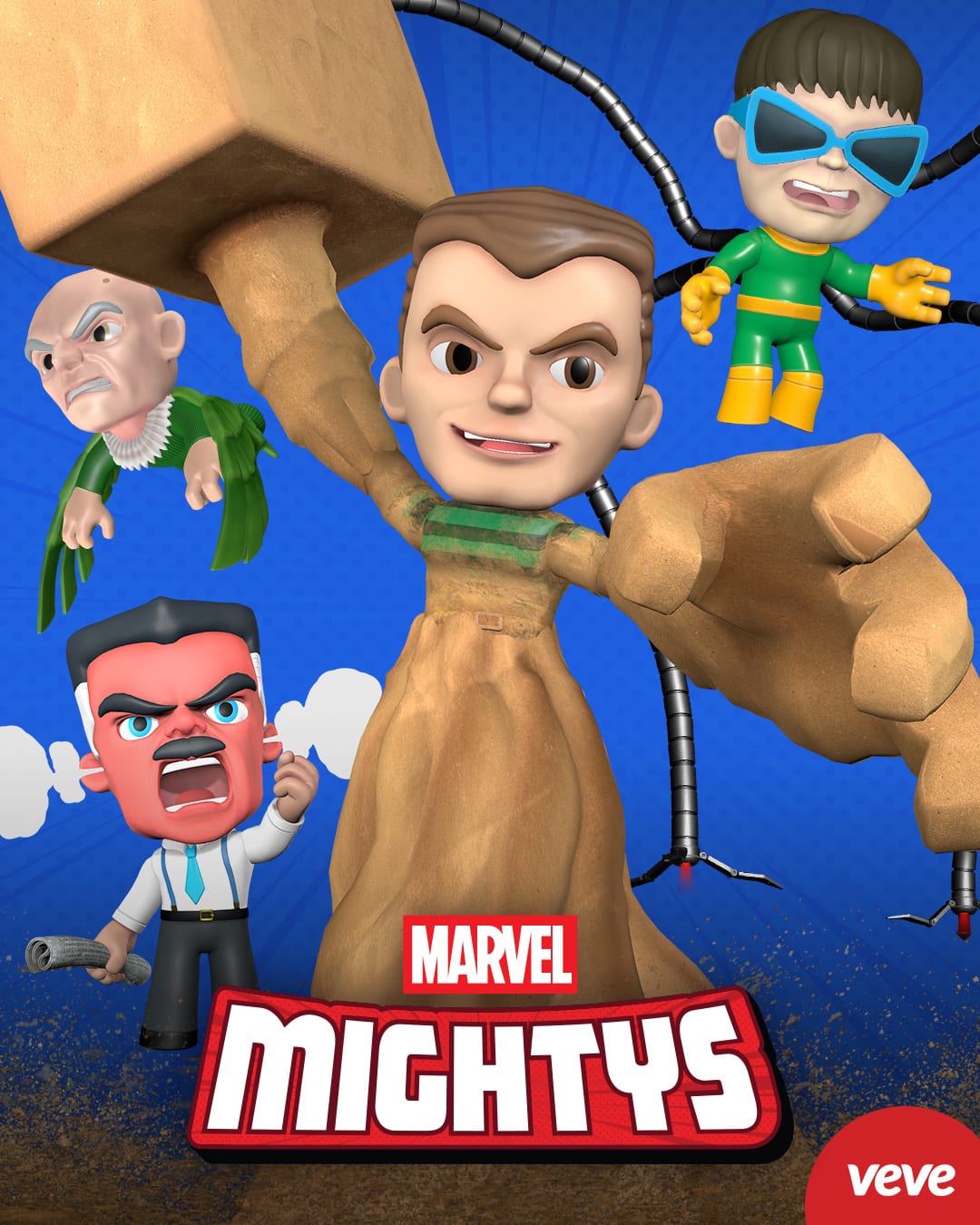
Most people build a Spider-Man collection the obvious way. Red and blue suit, black suit, maybe a Miles, maybe a Spider-Gwen, and then the collection quietly stops growing because there is only so much Spider-Man to buy. The villains are what keep it going, and honestly they are the better half of the character anyway.
Spider-Man has the strongest rogues gallery in comics. Not the most powerful, the strongest as a set. Batman’s is arguably deeper, but Spider-Man’s arrived faster and tighter, almost all of it inside an eighteen-month run in the early sixties, and that is why the group holds together so well on a shelf.
Why a villain roster completes a collection
A hero on his own is a figure. A hero surrounded by the people who have tried to kill him is a story.
Rogues galleries have been a collecting driver since the earliest character merchandise, and the reason is structural: villains come in defined sets. There is a canonical list, everyone agrees roughly what is on it, and so there is a finish line. A Spider-Man collection has no natural end. A Sinister Six style collection does, and having a target is what makes people keep collecting rather than drifting.
They also display better. Six villains in a row are six different silhouettes, six colour palettes and six completely different design ideas. Six Spider-Man variants are, visually, six of the same thing.
If you are new to any of this, the what is VeVe explainer covers the basics before you start chasing a set.
Doctor Octopus
The Amazing Spider-Man #3, July 1963. Otto Octavius was the first villain who actually beat Peter Parker, which is why he has never lost his standing. Steve Ditko drew him as a soft, middle-aged scientist wrapped in four mechanical arms, and the contrast is the whole design. The arms do the menace, the man does not have to.
Doc Ock is the natural first villain in a collection. He is the arch-enemy in practice, whatever the Goblin fans say, and the sculpt gives you something no other Spider-Man piece does: a wide, spidery silhouette that fills space on a display.
Electro
The Amazing Spider-Man #9, February 1964. Max Dillon, a lineman who became a walking electrical charge, and then put on what might be the most enjoyably absurd costume of the era: a green bodysuit and a bright yellow starburst mask that looks like a lightning bolt exploded on his face.
Collectors sometimes skip Electro because the modern films reworked him heavily. I would not. The classic Ditko design is one of the most recognisable pieces of sixties comic art in the whole Marvel line, and in a display case the yellow mask is what your eye lands on first.
Mysterio
The Amazing Spider-Man #13, June 1964. Quentin Beck, a special effects artist and stunt man who worked out that illusions beat superpowers if you are clever about it. The fishbowl helmet, the green cape, the purple gloves.
Mysterio is the design that ages best, because nothing about it is trying to look futuristic. It is a stage magician’s costume with a mirror ball for a head, and that is exactly why it still works sixty years later.
Sandman
The Amazing Spider-Man #4, September 1963. Flint Marko, a convict who got caught in a nuclear test site and came out able to turn into sand. Green and black striped shirt, brown trousers, and the ability to change shape at will.
Sandman is the rare Spider-Man villain who has spent time as a hero, which is part of why he keeps turning up. For collecting purposes, he is the texture piece. Everyone else in the group is smooth armour, energy or fabric. Sandman is granular, and that difference reads immediately when you put them together.
Vulture
The Amazing Spider-Man #2, May 1963. Adrian Toomes, the second villain Spider-Man ever faced in his own book, and the oldest man in the rogues gallery by some distance - a bald, elderly engineer strapped into a set of green feathered wings.
The Vulture is the one I would argue hardest for. A collection full of muscular young men in bodysuits needs a hunched old man with wings in it. He is the character that proves the roster was designed as a set rather than assembled from whoever was popular.
J. Jonah Jameson
The Amazing Spider-Man #1, March 1963. Not a villain in any technical sense. He has no powers, no costume and no criminal record worth mentioning. He is a newspaper publisher with a flat-top haircut and a moustache who has spent sixty years printing that Spider-Man is a menace.
Including Jameson in a villains series is the sort of decision that makes a collection feel curated rather than generated. He is the antagonist Peter Parker actually cannot escape, because Peter works for him. Every other villain shows up, fights, and leaves. Jameson is there on Monday morning.
If you want the wider picture on the character side of all this, the Spider-Man character page collects what has surfaced.
Green Goblin, in Marvel Mightys
The Amazing Spider-Man #14, July 1964. Norman Osborn, glider, pumpkin bombs, and the single most consequential villain in Spider-Man history for reasons anyone who has read The Night Gwen Stacy Died does not need explained.
The Goblin sits in the Marvel Mightys line rather than the Sinister Villains series, which means he has a different art style and a different scale to the others. Some collectors find that annoying. I think it works in his favour, because the Goblin has never really belonged in a neat row with everyone else anyway.
How to actually approach the set
A few things I would tell a friend starting this.
Decide early whether you are collecting the series or collecting the characters. If it is the series, you are chasing Sinister Villains specifically and the Goblin is a separate project. If it is the characters, the line they came from matters less than the roster being complete.
Pay attention to rarity tiers before you buy rather than after. Editions run from Common up through scarcer tiers, and a set assembled at wildly mixed tiers looks different in your collection than a matched one. The rarity tiers guide explains the ladder.
Watch the drop calendar rather than trying to find everything at once. Marvel pieces surface regularly, and the rest of the Marvel franchise page will give you a sense of the release rhythm. If you like the comics-history side of this, the comics section goes deeper on the actual issues these characters debuted in.
Collecting Spider-Man’s Villains
Pick one villain and start there. Doc Ock or the Vulture, depending on whether you want the obvious one or the interesting one. New collectors get US$10 in free credit with no card required, which is enough to get an account set up and see how a piece looks in AR before spending anything of your own. It is on the free credit page.