X-Men #125 and the quiet issue before Dark Phoenix
X-Men #125, cover dated September 1979 by Chris Claremont, John Byrne and Terry Austin, opens the Proteus story on Muir Island and lands directly before the Dark Phoenix Saga in issues #129 to #137. VeVe carries licensed digital editions from the Claremont and Byrne era, including this issue.
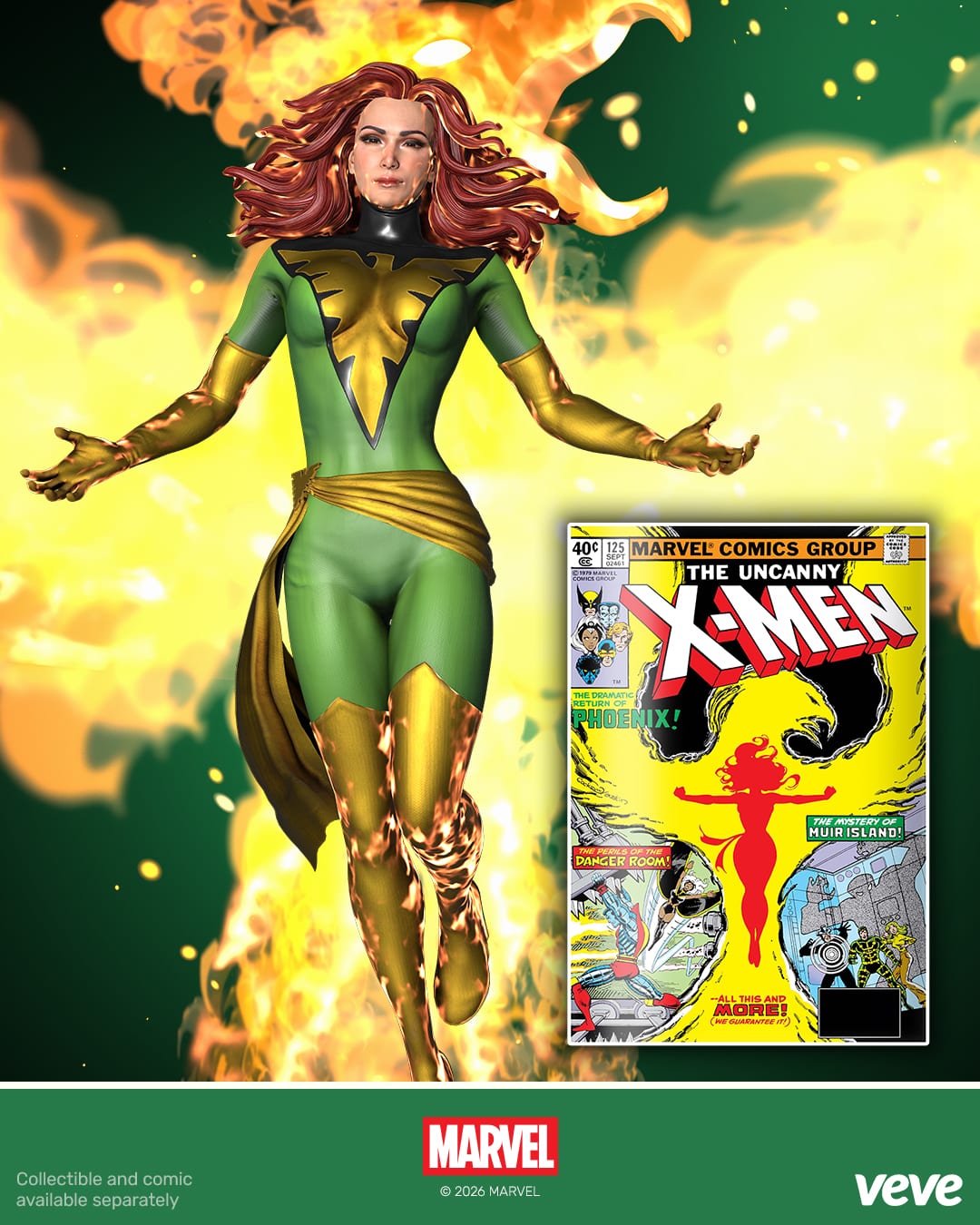
September 1979, and the cover asks what is happening on Muir Island. Inside, a containment cell off the Scottish coast is empty, the thing that lived in it is loose, and Moira MacTaggert has to explain to her colleagues that the prisoner she has been keeping for years is her son.
Chris Claremont writing, John Byrne pencilling, Terry Austin inking. That combination had been on the book for roughly two years by this point and had another eighteen issues to run. This one is not the famous issue. It is the one that shows exactly why the famous issues landed.
A monster who wears people
Proteus is Kevin MacTaggert, and the reason he was in a cell is that his power has no ceiling. He warps reality around himself. Matter, energy, probability, the shape of a room, all of it bends, and the only limit on him is that the body he inhabits burns out from the inside within days. So he takes another one. The story is a manhunt across Scotland in which the thing being hunted keeps changing what it looks like and leaves a corpse every time it moves.
He is also afraid of metal. Claremont plants that quietly, and three issues later Colossus kills him with it, which is one of the cleanest setup-and-payoff structures in Bronze Age superhero comics. The full story runs from this issue to #128.
The X-Men lose people in the Muir Island story. The team is scattered, the ones on the island are outmatched, and the horror is specific: you cannot fight something that might already be standing next to you wearing your friend. This is a superhero comic behaving like a siege film, and in 1979 that was not a register the genre used.
A private grief, in a book about mutants
Moira MacTaggert was, until this issue, the sensible adult in the background. A geneticist with a research facility, a collaborator of Charles Xavier’s, mostly a source of exposition.
Then the book tells you she has been feeding and containing her own child for years, that his father was violent, and that she has never told anybody. The rest of the arc is a mother deciding whether to help kill her son. Claremont’s whole method is in that turn: take a supporting character, reveal an interior life that recontextualises everything they have said, then make them pay for it.
That is why the run took over. Superhero comics in the late seventies were mostly episodic. Claremont ran a soap opera with long fuses, where a line of dialogue in one issue detonated two years later, and readers who followed it felt like they were being trusted with something. Giant-Size X-Men #1 got the new team on the page in 1975, but the book sold modestly for a while afterward. The Claremont and Byrne stretch from 1977 to 1981 is where it turned into Marvel’s best-selling title and the property everything else would eventually be measured against.
The woman standing on the edge of the next story
Jean Grey is in Scotland during all of this, and she is not fine.
She had come back from space in 1976 as Phoenix, and the book had spent three years treating that as an upgrade. Around this stretch a man named Jason Wyngarde starts appearing to her, courting her, showing her visions of an eighteenth-century life in which she is someone else entirely. She has no idea he is Mastermind. Neither does the reader on a first pass, because Claremont plays the seduction as a slow domestic strangeness rather than a plot.
Four issues later, in #129, the Hellfire Club arrives properly, and so do Kitty Pryde and Emma Frost. Through #137 the story turns into the one everyone knows: Jean loses the argument with her own power, destroys a star with an inhabited system around it, and dies on the moon.
That ending was not the plan. The original intention was to strip her powers and let her live. Editor in chief Jim Shooter read the issue where an inhabited world is wiped out and held that a character who commits genocide cannot be handed a quiet retirement, so Claremont and Byrne rewrote the finish. Comics had killed heroes before and brought them back within a year. This one held for years and changed what readers expected a serialised superhero story to be able to do. Our Phoenix collectors guide covers where that idea travelled afterward.
Read #125 knowing all of that and the Wyngarde scenes stop being a subplot. They are the whole engine, running in the background of somebody else’s horror story.
Where 1979 sits for physical copies
Bronze Age books survive better than Silver Age books, and that is almost entirely about where they were sold.
By 1979 the direct market was forming. Dedicated comic shops were buying non-returnable and selling to collectors who already knew to keep things flat and clean. That was still the smaller channel. Most copies of X-Men #125 went to newsstands and drugstores, where unsold ones had their covers stripped for return credit and the interiors destroyed, and the sold ones went home with teenagers.
So the supply of high grade copies is better than for a 1962 comic and worse than the print run suggests. Paper quality is the other problem: late-seventies newsprint yellows and goes brittle in a way that graders notice, and a book stored in a warm attic since the Carter administration will not grade well no matter how gently it was read.
Inside the run, the keys are #94 for the new team’s first regular issue, #101 for Phoenix, and #129 for Kitty Pryde and Emma Frost. #125 is a second-tier key, priced accordingly, and it is a better comic than most of the books above it on that list. That is a common shape in collecting and worth remembering. The market prices first appearances. It does not price craft. Incredible Hulk #181 is the clearest example of the same effect a few years earlier.
Reading the run as a licensed digital edition
VeVe publishes officially licensed digital comics, and the Claremont and Byrne era is represented in that line, this issue included. A licensed digital edition is a numbered copy of the full issue, read page by page at full screen in the app, with the edition number recorded on a public ledger so anyone can check which copy is yours.
Byrne and Austin reward a big bright screen more than most art teams of the period. Austin’s inks carry an enormous amount of texture, rain on stone, fog on water, the weave of Moira’s coat, and that detail is the first thing to disappear in a small or cheaply reprinted copy. Our comics section has the rest of the licensed line, and if you collect the characters as figures too, Emma Frost and Colossus both have hubs here, along with the event and gala costume guide for the dress-up side of X-Men collecting.
Start a free VeVe account. New collectors get US$10 in credit toward a first piece, no card required. The free credit page has the details.
Before the famous part
There is a particular pleasure in reading an issue like this one with the ending already known. Jean Grey spends most of #125 worrying about somebody else’s crisis, competent and calm and entirely unaware, and the reader watches her walk toward the thing waiting four issues out.
That is what a long-form serial buys you and it is why the X-Men outgrew every other team book on the shelf. Claremont was not writing episodes. He was writing a decade. More on the team at the X-Men character hub.