The Hellfire Gala and the pull of one-night costumes
The Hellfire Gala is an annual in-universe event from Marvel's Krakoan-era X-Men books, launched as a line-wide crossover in 2021, where every mutant turns up in a one-off designer outfit. For collectors it produces something unusual: a set of costume designs tied to one dated occasion with a closed guest list, rather than another open-ended costume variant.
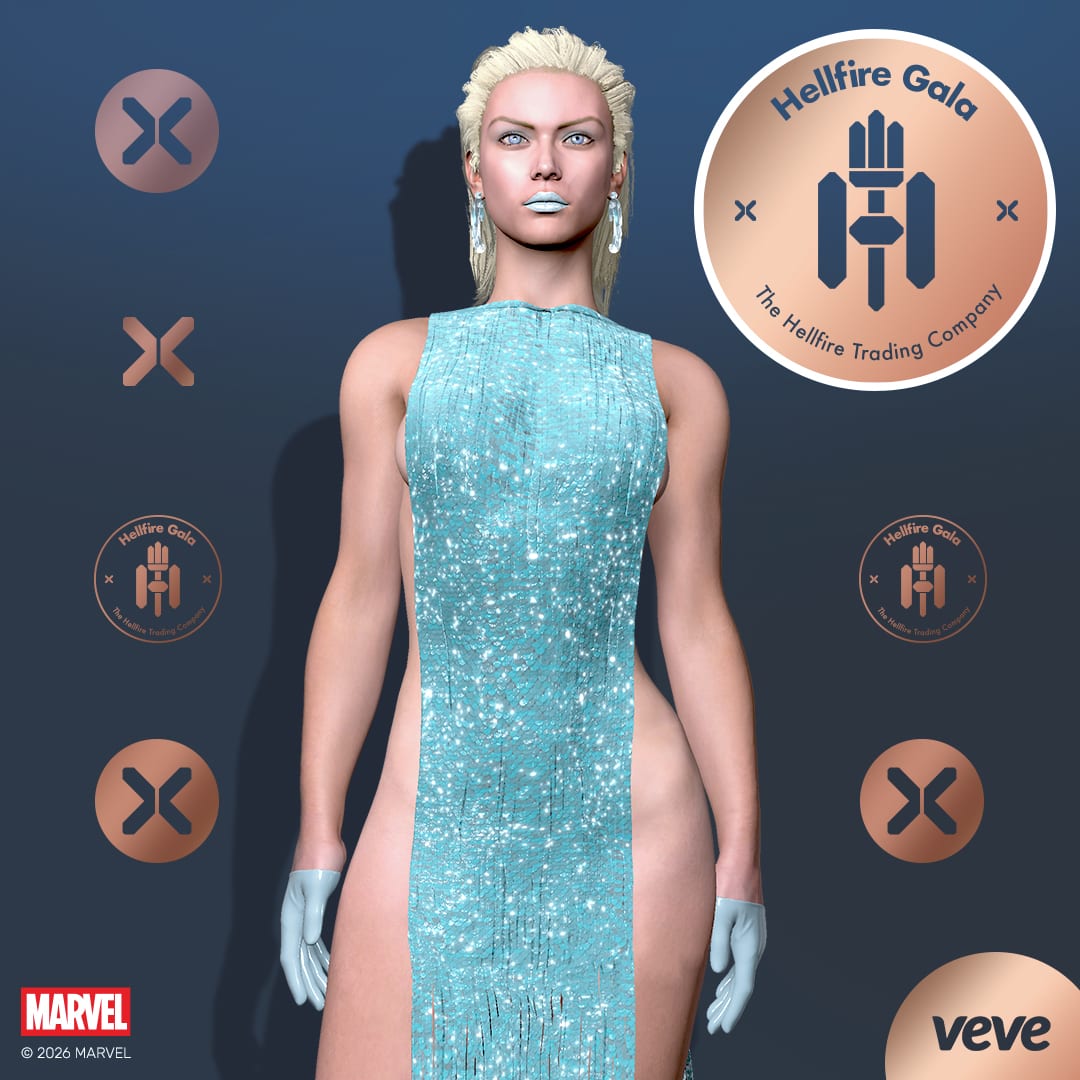
The X-Men throw a party once a year, and everyone wears something they will never wear again. That is the entire hook, and it is a better one than it sounds. The Hellfire Gala hands collectors a finite, dated, fully documented set of designs and then shuts the door behind it.
The club came first
Long before the gala there was the Hellfire Club, and it showed up in the middle of the most discussed X-Men story ever published. Chris Claremont and John Byrne introduced it across Uncanny X-Men #129 to #131 in 1980, as part of the Dark Phoenix Saga. The idea was borrowed from two places at once. There was a real Hellfire Club in eighteenth-century Britain, a private society of aristocrats with a reputation for excess, and there was an episode of the British television series The Avengers that put its heroine in corseted villain gear for a costume party. Claremont and Byrne took the name from the first and the visual language from the second.
Emma Frost walked straight out of that. She first appeared in Uncanny X-Men #129, cover-dated January 1980, as the White Queen, and every version of her since is a variation on a design that started life as a knowing costume joke. Worth sitting with for a moment. The X-Men line’s biggest annual fashion event descends directly from a 1980 storyline about wealthy people playing dress-up in a private club. The gala is not a departure from X-Men history. It is that history followed to its logical end.
What Krakoa changed
In 2019 Jonathan Hickman relaunched the line and moved every mutant on Earth to the living island of Krakoa. Mutants suddenly had a nation, an economy, borders, and diplomatic problems. Once you have a nation, you need a state occasion.
The Hellfire Gala arrived in 2021 and ran across the whole X-line, every book in the same stretch of weeks, one evening told from a dozen angles. Mutants invited world leaders, celebrities and the press to Krakoa and used the night to make announcements that would have been dull in a boardroom and were not dull at all in couture. The first gala ended with mutants terraforming Mars. The active X-Men roster was decided by public vote. Diplomacy, but with a red carpet and a guest list.
And everybody, without exception, wore something built for that night alone.
Why an expiry date makes a costume collectible
Most superhero costume variants are soft around the edges. Armoured Iron Man, a stealth suit, a black-and-white Spider-Man. They appear, they recur, they get redrawn by whoever has art duty that month, and five years later nobody can tell you which version came first. There is no fence around the category.
A gala outfit has a fence around it. It exists for one event, in one year, and it is never worn again. That gives it three things collectors genuinely care about:
- A fixed date, so you can say exactly when the look existed
- A fixed occasion, so every piece belongs to the same evening
- A closed roster, because the people who attended are the people who attended
Try the opposite experiment. Set out to collect every Cyclops visor design and you will never finish, because the category has no edge. The gala has an edge. A shelf of gala pieces reads as one coherent thing to anyone who walks past it, which is more than most themed rows ever manage.
There is a second effect, quieter but real. Event costumes are drawn by artists who know the design will only be used once, so they push. Nobody has to keep a gala outfit practical for a fight scene next issue. You get capes that would be a liability, silhouettes that only work standing still, and colour choices no field uniform would survive. That is exactly what you want in a display piece.
The gala art that exists
Emma Frost is the obvious anchor and the one I would start with. She is the character the whole Hellfire idea was built around, she is the host in most tellings, and the white-on-white gala look is the single most reproduced image from the event. If you only ever own one gala piece, it is this one, and it does not need the rest of the set to make sense.
Magik is the one I find most interesting. Illyana Rasputin spent years being drawn as armour and soulsword and demon limbs, so putting her in formalwear creates a tension the other designs do not have. She looks like she would rather be anywhere else, which is correct.
Cyclops is the straight man of the set. Scott Summers in a tailored outfit, visor still on, still visibly running the room in his head. The joke lands because he is the one character who cannot take the mask off, and the design leans into that instead of hiding it.
Colossus is a formalwear problem and the design knows it. Seven feet of organic steel does not wear a suit, it wears something built for seven feet of organic steel, and the result sits oddly and pleasingly next to the rest.
Jean Grey is the other face people look for from the gala years. If you are mapping out where she and the rest of the roster sit, the broader X-Men character hub is the place to work from, and the wider Marvel franchise page shows how X-Men material fits against everything else.
Building the row
A gala shelf works best when you commit to the conceit. Mixed in among regular costume pieces, a gala outfit just reads as an odd variant and people assume you bought the wrong one. Lined up together, it reads as an event, and visitors ask what the occasion was. That question is the whole payoff.
If you want a second row that talks to the first, the Phoenix Five set does something structurally similar. Five characters, one storyline, one moment in publishing history, a hard edge around the category. Gala pieces and Phoenix Five pieces sitting side by side make a decent argument for the same collecting idea told twice.
For the deep historical end of the shelf, Giant-Size X-Men #1 is the issue that made all of this possible. No 1975 relaunch, no Claremont run, no Hellfire Club in 1980, no gala in 2021. It is a long chain and every link is documented.
One last thought
The thing I like about event costumes is that they are honest about being costumes. A regular superhero uniform pretends to be functional clothing. A gala outfit admits it exists to be looked at, photographed, and talked about the next morning. That is a strange amount of self-awareness for a genre built on spandex, and it makes the pieces more fun to own than the tenth version of a character in their usual gear.
Somebody in a Marvel editorial meeting worked out that if you give every artist on the line one night to design whatever they want, you get a year of images people actually save. They were right, and collectors were the first to notice.