Vampirella #1 and the magazine that dodged the Code
Vampirella #1 was published by Warren Publishing in September 1969, created by Forrest J Ackerman with a costume designed by Trina Robbins and a cover painted by Frank Frazetta. Warren published in black-and-white magazine format because that format fell outside the Comics Code, which banned vampires outright.
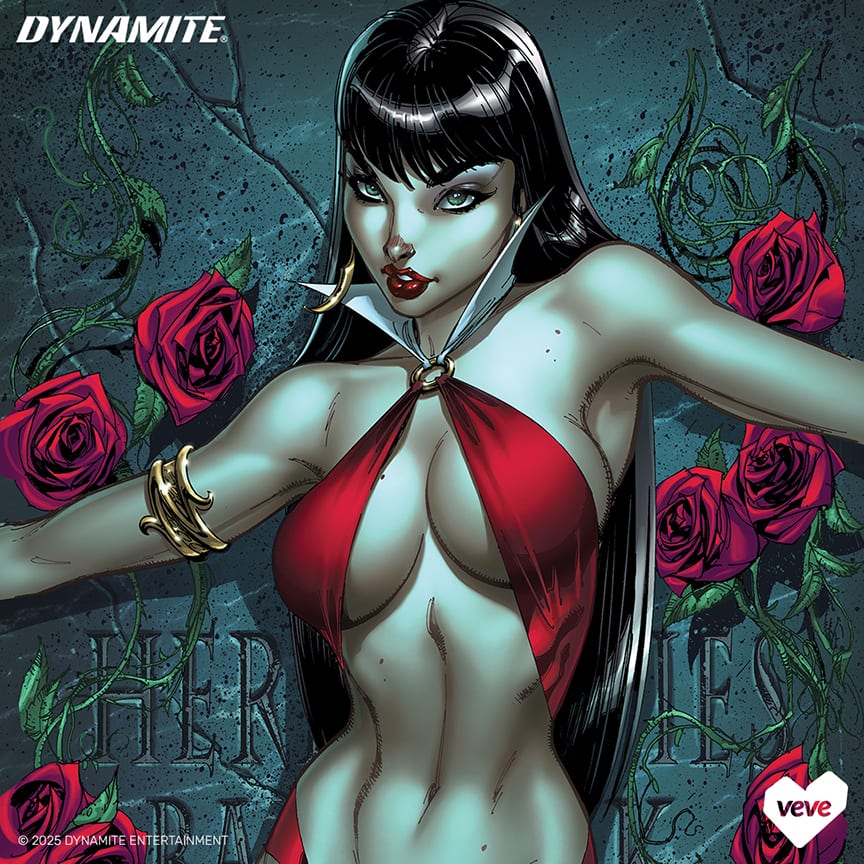
From 1954 onward, American comic books could not contain a vampire. Not a sympathetic one, not a villainous one, none. The Comics Code Authority’s rules named them alongside werewolves, ghouls and the walking dead and prohibited the lot, and publishers agreed to it because the alternative looked like federal regulation. Fifteen years later a publisher put a woman from a planet where blood runs in rivers on a newsstand with a Frank Frazetta painting on the cover, entirely legally, and the reason is a technicality about paper size.
Magazines were not comic books
The Code was a self-policing arrangement. Publishers submitted their comic books to the Comics Magazine Association of America, the approved ones got a seal on the cover, and distributors and retailers treated the seal as the price of rack space. It worked because everybody in the chain went along with it.
What it did not cover was magazines. A black-and-white publication on larger stock, priced like a magazine and distributed with magazines, was not a comic book for these purposes even when it was full of comics. James Warren figured that out early and built a company in the gap.
Warren had started with Famous Monsters of Filmland in 1958, edited by Forrest J Ackerman, which is the publication responsible for a generation of American horror fans knowing who Lon Chaney was. Creepy followed in 1964 and Eerie in 1966, both anthologies of horror comics in magazine format, both carrying exactly the kind of material the Code existed to stop. Archie Goodwin edited and wrote a good deal of it. The art came from people like Frank Frazetta, Al Williamson, Reed Crandall and Angelo Torres, several of them EC veterans who had been put out of work by the Code in the first place.
So the loophole did not just permit horror comics. It reassembled the specific talent pool the Code had scattered, which is a small piece of poetic justice.
Three people made her
Vampirella #1 landed in September 1969 and the creative origin is unusually well documented, partly because the three contributions are so distinct.
Forrest J Ackerman came up with the character and wrote the first story. Ackerman was a fan first and an editor second, fluent in puns and pulp, and his Vampirella is comedic. She is from Drakulon, a planet where blood flows as liquid, she narrates, and the tone is closer to a horror host introducing other people’s stories than to a lead character with an arc. Tom Sutton drew it.
Trina Robbins designed the costume. That is a sentence with some weight on it, because Robbins was one of very few women working in American comics in 1969 and went on to be both an underground cartoonist and the most important historian of women in the medium. She drew a red sling, thigh boots, a collar. It became one of the most recognizable and most argued-about costume designs in comics, and Robbins spent decades being asked about it with varying degrees of good humor.
Frank Frazetta painted the cover. In 1969 Frazetta was at the height of his paperback-cover period, the Conan work that reset what fantasy illustration looked like, and a Frazetta painting on a first issue was a serious commitment of budget. The cover is the reason a lot of people picked the magazine up, and it is still the image that sells the issue.
She was not the lead until she was
Vampirella spends her early issues as a host, introducing stories she is not in. The turn came in the early seventies when Archie Goodwin wrote her a real origin and the magazine committed to her as a protagonist, and then Jose Gonzalez took over the art and defined her permanently.
Gonzalez is the reason the character has a face. He came in through the Spanish art agency that supplied a large share of Warren’s later pages, alongside Esteban Maroto and Jose Ortiz, and his Vampirella is the version that every subsequent artist is either copying or reacting against. If you only know the character from covers, the Gonzalez interiors are a genuine surprise: restrained, beautifully drawn, more interested in atmosphere than in the costume.
Warren published her through issue #112 before the company went under in 1983. Harris Publications picked up the character and relaunched her in the nineties. Dynamite Entertainment has published her since 2010. Fifty-seven years of near-continuous publication across three owners, which puts her in a very small club of characters that survived their original publisher’s death without a gap long enough to break the thread. The Vampirella character hub tracks what the licensed art side of that looks like now.
Magazines grade badly
Collectors who come to Warren material from superhero comics usually get a surprise, and it is worth knowing before you go looking for a copy.
- The format is fragile. Larger pages on thin stock, saddle-stitched, with covers that were not built to survive a spinner rack.
- They were shelved with magazines, not comics. That meant rolling, folding, back pockets, and rack clips.
- Nobody bagged them. Comic collectors in the seventies were bagging comics. Magazines went on a shelf with the other magazines, upright, sagging.
- Returns were destructive in the same way as comics. Unsold newsstand copies were not shipped back intact.
The result is that high-grade unrestored copies of Vampirella #1 are scarce in a way that is easy to underestimate from the raw print numbers. The condition vocabulary applies here but the distribution is different, and it is one of the cases where a mid-grade copy is a perfectly respectable thing to own rather than a compromise.
What VeVe Artworks is
VeVe Artworks is VeVe’s line for licensed and creator-led art, which is where a character like this fits rather than in the superhero catalog. It sits next to the platform’s comics program and covers illustration, painted covers and creator collaborations as numbered digital editions.
The mechanics are the same across the platform. A run of fixed size, authorized by whoever holds the rights, with each piece carrying its own edition number recorded on a public ledger and viewable full-screen or in augmented reality. The licensing question is the entire point of the exercise, because a piece of Vampirella art without the license behind it is fan art, and fan art is a different object with a different meaning.
There is something genuinely odd about that arrangement that is worth sitting with. A character invented in 1969 to exploit a gap in a self-regulation agreement, drawn in black and white on cheap magazine stock, printed by a company that went bankrupt in 1983, now has an officially licensed digital edition in 2026 with a public edition number. The collecting habit has always done this kind of thing, and the longer history of how it works is full of objects that ended up institutional after starting out disreputable. The designer and art-toy side of collecting ran the same route, from novelty to gallery, in about the same span of years.
The disreputable stuff outlasts the respectable stuff
The Comics Code is dead. It limped through revisions in 1971 and 1989 and was formally abandoned by the last publishers using it in 2011, and almost nobody noticed. The magazines that were published specifically to avoid it are still being reprinted, argued about and licensed.
That is the usual pattern. The material that gets made under restriction tends to be more interesting than the material made to satisfy the restriction, and the format that exists because of a loophole tends to outlive the rule that made the loophole necessary. Vampirella is a 1969 gag about a vampire from a planet of blood, drawn by some of the best illustrators alive, sold to teenagers because a technicality said it was a magazine. Fifty-seven years later she is still in print. Most of what got the seal is not.