Why Official Licenses Matter More Than Anything in Digital Collecting
Official licenses are the single most important factor in digital collecting because a license is what makes a collectible authentic, quality-controlled, connected to real character history, and legally safe to own and trade. Licensed platforms like VeVe - which holds official deals with Marvel, Disney, Lucasfilm, TMNT, Solo Leveling, Ubisoft and Avatar - have outlasted the thousands of unlicensed NFT projects that vanished, for the same reason fans buy official jerseys over bootlegs: the real thing carries meaning a copy cannot.
Picture two digital Spider-Man collectibles side by side. Same pose, similar art quality, both “limited edition.” One was licensed by Marvel, approved by Marvel, and released through an official partner. The other was made by an anonymous team who typed “spiderman style hero” into an art tool and minted 10,000 of them.
Are those the same thing?
Every collector knows they’re not - knows it instantly, in the gut, before any argument gets made. This piece is about why the gut is right, because the reasoning behind that instinct is the single most useful filter in all of digital collecting. Get the license question right and almost every other decision makes itself.
What does a license actually mean?
A license is not a logo. It’s a legal and creative relationship between the platform and the company that owns the character - and it changes what you’re actually holding in four concrete ways.
Authenticity. A licensed Spider-Man is Spider-Man. It exists inside the same official universe as the comics, the films, and the merchandise - sanctioned by the same company that has published the character since 1962. An unlicensed one is fan art at best and counterfeit at worst, no matter how good it looks. The character isn’t really in it, any more than an actor in a mall costume is really Spider-Man.
Quality control. Licensors are brutal. Marvel and Disney approval processes are famous throughout the collectibles industry - character models reviewed, poses checked against style guides, colors matched, whole sculpts rejected over details fans would barely notice. When a licensed piece reaches you, it has survived the same gauntlet as an official statue. Unlicensed projects answer to no one, and it shows.
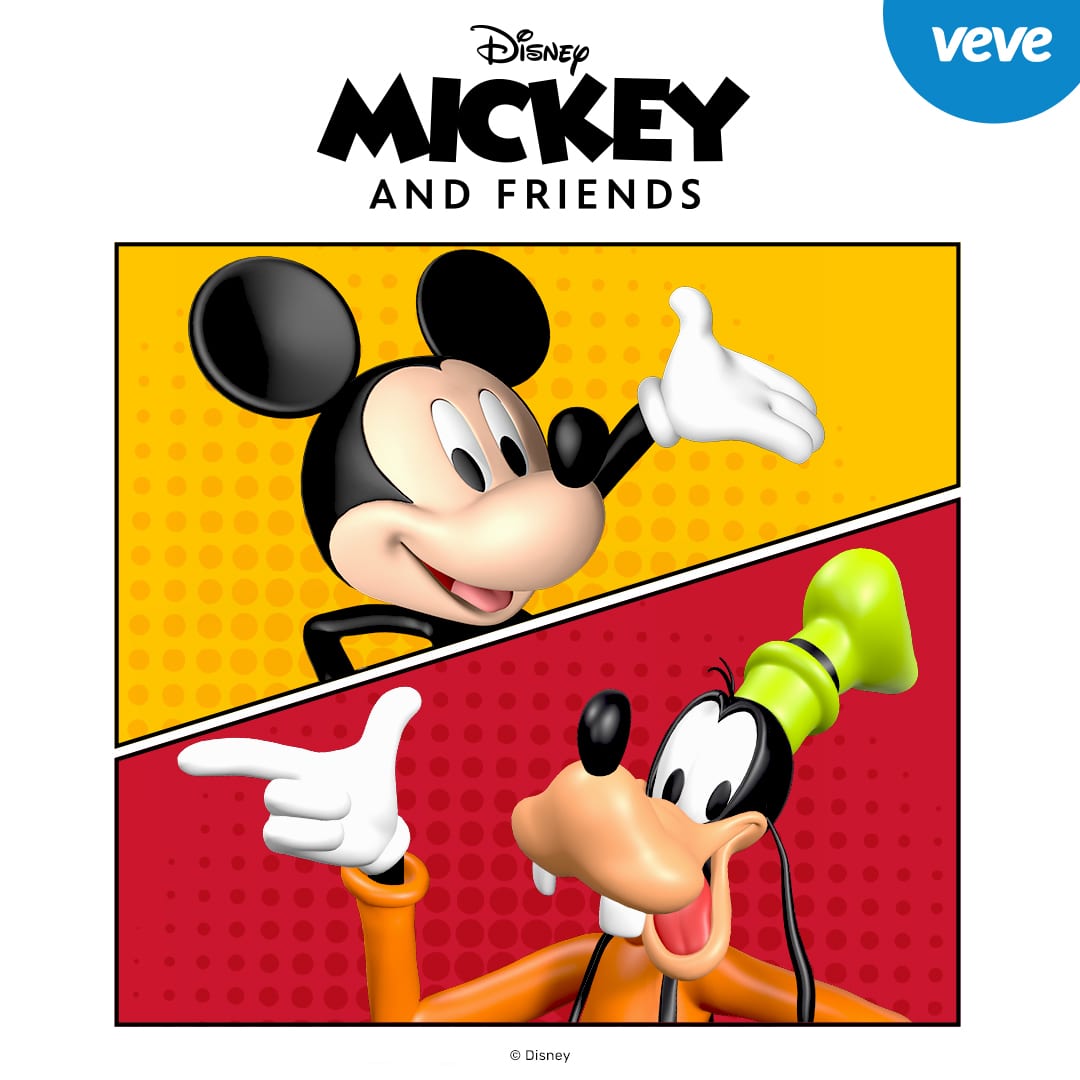
Character history. This is the one collectors feel most. A licensed first-appearance comic or a licensed figure connects to a real lineage - decades of stories, creators, and cultural weight. When you pull an official Mickey Mouse, you’re holding a numbered piece of a character with nearly a century of history. That thread of meaning is precisely what a knockoff can never have, because meaning can’t be copied, only granted.
Legal safety. Unlicensed IP collectibles are infringement, and rights holders enforce. Projects get struck down, delisted, and erased - and everything “collectors” held becomes radioactive overnight. A licensed collectible can be owned, displayed, and traded in the open, forever, with the rights holder’s blessing.
How did VeVe get the licenses nobody else could?
The short answer: the hard way, and early.
VeVe was built from day one as a licensed platform - not a crypto project that went looking for IP later, but a collectibles company that treated rights holders as the foundation. That posture is why the roster looks the way it does: official relationships with Marvel, Disney, Lucasfilm (Star Wars), Teenage Mutant Ninja Turtles, Solo Leveling, Ubisoft, and Avatar, among others.
Understand what that list represents. Disney and Marvel are the most protective IP holders on Earth. They said no to essentially the entire NFT industry - and worked with VeVe. Landing one of those deals would define a platform; VeVe assembled a shelf of them, plus official digital comics including genuine first-appearance issues released as numbered editions.
Those licenses also structure the whole collecting experience. Official drops arrive on a drop calendar with published edition counts and rarity tiers, because the licensor signed off on exactly what exists. Scarcity means something when the character’s owner is the one guaranteeing it.
What happened to the unlicensed projects?
Walk the graveyard for a minute, because it’s instructive.
The NFT boom produced tens of thousands of unlicensed projects - “inspired by” superheroes, bootleg anime characters, celebrity likenesses nobody cleared. The overwhelming majority are gone. Abandoned by their teams, delisted after takedowns, or simply evaporated when attention moved on, leaving behind dead links and dead communities.
The pattern isn’t random. Unlicensed projects had nothing underneath them - no character history, no accountable company, no reason to exist beyond the moment. When the moment passed, there was nothing left to collect for. A collectible is only as durable as the meaning attached to it, and borrowed meaning gets repossessed.
Licensed platforms weathered the same storms because the thing being collected - Spider-Man, Mickey, the Turtles - matters independently of any market weather. Marvel’s characters have survived wars, bankruptcies, and every entertainment-industry upheaval since the golden age. A platform anchored to IP like that is anchored to the most durable stories in popular culture. That durability, not hype, is the real case for VeVe over the field - we lay out the full picture, flaws included, in our honest VeVe review, and if you want to survey what else is out there, the alternatives comparison names them plainly.
Why do fans always pay for the real thing?
Because collecting has never been about the object. It’s about the connection the object certifies.
This is why fans buy the official jersey when a knockoff costs a third as much and looks nearly identical from ten feet away. Why an official Hot Toys figure sits behind glass while the convention-stall bootleg gets left in a drawer. Why a licensed replica lightsaber feels different in your hands than a toy that legally must be called a “laser sword.”
The official version is a handshake with the thing you love. The club crest, the studio seal, the Marvel logo - they certify that your fandom and the real story touched. A bootleg can only ever certify that you wanted the feeling without the connection, and every collector who’s owned one knows it never quite delivers.
Digital collecting is that exact psychology with the dial turned up. When the object itself is digital, the license does even more of the work - there’s no fabric or paint to judge, so authenticity carries nearly all the meaning. Which is why “is it officially licensed?” isn’t one question among many in this hobby. It’s the first question, and for a lot of veteran collectors, close to the only one.
The one-question filter
Here’s the takeaway, portable enough to use anywhere: before anything else about a digital collectible, ask who licensed it.
A real license means authenticity, quality control, character history, legal safety, and a platform with accountable partners. No license means you’re collecting a copy of a feeling. Every hour you’d spend evaluating an unlicensed project is answered in one second by that single question - and it’s the reason this site covers VeVe rather than the graveyard. The characters you actually grew up with are all in one place; browse the full roster and you’ll see what a real license shelf looks like.
Choosing Licensed Collectibles
The best way to feel the difference a license makes is to hold the real thing. VeVe gives new collectors US$10 in free credit - no card required - enough to claim your first officially licensed collectible from Marvel, Disney, Star Wars or TMNT and see the official art up close. Claim your free US$10 here, pick the character that means something to you, and collect the real one.