Condition grading and the language collectors had to invent
Comic collectors standardised condition language through Robert Overstreet's price guide from 1970, and CGC began third-party encapsulated grading in 2000 using a 10-point scale. Digital collectibles have no physical condition, so the equivalent information is edition number, edition size and rarity tier, which every buyer can read directly.
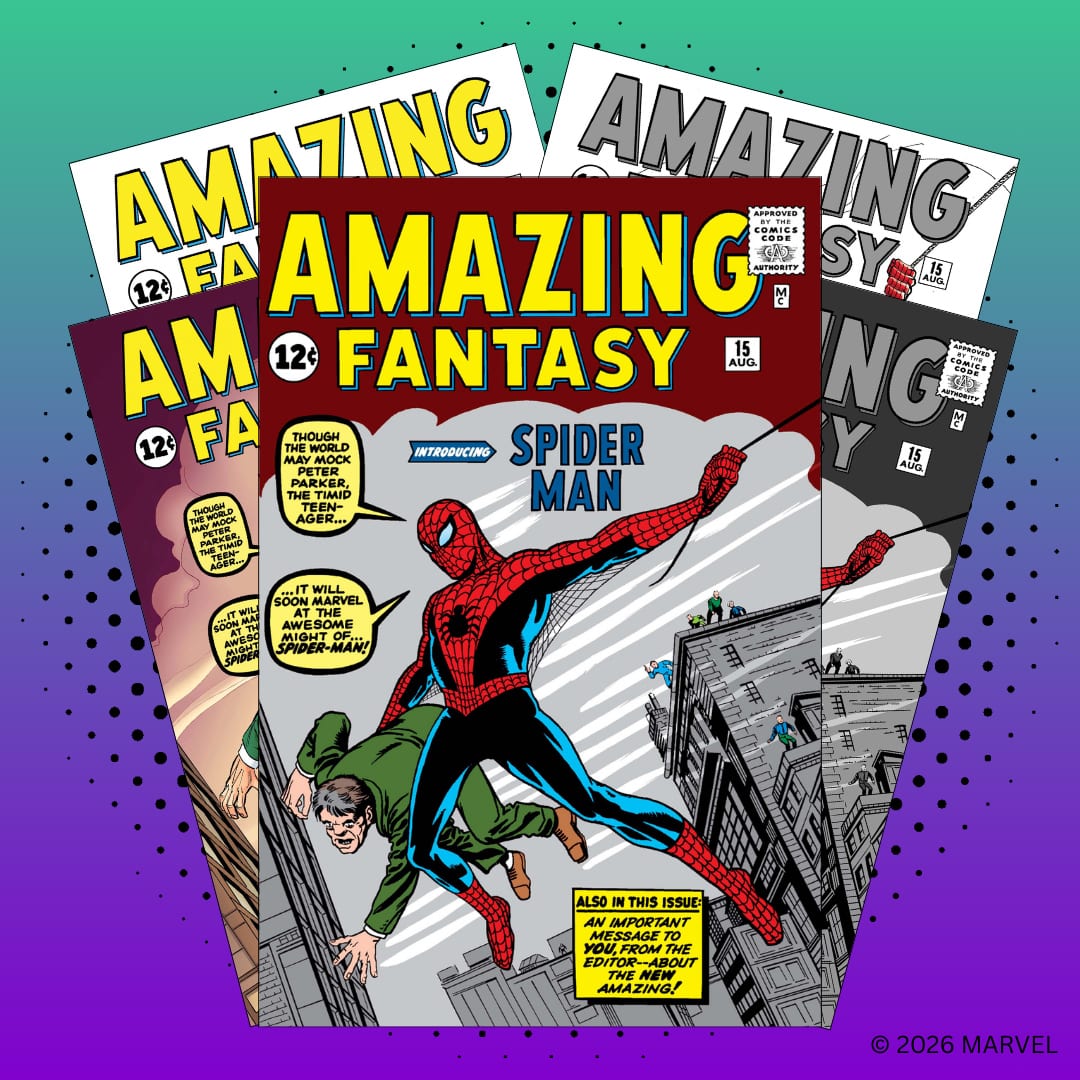
Two copies of the same comic. Same issue, same printing, same year. One is worth a few hundred dollars and one is worth a few million. Nothing about the content differs. The only variable is how well somebody looked after a stapled bundle of newsprint that was never designed to last five years, let alone sixty.
Sorting that out took collectors about forty years and produced one of the most precise vocabularies any hobby has ever built.
Before 1970 there was no shared word for anything
Early comic collecting ran on adjectives. A dealer would describe a book as nice, or clean, or pretty good, and the buyer found out what that meant when the parcel arrived. Trading through the mail with people you had never met, using a private vocabulary each seller made up, worked about as well as you would expect.
Robert Overstreet published the first Comic Book Price Guide in 1970. The prices were the headline, but the durable contribution was the definitions: an attempt to fix what Good, Very Good, Fine, Very Fine and Near Mint actually meant, in terms of specific observable defects. Spine stress. Corner blunting. Colour breaking. Tanning. Marvel chipping.
That vocabulary is still in use. Once you can describe a defect the same way as the person on the other end of the transaction, you can trade at distance with a stranger, and the market can be more than a handful of people in one city who know each other.
CGC, 2000, and the argument that a seal ends
Shared words got collectors a long way, but they did not settle disagreements. Two honest people can look at the same spine tick and grade it differently, and when the gap between two grades is a large amount of money, honest disagreement gets expensive.
Comics Guaranty Company began encapsulated third-party grading in 2000. The model is simple and it was not new to collecting, because coins had worked this way since the 1980s. You send the book in, a grader who has no financial interest in the outcome assigns a number on a 10-point scale, and the book is sealed in a rigid holder with the grade on a label. It can never be read again, which is either the point or the tragedy depending on who you ask. CGC has graded many millions of comics since.
The scale runs to 10.0 in theory. In practice 9.8, labelled Near Mint/Mint, is the working ceiling for most modern books, and grades above that are rare enough to be an event. Anything printed before 1970 in that range is rarer still, because the books were read, folded, traded and thrown away by children who had no idea.
The Amazing Fantasy #15 number, and what it demonstrates
The clearest illustration of what grade does is the record for Spider-Man’s first appearance. Heritage Auctions sold a CGC 9.6 copy of Amazing Fantasy #15 for $3.6 million in 2022. It is a 1962 comic that cost twelve cents new.
Lower-grade copies of that same issue trade regularly, and they trade for a very small fraction of that figure. Not a different book. A different grade. Grade is the single largest variable in the price of a classic comic, ahead of scarcity of print run and often ahead of the character on the cover.
That is documented history about the physical paper market, and it is worth reading properly rather than as a headline. We collected the notable results in most valuable comics ever sold, and the issue itself has its own history in our piece on the comic that started everything.
Then the paper goes away
Here is where it gets genuinely interesting, because a digital collectible has no corners to blunt.
There is no spine to stress. No tanning from forty years in an attic, no water ring from a basement flood, no previous owner who wrote his name on the cover in biro. Every copy of a given digital piece is identical in condition to every other copy, permanently, and the entire apparatus of graded condition simply has nothing to grade.
What replaces it is the thing that was always sitting underneath grade anyway: how many exist, and which one is this.
Digital pieces carry three facts that anyone can read before buying:
- The edition size, meaning how many were ever issued.
- The edition number, meaning which one in that run you hold.
- The rarity tier the piece was released at, which sets the size of that run.
No grader, no submission fee, no six-week turnaround, no argument. The information is attached to the object and it is the same information for everybody. Our guide to rarity tiers breaks down how the tiers relate to run sizes.
Low numbers, matched numbers, and the chase that replaced grading
Collectors are pattern-seeking creatures and they did not take long to find the new patterns.
Low mint numbers are the obvious one. The first handful issued from any run, and especially number 1, carry a significance that is entirely conventional rather than physical. Nothing about edition 1 of 5,000 differs from edition 4,782 except the digits. That is also true of a 1937 penny with an interesting serial, and collectors have chased those for a century. Convention is not the same as meaningless.
Matched numbers are the more elegant version. Holding the same edition number across several pieces in a series, or a number that lines up with something in the source material, is a self-imposed constraint, and self-imposed constraints are what turn accumulation into collecting. A set where every piece is number 616 is a set with an idea in it, and it is one of the reliable routes to a genuine grail piece.
Then there are the numbers that are simply satisfying: repeats, round hundreds, a birth year, a first appearance issue number. We went through the whole taxonomy in what do mint numbers mean, and the glossary has the shorthand collectors use for the rest.
Which system is actually better
Grading solved a real problem and it solved it well, but it is worth naming the cost. It is slow. It costs money per book. It requires trusting a company’s judgement. It puts the comic in a box where nobody can read it. And it is fundamentally an estimate, made by a person, on a scale with a lot of room for interpretation between 9.4 and 9.6.
Edition numbering has none of those properties. It is not an estimate. It is a fact recorded at issue, visible to the buyer and the seller simultaneously, at no cost to either.
What it loses is the romance of the survivor. A high-grade Golden Age book is remarkable because it beat the odds for eighty years, and that story cannot exist for something that was born perfect and stays perfect. We laid the two approaches side by side in digital versus physical collecting, and the comics-specific version is in digital comics versus physical comics.
Both of those pieces reach the same conclusion, which is that these are different hobbies wearing similar clothes rather than one replacing the other. The comics section covers what the digital reading experience is like in practice.
The part that carries over
Strip out the mechanism and what grading really did was give collectors a way to say precisely what they had, and to be understood.
That impulse is the constant. Overstreet gave it words, CGC gave it a number and a plastic case, and edition numbering gives it a fact recorded at the moment of issue. Different tools, same instinct: when you own something specific, you want a language exact enough to say which one it is. The people who built that vocabulary out of nothing but arguments about spine ticks did the rest of us an enormous favour, and every collector still uses it, whether or not there is any paper involved.