The Avengers #1 and the team that Loki started
The Avengers #1, cover-dated September 1963, was written by Stan Lee and drawn by Jack Kirby. Loki's plot to frame the Hulk accidentally brings Thor, Iron Man, Ant-Man and the Wasp together, and the Hulk quits the team one issue later.
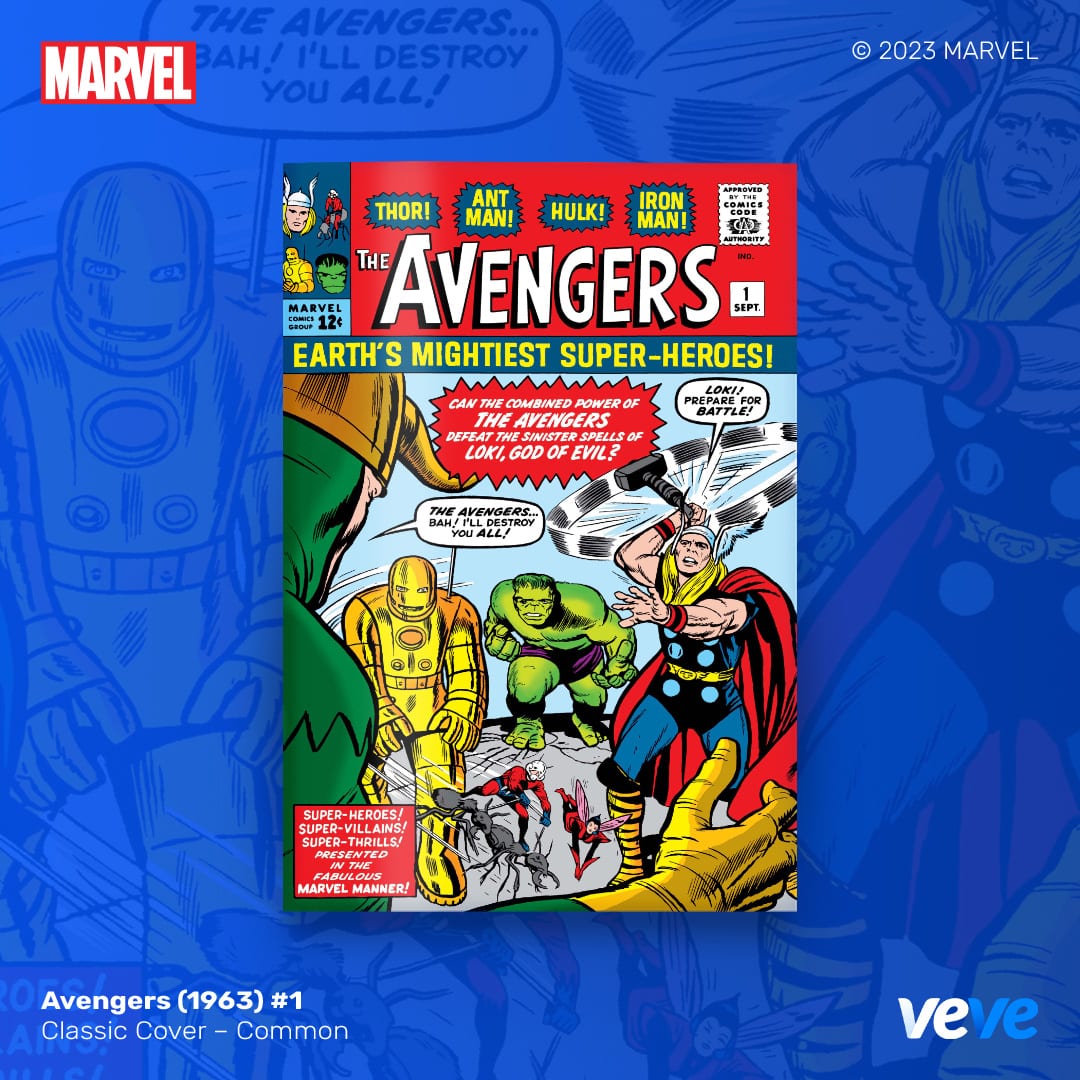
The villain builds the team. That is the joke at the bottom of Marvel’s biggest franchise and it has been there since the first issue: Loki, stuck on the Isle of Silence and looking for a way to hurt his brother, tricks the Hulk into wrecking a railway line. The plan works perfectly until it works too well and five people who have never met arrive at the same place.
Twelve cents, September 1963
Stan Lee wrote it, Jack Kirby penciled it, Dick Ayers inked it and Artie Simek lettered it. The Avengers #1 went out with a September 1963 cover date at twelve cents, in the same month Marvel shipped X-Men #1, which tells you something about how much work two men were producing that year.
The plot is efficient in a way that modern comics rarely bother with. Rick Jones and his Teen Brigade radio for help from the Fantastic Four. Loki bends the signal so that Thor hears it, because Thor is the one he actually wants. The signal also reaches Iron Man, Ant-Man and the Wasp. They converge on the Hulk, who is hiding in a circus disguised as a robot, which is exactly as strange as it sounds. Thor works out who is really behind it, goes to the Isle of Silence, and drags Loki back to face everybody. The Wasp suggests they stay together. She also picks the name.
Twenty-two pages. No decompression, no arc, no variant covers.
Why 1963 and not 1961
DC had already proved the idea. The Justice League of America, assembled in The Brave and the Bold #28 in 1960, sold well enough that Martin Goodman noticed, and by Lee’s own account it was that conversation that pushed Marvel toward the Fantastic Four. A team book made of brand new characters came first. A team book made of characters who already had their own titles was a different bet.
That bet only became possible once Marvel had the inventory. By mid-1963 there were enough solo features on the schedule to raid. It also solved problems. The Hulk’s own title had been canceled after six issues the previous spring, and Ant-Man was sharing space in an anthology. A team title gave homes to characters whose individual books were struggling and cross-promoted the ones that were not. Every reader who bought Journey Into Mystery for Thor now had a reason to try Tales of Suspense for Iron Man.
There was a production argument for it as well. Kirby was drawing an absurd share of the line that year, and a team title let one book carry four features’ worth of characters without four separate origin stories to set up. Readers arrived already knowing who everyone was. That is free page space, and Lee spent it on the characters bickering.
Assembling a cast out of existing solo stars is standard practice now, across comics, film and games. In 1963 it was a commercial experiment, and the thing that made Marvel’s version work was that the characters did not like each other.
The roster was the invention
Most team books pick a lineup and defend it. Lee and Kirby did the opposite almost immediately.
The Hulk quits in issue #2, cover-dated November 1963, because the others treat him like a monster and he is not wrong about that. By #3 he is fighting them alongside Namor. Issue #4, in March 1964, pulls Captain America out of a block of ice and hands the team a moral center it did not previously have. And by issue #16, every founding member except Cap has walked away, replaced by three former villains in Hawkeye, Quicksilver and the Scarlet Witch.
Sixteen issues to replace the entire cast. That is the structural idea the title has run on ever since, and it is why the book survived when so many 1960s team titles did not. The Avengers is a building, not a band. People move in and out of it and the thing keeps standing, which also gave the films sixty years of casting flexibility to work with. The 2012 film took over $1.5 billion worldwide and Endgame reached roughly $2.79 billion in 2019, briefly the highest-grossing film ever released.
The census problem with a 1963 newsstand book
Nobody bought this to keep it. Avengers #1 went to spinner racks, drugstores and newsstands, was sold to children at twelve cents, and unsold copies were returned as stripped covers for credit and destroyed. The direct market and the idea of a comic as a preserved object were more than a decade away.
What survives, survives by accident. High-grade copies of Avengers #1 are genuinely scarce, and the usual Silver Age failure modes show up on nearly all of them:
- Spine stress from being folded open by a reader who had no reason to be careful.
- Tanning and brittleness, because 1963 newsprint was cheap paper with high acid content.
- Marvel chipping along the top edge, a known trimming quirk of Marvel’s printers in that era.
- Arrival date stamps in ink on the cover, applied at the distributor.
Copies in the highest certified grades have sold into the six figures at Heritage Auctions when they come to market, and they do not come to market often. That is documented history about a paper collectible, and it is the direct result of a book that nobody in 1963 thought was worth saving.
What the licensed digital edition offers
VeVe releases officially licensed Marvel digital comics, including Silver Age key issues. A licensed digital edition is the full book as a numbered copy: all twenty-two pages readable in the app at a size that shows Kirby’s staging properly, with your edition number recorded publicly rather than held privately. The mint number explainer covers why collectors care which copy they pulled, and the comic reader itself is worth understanding before you buy anything.
It is not a 1963 newsstand copy and does not pretend to be one. What it is is a way to read the issue as a complete comic, own a specific numbered edition of it, and keep it next to the Asgard material and the rest of your Marvel shelf.
Read it for the arguing
The surprise, coming to Avengers #1 after fifteen years of films, is how little ceremony it has. There is no montage, no swelling theme, no moment where five heroes stand in a circle. A god, a millionaire in a metal suit, two scientists the size of insects and an angry green man all show up to the same emergency and decide, more or less out of convenience, to keep the phone number.
The friction was the point from page one. Marvel’s other team was a family. This one was a group of professionals who found each other irritating, and sixty years later that is still the version everybody writes.