Journey into Mystery #1, ten years before Thor picked up the hammer
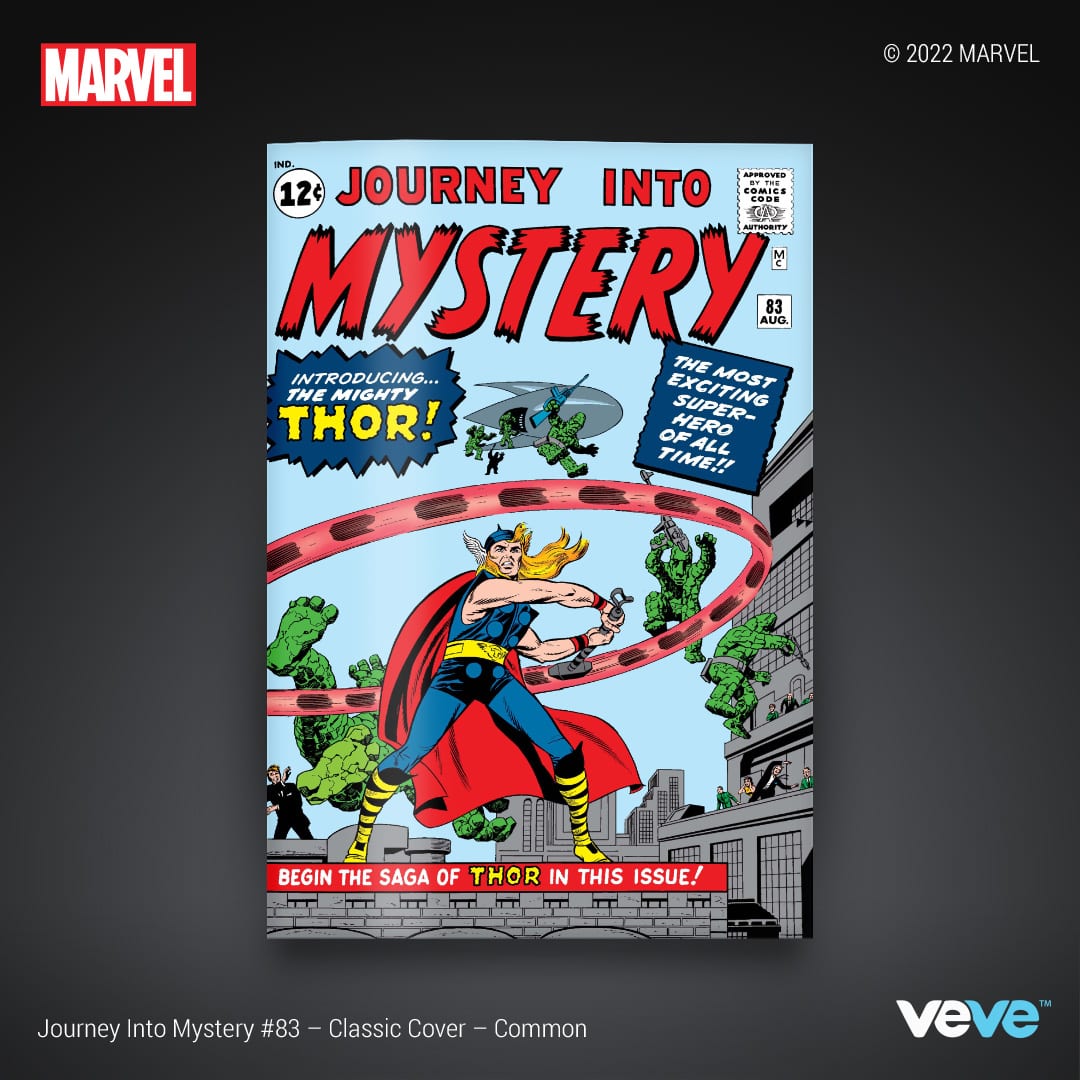
Journey into Mystery #1, cover dated June 1952, was an Atlas Comics horror and suspense anthology with no superheroes in it. Thor did not appear until Journey into Mystery #83 in August 1962, ten years later. VeVe carries a licensed digital edition of the 1952 first issue.
Nobody kept this one on purpose. Journey into Mystery #1 was a ten-cent horror anthology from a publisher that was putting out dozens of nearly identical books, sold off a wire rack next to the chewing gum, read once, and thrown in a bin. That is not a slight on it. That was the entire business model of American comics in 1952, and understanding it is the only honest way to talk about what a surviving copy means.
Cover dated June 1952. Published by Atlas Comics, which was Martin Goodman’s operation and which would be renamed Marvel within a decade. Four short stories of horror and suspense, no continuing characters, no costumes, nobody who would ever be seen again.
Thor is not in this comic
Worth saying plainly, because the two facts get welded together in listings and conversation all the time.
Thor debuted in Journey into Mystery #83, cover dated August 1962, in a story by Stan Lee, Larry Lieber and Jack Kirby. Don Blake, an American doctor on holiday in Norway, hides in a cave from an alien invasion, finds a wooden walking stick, strikes it against a rock and becomes the thunder god. That is issue eighty-three. The title carried on as Journey into Mystery until issue #126 in 1966, when it simply became Thor and stayed that way.
Issue one has none of that. Ten years and eighty-two issues separate the two books, an entire publishing era sits between them, and the company that made the second one was structurally different from the company that made the first.
What an anthology comic was for
In the early fifties the industry was selling comics in numbers that are hard to picture now. Tens of millions of copies a month across every publisher, sold through newsstands, drugstores, bus stations and groceries, at ten cents, to an audience that included a very large number of adults.
Horror was the hottest category on the rack. EC Comics had proved that gruesome, well-crafted short fiction sold, and the rest of the industry came in behind it at volume. Goodman in particular was famous for flooding a genre the moment it showed results, and Atlas at its peak was publishing an enormous line of near-interchangeable titles. Journey into Mystery was one of them: a container for four stories a month, with a title chosen because it sounded like the others.
There is real craft inside these books. Atlas kept good artists busy, and a well-made 1952 horror short does in six pages what a modern comic takes an arc to do. There is also a great deal of filler, because a line that size cannot be selective. Both things are true and collectors who pretend otherwise are selling something.
The year everything changed
In 1954 the psychiatrist Fredric Wertham published Seduction of the Innocent, arguing that comics were causing juvenile delinquency. The United States Senate held subcommittee hearings on the subject that April. Public burnings organised by schools and church groups had already been happening in towns around the country in the late 1940s, with children encouraged to bring their collections to the fire.
The industry responded by regulating itself before someone else did it. The Comics Code Authority arrived later that year, and the standards it imposed were not subtle: no vampires, no werewolves, no zombies, no ghouls, and the words horror and terror banned from cover titles outright. EC’s horror line was finished. So was everyone else’s.
Journey into Mystery survived by changing shape. The horror drained out of it and science fiction and fantasy filled the gap, and through the late fifties and early sixties it ran monster shorts with Kirby and Steve Ditko art. Those monster stories are the direct ancestor of what Marvel did next. When the superheroes finally arrived, they arrived in a house that had spent eight years drawing things that were bigger than buildings.
Three years after the Code, in 1957, Atlas collapsed a second time when its distributor left the business. Goodman signed with a distributor owned by his largest competitor and accepted a cap of eight titles a month. That ceiling is why Fantastic Four #1 in 1961 had to work, and why Thor was put into an existing anthology in 1962 rather than given a title of his own.
Why early anthology issues are genuinely scarce
This is the part that gets talked about loosely, so here is the mechanism.
- Print runs were large. Hundreds of thousands of copies was normal for a title like this, which is a bigger run than most single issues manage today.
- Almost none of it came back. Unsold copies were not returned intact. Distributors stripped the covers off for return credit and destroyed the interiors.
- Nobody preserved them. There was no collector market, no bags, no boards, no back-issue shops. A comic was a disposable magazine for children and it was treated exactly that way.
- The 1954 panic actively destroyed stock. Horror books specifically were thrown out, confiscated and burned by people who believed they were harmful.
- The paper was cheap. Fifties newsprint browns and goes brittle, and a copy stored in a garage for seventy years will not grade well however carefully it was read.
Stack those together and you get the defining fact of Golden and early Silver Age collecting: a huge print run and a tiny survival rate are not a contradiction. Graded census counts for pre-Code Atlas horror first issues in high condition tiers run in single or low double digits.
This is the same arithmetic that produces the famous numbers at the very top of the market. A CGC 8.5 copy of Action Comics #1 sold for $3.25 million through ComicConnect in 2021, and it did so because of condition scarcity in a book that originally sold hundreds of thousands of copies. The broader version of that story is in the most valuable comics ever sold. Journey into Mystery #1 does not operate anywhere near that tier and never will, but it is shaped by the same forces, and pre-Code horror as a category has held serious collector attention at Heritage and elsewhere for years.
What the licensed digital edition actually is
VeVe publishes officially licensed digital comics, and Journey into Mystery #1 is in that line. In practical terms it is a numbered copy of the complete 1952 issue: every page, read full screen in the app, with the edition number recorded on a public ledger so anyone can look up which copy sits in your collection.
For a book like this one the reading part carries most of the value. A clean physical copy of a 1952 Atlas anthology is a fragile object that you handle carefully and do not read often, and most people who want to see the stories are looking at scans anyway. A licensed edition gives you the pages at full size with the original colour, the original ad pages and the original lettering intact, which is closer to the 1952 experience than a recoloured reprint on glossy stock. Our comics section covers the rest of the line, and digital comics versus physical comics lays out where each format is honestly better.
The cave in Norway
There is something fitting about the god of thunder showing up in a title that had spent ten years publishing stories about ordinary people finding things they should have left alone. Don Blake picks up a stick in a cave. That is a Journey into Mystery plot. The only difference is that this time the story did not end on page six.
Marvel got one of its three or four biggest characters out of a horror anthology that was running on fumes, and eighty-two issues of disposable short fiction turned out to be the run-up. More on where he went next at the Thor character hub, in the Asgard collectors guide, and alongside Loki across the wider Marvel line.