Amazing Spider-Man #252 and the arrival of the black suit
Amazing Spider-Man #252, cover-dated May 1984, is the first appearance of the black costume in the main title, arriving on the stands months before Secret Wars #8 explained where it came from. The design started as a reader submission that Marvel bought for $220, and it became the basis for Venom four years later.
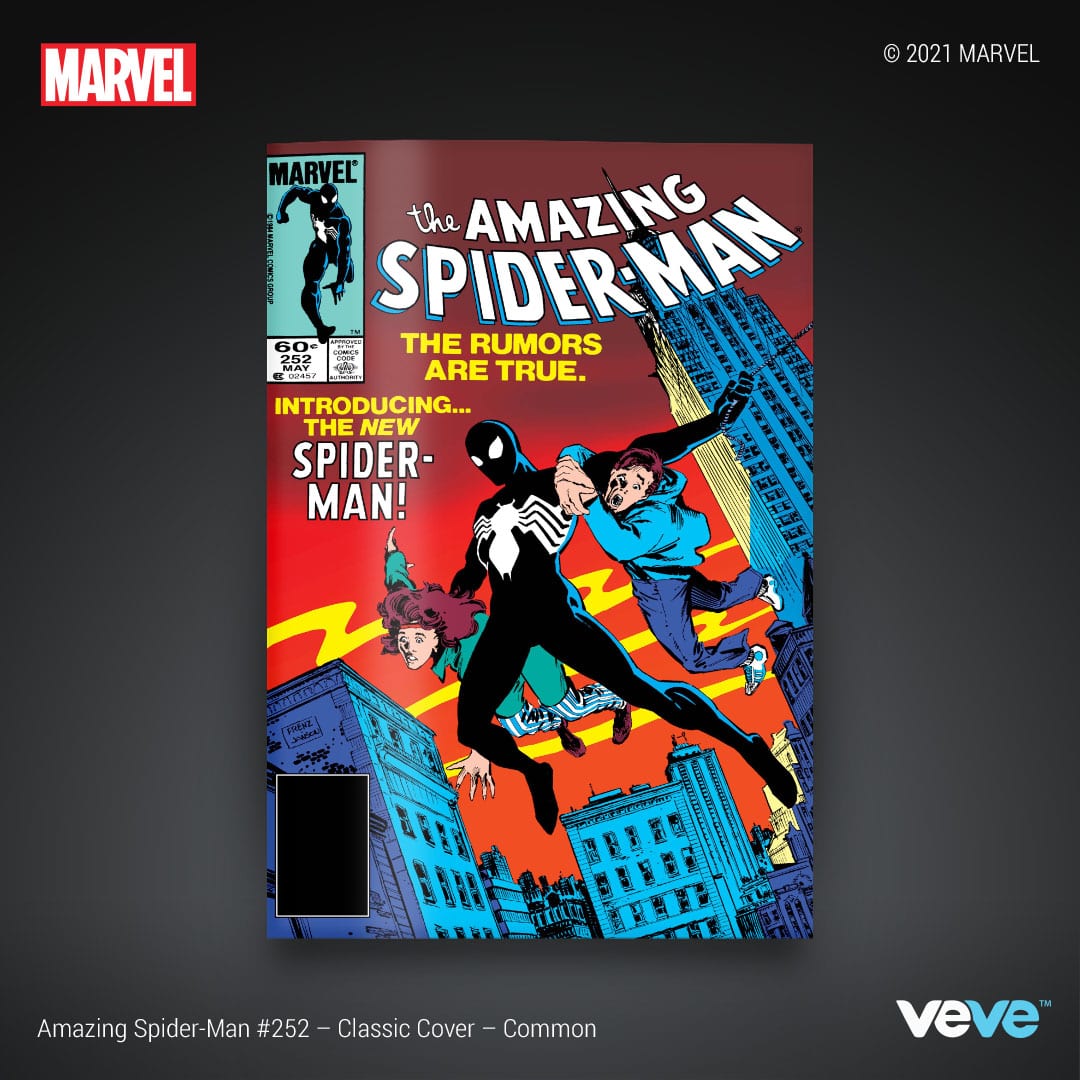
The suit turned up with no explanation. Readers who picked Amazing Spider-Man #252 off a spinner rack got a Spider-Man in black and white, a white spider stretched across his chest instead of the red webbing, and a story that treated the change as old news. Peter had been away. He came back wearing this. Nobody in the issue seemed especially bothered.
A cover that steals from 1961 on purpose
Cover date May 1984. Roger Stern wrote it, Ron Frenz penciled, Brett Breeding inked the interiors, and the cover is a Frenz and Klaus Janson job that deliberately restages Fantastic Four #1: a New York street, bystanders reacting, the figure front and center where Kirby had put the Thing. Marvel was celebrating its own house style by quoting the issue that started it, and the joke works whether or not you catch it.
The issue is called “Homecoming!” and Marvel did not run the change quietly. That same month the black costume appeared in Peter Parker, The Spectacular Spider-Man #90 and Marvel Team-Up #141. Three titles, one month, no origin story anywhere in them.
The explanation was sitting in a limited series that had not shipped yet. Secret Wars #8, where Peter finds a machine on an alien world that spits out a living black suit, carried a December 1984 cover date. So for the better part of a year, the biggest visual change in Spider-Man’s publishing history was a thing readers just had to accept. That gap would be unthinkable now. It was also, accidentally, great marketing.
Two hundred and twenty dollars
The design did not come from an editorial retreat. In 1982 a fan named Randy Schueller sent Marvel an unsolicited pitch that included a black Spider-Man costume. Jim Shooter, then editor in chief, wrote back and offered to buy the idea. The check was for $220.
Marvel paid it, the concept went into the pile, and Mike Zeck did the design work that produced the version everyone knows: solid black, white spider, no webbing lines, silhouette doing all the work. Schueller’s name sat outside the credits for years before the story got told properly.
It is one of the better true anecdotes in comics, and it says something about how this industry actually operates. The most recognizable costume redesign of the 1980s cost less than a month of rent.
Why black was a bigger change than it looks
The red and blue suit is busy. Webbing lines, panel breaks, two bold colors fighting each other. Artists spend real time on it, and in a fight scene at speed it turns into noise.
The black suit is a shape. It reads at any size, in any lighting, at any distance, which is why it took over merchandise, video games and a Sam Raimi film in 2007 with such little resistance. Give an artist a silhouette that clean and they will find things to do with it.
It also let the art department do something they could not do with red and blue: put Spider-Man in the dark. Shadow work on the old costume flattens it into mud, because two saturated colors under a night sky stop reading. The black suit gains from low light. A generation of moody, rain-slick Spider-Man pages became possible the month this issue shipped.
Stern and Frenz also used it to change Peter. The suit responds to thought, makes its own webbing, and cleans itself, all of which sounds convenient until issue #258, when Reed Richards puts it under a scanner and tells Peter he has been wearing a living organism. Peter panics. He gets it off. That is the moment the story stops being a costume change.
From wardrobe to a villain
What Marvel had built, without quite meaning to, was a rejected creature with a grudge. The symbiote goes looking for a second host, finds a disgraced reporter named Eddie Brock who blames Spider-Man for his career, and the two of them arrive together in Amazing Spider-Man #300 in May 1988. Venom is the black suit plus a man who hates you.
Four years separate issue #252 from that. In publishing terms it is a long fuse, and it only worked because the costume itself had already become popular enough that readers had opinions about it. The symbiote side of Spider-Man has been a permanent fixture ever since, with its own books, its own hosts and its own corner of the wider Marvel line.
The collecting reality of a 1984 book
Comics from 1984 sit on the hinge between two distribution worlds. Newsstand copies were still shipping to drugstores and supermarkets, returnable and roughly handled. The direct market, where comic shops bought non-returnable and buyers knew to bag what they liked, was growing fast.
That mix explains the census. Amazing Spider-Man #252 is not a scarce book in absolute terms. Plenty of people in 1984 already understood the concept of keeping a comic nice, and plenty of shops set copies aside. What is scarce is a copy that survived the newsstand path in top condition, and grading spreads the population out hard: the difference between a well-loved copy and a top-graded one is the difference between two entirely separate markets.
Worth knowing if you ever chase a physical copy:
- The Canadian price variant of this issue exists and is genuinely scarcer than the standard run.
- Direct edition copies carry the boxed logo in the corner rather than the barcode.
- Spectacular Spider-Man #90 and Marvel Team-Up #141 are the same month’s black-suit debuts and get overlooked next to it.
What the digital edition is
VeVe releases officially licensed Marvel digital comics, issue #252 among them, and the thing to understand is that it is the whole book rather than a cover image. You read all of it in the app, full screen, at a size the original newsprint could never hold, and the specific edition number you own is recorded publicly instead of living in a private account ledger. We wrote up why collectors care about that number and how the comic reader itself works elsewhere.
A licensed digital edition of #252 is not a 1984 newsstand copy and nobody should pretend otherwise. It is a way to read the issue properly and hold a numbered edition of a book that changed how Spider-Man looks.
The joke at the center of it
The best detail in the whole saga is that Peter keeps wearing it. Even after Reed’s diagnosis, even after the sonics and the panic of getting it off him, he goes back to a cloth copy of the black suit because he likes how it looks. Vanity, basically. The most famously guilt-ridden character in comics made a fashion decision and it cost him a decade of his life.