Why a vehicle anchors a collection better than a hero
Vehicles anchor a collection because they set its scale. They are physically larger, appear in far smaller numbers than characters in any given lineup, and cost more to produce, so a display built around one vehicle gives every figure near it a sense of place and proportion.
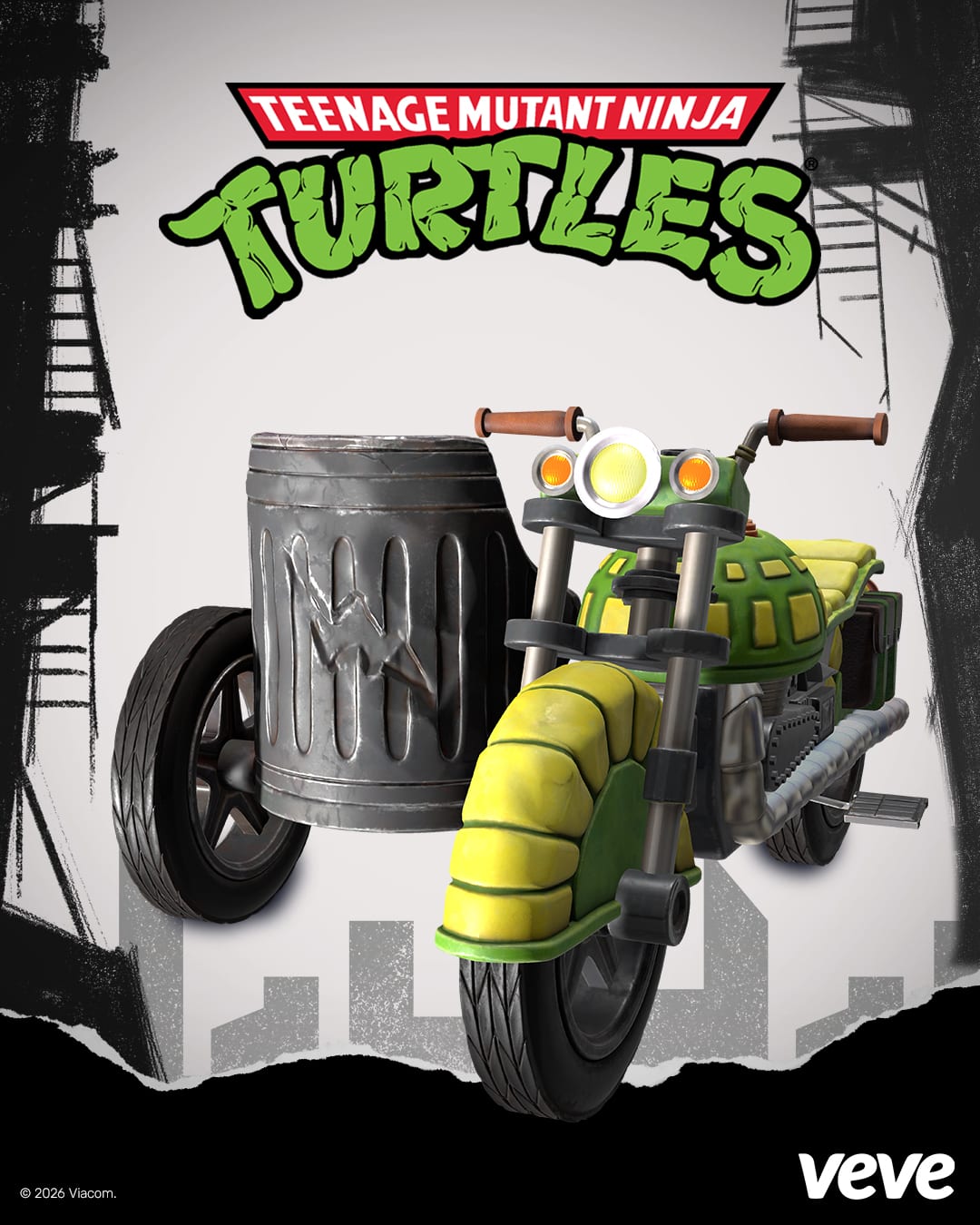
Most collections start with a favourite character and drift outward. Then one day a vehicle lands, and the whole thing reorganises itself around it. This happens to almost everybody, in almost every franchise, and it is not sentiment. It is geometry.
Scale is a thing you own, not a thing you choose
A shelf has no scale until something on it establishes one. Ten figures at roughly the same height give you a row. Add one large object and every figure near it becomes small, which is to say, becomes a person standing next to a machine.
That is the whole effect. A Millennium Falcon does not just occupy space, it tells your eye how big everything else is meant to be. So does an AT-AT, which does it more aggressively, because the design brief was literally to look like something that dwarfs infantry.
Character pieces cannot do this for each other. Two figures side by side are just two figures. It takes a difference in kind, not degree, and hardware is the only thing in most lineups that provides it.
Any franchise makes far fewer vehicles than characters
Count the roster of a long-running property and the imbalance is obvious. Teenage Mutant Ninja Turtles has four turtles, a rat, two henchmen, a warlord, a reporter, a vigilante and a long tail of mutants. It has a handful of vehicles.
The Technodrome is the extreme case. It debuted in the 1987 animated series as Krang and Shredder’s rolling fortress, a sphere covered in eyes that burrows under cities, and it has been the single most requested object in Turtles collecting ever since. It is not a vehicle in the way a car is a vehicle. It is a building that moves, which is why the Playmates playset version became a household legend among kids who had one and kids who did not.
The Turtle Cycle sits at the opposite end and matters for the same structural reason. Small, specific, tied to one character at a time. Between the two you have the range of the entire property, from a sewer chase to a subterranean war machine, and between them sit a couple of dozen figures with nowhere else to go.
The maths is consistent across licences. Vehicles are the minority category, they always were, and scarcity of type is a different thing from scarcity of copies.
Hardware is simply harder to make
There is a production reason vehicles show up less often, and it is worth understanding because it explains why they feel like events.
A humanoid figure reuses solved problems. The proportions are known, the articulation points are standard, the silhouette is familiar to everyone working on it. A vehicle is a fresh engineering problem every single time. Bigger tooling, more parts, more moving pieces, more ways for it to look wrong. In digital form the equivalent cost is modelling time and polygon budget, but the ratio holds. A ship takes longer than a person.
Nobody makes a vehicle casually. That is why they arrive with more fanfare and why collectors clear space in advance.
The die-cast century proves the point
The clearest evidence that people want the machines is a small blue box from 1966.
Corgi released a die-cast Batmobile that year off the back of the Adam West series, and it went on to sell in the millions, becoming one of the best-known toy cars ever produced. It was not a Batman figure. It was Batman’s car, and it outsold most of what else Corgi made. Children who could not have told you a single plot point wanted the vehicle.
Two years later Mattel launched Hot Wheels with sixteen cars and a strip of orange track. Mattel has since produced billions of cars, which by unit count makes it one of the largest manufacturing runs of any toy object in history. Not characters. Cars.
The same pattern shows up in the supercar world, which is why a Lamborghini collection behaves exactly like a character collection with the names swapped out. Ferruccio Lamborghini founded the company in 1963 after a career building tractors, reportedly following an argument with Enzo Ferrari about clutch quality. The Miura arrived in 1966 with its engine mounted transversely behind the driver and effectively invented the modern supercar. The Countach followed into production in the mid 1970s with the wedge profile and scissor doors that ended up on a poster in half the bedrooms in the western world. Those cars are characters. They have origin stories, rivalries and definitive versions, and people collect them with exactly the devotion normally reserved for a superhero.
In AR, a vehicle is the thing you put on the floor
Digital display changes the calculation in one specific way. Physical vehicle collecting runs into a hard limit fast, because a large object needs a large surface and most people do not have a spare table. That ceiling disappears when the object is rendered into the room instead of placed in it.
What replaces it is a placement decision, and it is the one that most improves a display:
- Put vehicles on the floor. At full scale a ship or a walker is read from below, which is how you saw it on screen and how it feels overwhelming.
- Keep figures on a table or a surface at eye level, so you are meeting them rather than looking down at them.
- Give hardware a clear gap on all sides. Vehicles need negative space in a way characters do not.
- Anchor a scene with one large object and let everything else relate to it, rather than lining pieces up by franchise.
That floor-versus-table split is covered more fully in the guide to displaying digital collectibles, and the mechanics of why room-scale placement works at all are in how AR collectibles work.
Start the theme with the machine
If you are assembling a themed run, the usual advice is to pick the character you love most and build outward. The better advice is to pick the vehicle and build around that, because the vehicle answers questions the character does not. It fixes scale, it fixes the setting, and it gives you a reason to say no to pieces that do not belong.
A Turtles display built around the Technodrome knows what it is. A Star Wars display built around the Falcon knows what it is. A display built around a favourite figure usually turns into a list. There is more on that in the guide to building a themed collection, but the short version is that hardware does the editing for you.
The shelf you remember from someone else’s house was never the one with the most pieces on it. It was the one with the big thing in the middle.