VeVe Artworks and the smaller creators on the shelf
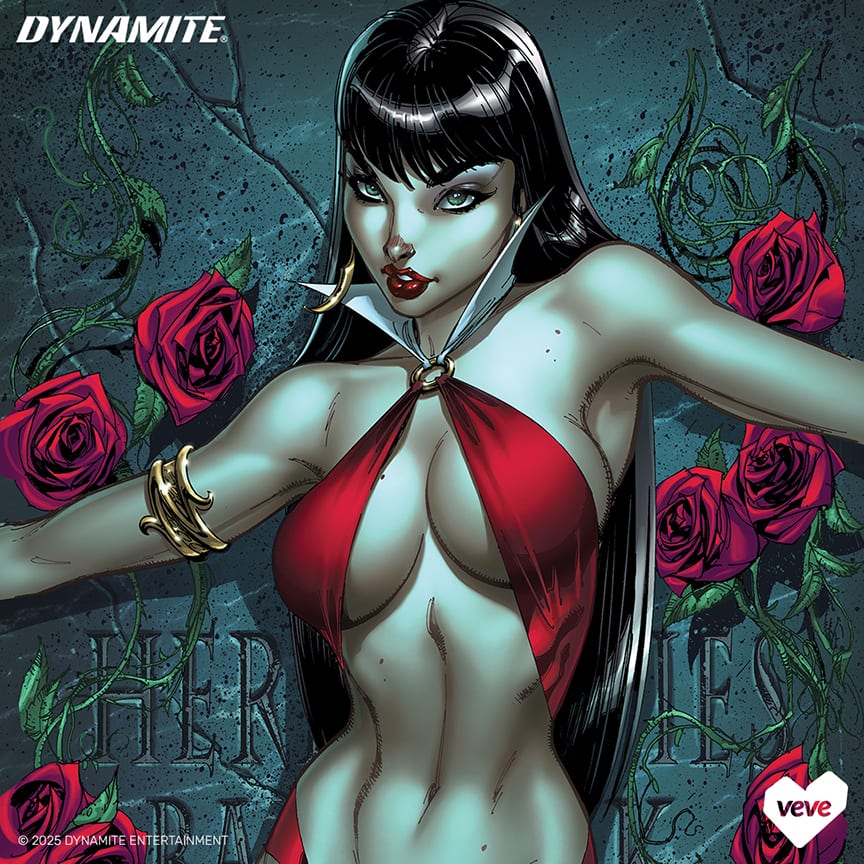
VeVe Artworks is the strand of the VeVe catalogue that carries art-led and creator-led releases rather than studio blockbusters. Visible examples include the Vampirella comic release, independent character lines such as Running Mon, designer toy collaborations including tokidoki, and brand partnerships. It sits alongside the Marvel, Disney and Star Wars material rather than replacing it.
Scroll far enough past the Marvel shelves and the catalogue changes character. A 1969 horror magazine cover. A line of folklore monsters by a single artist. Sushi crossed with supercars. Coca-Cola signage. A Dutch painter who died in 1944. None of it is a blockbuster and all of it is doing something the blockbusters cannot.
That corner of the platform is worth understanding on its own terms, because it answers a question collectors ask a lot: what is here that I could not get from a franchise drop.
What I can tell you, and what I cannot
One thing first, because a lot of writing about creator programmes is confidently made up. I am not going to describe an application process, a revenue split, or terms of participation, because those are not things I can verify and getting them wrong would be worse than useless.
What is visible is the catalogue itself. So that is the evidence base: the releases that exist, what kind of work they are, and what they have in common. That turns out to be enough to explain the shape of it.
Vampirella, and why she belongs in this section rather than the comics aisle
Vampirella #1 carries a cover date of September 1969 and was published by Warren Publishing, and the format matters more than the date. Warren published in black-and-white magazine format rather than as a colour comic book, and it did that deliberately, because the Comics Code Authority governed newsstand comic books and did not govern magazines. That single decision is why Warren could run horror content through the late 1960s and 1970s that no Code-approved publisher could touch.
The first cover was painted by Frank Frazetta, which is most of the reason anyone remembers issue one. Forrest J Ackerman, the science fiction editor and fan legend behind Famous Monsters of Filmland, supplied the concept, and Trina Robbins designed the costume. The interior look that stuck came later, from Jose Gonzalez, whose run through the 1970s is what most people are actually picturing when they picture the character. Warren folded in 1983, the rights moved to Harris Comics, and Dynamite Entertainment has published her since 2010.
So she is not a studio property in the Marvel or Lucasfilm sense. She is a character built by an independent horror publisher working around the rules, kept alive by artists rather than by a film franchise. Our longer piece on Vampirella #1 and the Artworks strand goes into the issue itself, and the Vampirella hub collects what is on the platform.
What a licensed platform gains by carrying smaller work
This is the part that looks like charity and is not.
A platform built entirely on major studio licences has a structural problem: it does not control its own schedule. Releases arrive when the rights holder wants them to arrive, tied to films, anniversaries and marketing calendars that belong to somebody else. Everything about the experience, including how often there is anything new to look at, is downstream of a handful of enormous companies.
Art-led and creator-led releases fix part of that. They are smaller, they are faster to produce, and the creative decisions do not run through three approval layers. They also give the catalogue range. A shelf with nothing but superheroes on it appeals to people who like superheroes, which is a lot of people and still a ceiling.
There is a credibility argument too. Carrying independent work signals that the platform is a place where art gets published rather than a merchandise channel, and that distinction matters to a certain kind of collector. It is the same reason a gallery that shows blue-chip names also shows people nobody has heard of yet.
What a creator gains
Distribution, mostly, and that word is doing heavy lifting.
An independent artist making a character line has the hard part solved and the easy part unsolved. The art exists. The audience does not. Building one from nothing means years of social media, conventions, a web shop, fulfilment, customs forms and a mailing list, and most of that work has nothing to do with drawing.
Putting work on a platform that already has an audience of collectors skips that. It also puts the work next to Marvel and Star Wars, which is a placement no indie creator gets in a physical store. That adjacency is worth something on its own. The same dynamic ran through the art toy movement from the late 1990s, where a solo artist’s figures sat in the same shop as mass-market vinyl and got taken seriously because of where they were standing. That history is the closest precedent for what is happening here.
What a collector gets that a franchise drop cannot provide
Four things, roughly.
- Sets you can finish. An indie line might be six characters. A franchise is effectively infinite, and there is a real pleasure in a complete set that a franchise never lets you have.
- Designs nobody had to approve. A licensed piece has to look like the character does everywhere else. An artist-owned one does not, which is how you get a folklore monster line or a car made of tuna.
- Craft as the subject. With a franchise piece, the character is the draw and the execution is a bonus. With art-led work it is the other way round.
- A different kind of story to tell. Running Mon’s folklore sources or the tokidoki character system are more interesting to explain than another variant costume.
None of that makes art-led pieces better than licensed ones. They are a different appetite. Plenty of collectors want the Marvel shelf and nothing else, and why official licences matter explains exactly what that permission buys and why it is worth paying for.
The mechanics do not change
Whatever strand a piece comes from, it behaves the same way in the app. It is a numbered edition, the number is recorded against your account, you can view it full-screen and place it in augmented reality, and you can arrange it on a shelf with anything else you own. A Vampirella cover and a sushi car can sit in the same display and the app does not care. What VeVe is covers the platform basics, and the glossary covers the vocabulary if any of the terms are new.
If you want to look at the art before deciding anything, start a free VeVe account and browse. New collectors get US$10 in credit toward a first piece, no card required, and the free credit page explains the details.
Warren Publishing put out Vampirella #1 in magazine format because that was the only way to print what it wanted to print. Fifty-seven years later, the interesting corner of a digital catalogue is still the one where somebody worked out a way to make the thing they actually wanted to make. Worth scrolling that far.