Uncanny X-Men #266: Gambit deals himself in
Uncanny X-Men #266, cover dated August 1990, is the first full appearance of Gambit, though he turns up briefly in X-Men Annual #14, which reached stands a little earlier. Chris Claremont wrote it and Mike Collins penciled it, introducing Remy LeBeau as a charming, secretive thief with the power to charge objects with explosive kinetic energy.
Storm shows up in New Orleans as a child with no memory of her adult life, and the man who helps her on the street is a card sharp in a trench coat who calls himself Gambit and keeps the rest to himself. Uncanny X-Men #266 carries an August 1990 cover date, and it is where Remy LeBeau walked into the X-Men’s orbit for good.
The setup Claremont built for him
Chris Claremont had been running Uncanny X-Men for well over a decade by 1990, and he used the storyline that had turned Storm back into a child to introduce Gambit sideways, through her eyes rather than his own. Mike Collins drew him as pure attitude: the coat, the visor, the cards held loose in one hand like he is always mid-bluff. Gambit teams up with young Storm on the streets of New Orleans, flirts, dodges every direct question about himself, and disappears again. His power, kinetic charging that turns a playing card into a small explosive, is on show, but his real name and his past are held back for later issues.
That patience was deliberate. Claremont liked introducing characters as mysteries first and explanations second, and Gambit is one of the clearest examples in his run. Readers got the voice and the swagger in #266 and spent the next several years getting the backstory.
Why the timing worked
Jim Lee’s art was becoming the biggest draw in the X-Men line by 1990, and Marvel was about to relaunch the franchise around him. Gambit debuted right as that momentum was building, and Lee, whose version of the X-Men was about to become the best-selling comic in American history with X-Men #1 in 1991, soon made him a regular in his own pages. A charming new mutant with a visual hook that strong, arriving at that exact moment, had a runway most new characters never get.
Gambit also filled a gap the team had not had since Wolverine’s early appearances: a member whose loyalties were not fully settled. He was a thief before he was an X-Man, and the book kept that tension alive for years rather than resolving it in his first arc.
What the character became
Gambit joined the X-Men outright not long after his debut and became a fixture of the Claremont-to-Lee era teams, paired romantically with Rogue in one of the franchise’s longest-running will-they-won’t-they arcs. His past in the Thieves Guild of New Orleans and his connection to Mister Sinister’s mutant-breeding schemes became a recurring engine for X-Men stories through the 1990s.
He crossed into wider pop culture through the 1990s X-Men animated series, reached live action with Taylor Kitsch in X-Men Origins: Wolverine and later Channing Tatum in Deadpool & Wolverine, and remains one of the most requested characters for any new X-Men adaptation, animated or live action.
The collecting picture
Uncanny X-Men #266 came out during one of the best-selling periods in the title’s history, so surviving copies are common. The issue’s value has always tracked the character’s popularity rather than scarcity: demand for high-grade copies rose with each X-Men film wave and again whenever Gambit gets serious screen attention, which has kept the book a steady presence at auction without ever behaving like a Silver Age rarity.
Reading Gambit’s world on VeVe
VeVe’s X-Men and broader Marvel catalog covers figures and artworks across the team’s decades of history, and its comics section carries licensed digital editions of key issues from the era, each one a numbered copy readable full screen in the app rather than a page scan. The mechanics behind editions and how VeVe records them publicly are covered in how blockchain provenance works.
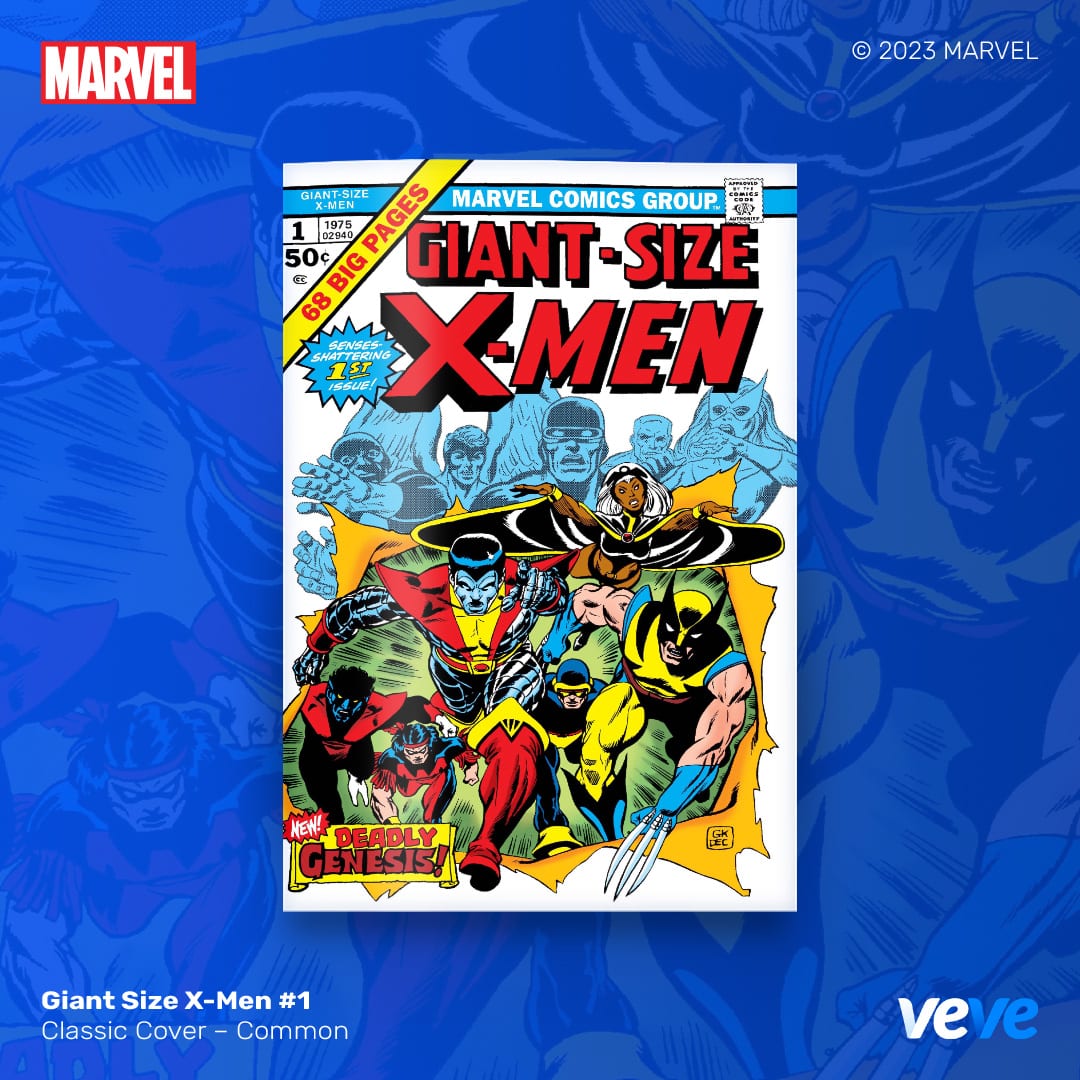
Readers who want a broader look at that period of the franchise can start with the Phoenix Five collectors guide or Giant-Size X-Men #1, the book that rebuilt the team Gambit eventually joined. To look around VeVe’s app directly, start a free VeVe account. New collectors get US$10 in credit toward a first piece, no card required, detailed on the free credit page.
The thief who stayed
Gambit was built to be unreadable, a character whose whole appeal was that the team, and the reader, could not quite pin him down. Three decades of comics, cartoons and films later, that first impression from a single 1990 issue has held. He still plays his cards close.