TMNT #1: the black and white comic two guys self-published in 1984
Teenage Mutant Ninja Turtles #1, self-published by Mirage Studios in 1984, is the first appearance of Leonardo, Michelangelo, Donatello, Raphael and Splinter. Kevin Eastman and Peter Laird created and drew it together, printing a small independent run that has since become one of the most valuable modern-age comics.
Two young artists with no publisher pooled their money, borrowed the rest from a relative, and printed a black and white comic book about four mutant turtles trained in ninjutsu by a rat. Teenage Mutant Ninja Turtles #1 came out in 1984 under Kevin Eastman and Peter Laird’s own imprint, Mirage Studios, run out of Dover, New Hampshire, and it is the origin of one of the most durable franchises in American pop culture.
What the book actually is
Eastman and Laird built the concept as a loving parody, stacking references to Daredevil, the New Mutants, and Ronin, Frank Miller’s samurai miniseries, into one absurd premise: four turtles exposed to mutagenic ooze, trained by a mutated rat sensei named Splinter, fighting crime in New York City sewers and rooftops. The tone in the original black and white book is far darker and more violent than the franchise most people know from the 1987 cartoon and the toy line that followed it. Splinter here trains the turtles as an act of vengeance, and the fight choreography owes more to Miller’s Daredevil than to Saturday morning television.
Why a self-published book and not a Marvel or DC launch
No major publisher would have taken this pitch in 1984. It is too strange, too violent for the kids’ market and too odd a premise for the direct market’s growing appetite for grim, Miller-influenced antihero comics. Eastman and Laird’s answer was to skip the pitch meeting entirely and print it themselves, funding the initial run out of pocket, a tax refund and a loan from Eastman’s uncle. That independence is exactly why the book reads the way it does: nobody softened the concept on the way to print.
From garage print run to global franchise
The original print run was tiny by any standard, about 3,000 copies at $1.50 each, aimed at comic shops rather than newsstands. Word spread through the direct market fast enough that Mirage went back to press repeatedly, and the black and white boom of the mid-1980s, a wave of independent creators following Eastman and Laird’s example, is one of the more direct consequences of this single book’s success. The turtles themselves went on to a 1987 animated series, a toy line that became one of the best-selling of its decade, multiple live-action films starting in 1990, and continued comics, games and television across four subsequent decades.
Why the first printing is the grail
Because the initial run was so small and aimed at a niche audience that did not yet know the book would matter, surviving first-printing copies are genuinely scarce, a rare case in the modern comics era where a book behaves more like a Golden Age rarity than a speculator-era product. First printings are identified by specific indicia inside the book, and high-grade copies have sold for six-figure sums at major auction houses as the franchise’s popularity across multiple generations kept demand well ahead of the tiny original supply.
Turtles on VeVe
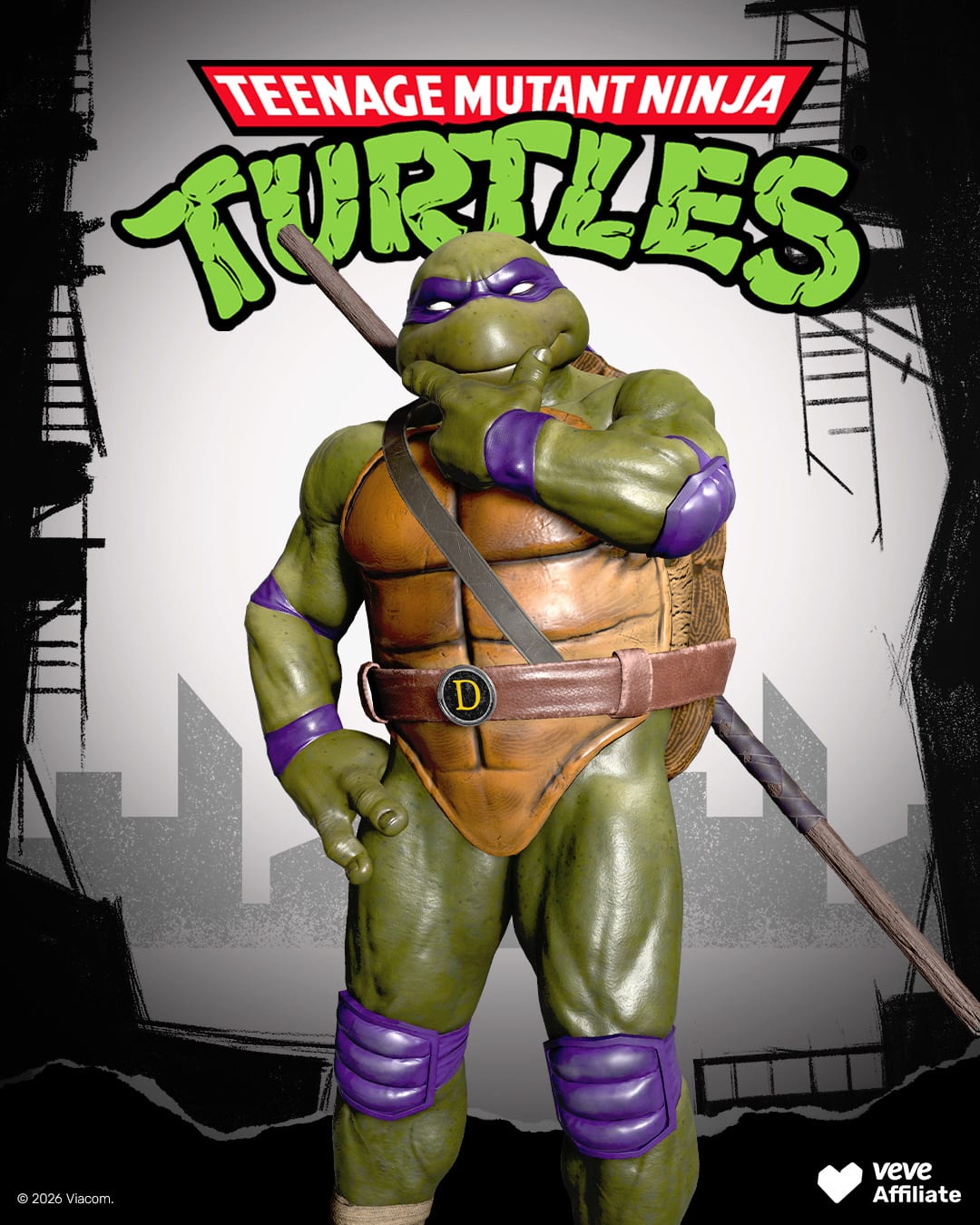
VeVe’s TMNT franchise lineup covers Leonardo, Raphael, Donatello, Michelangelo and Splinter, along with vehicle and environment pieces tied to the franchise’s later, more colorful eras rather than this original black and white book. Our TMNT collectibles guide covers that full lineup in more depth. A licensed digital piece on VeVe works as a numbered edition displayed and tracked in the app, its record public rather than filed away privately, which how blockchain provenance works explains in plain terms.
To browse the current Turtles catalog, start a free VeVe account. New collectors get US$10 in credit toward a first piece, no card required, covered on the free credit page.
Four turtles from Dover, New Hampshire
Nothing about the way this book got made suggests it should have worked. Two guys with no publisher, no marketing budget and a genuinely strange pitch printed a few thousand copies of a comic and changed what an independent creator could accomplish in the direct market. Everything with the turtles’ name on it since, cartoons, toys, films, games, runs back through that one small print job.