TMNT on VeVe: Turtles, Splinter, Technodrome and the Dojo Discipline Series
VeVe's TMNT range covers all four turtles, Splinter, vehicles and locations including the Technodrome and Turtle Cycle, an Origins Diorama, and the Dojo Discipline figure series. Because the turtles were designed as a four-part team with different weapons and colours, TMNT is one of the easiest franchises to collect as a complete set rather than piece by piece.
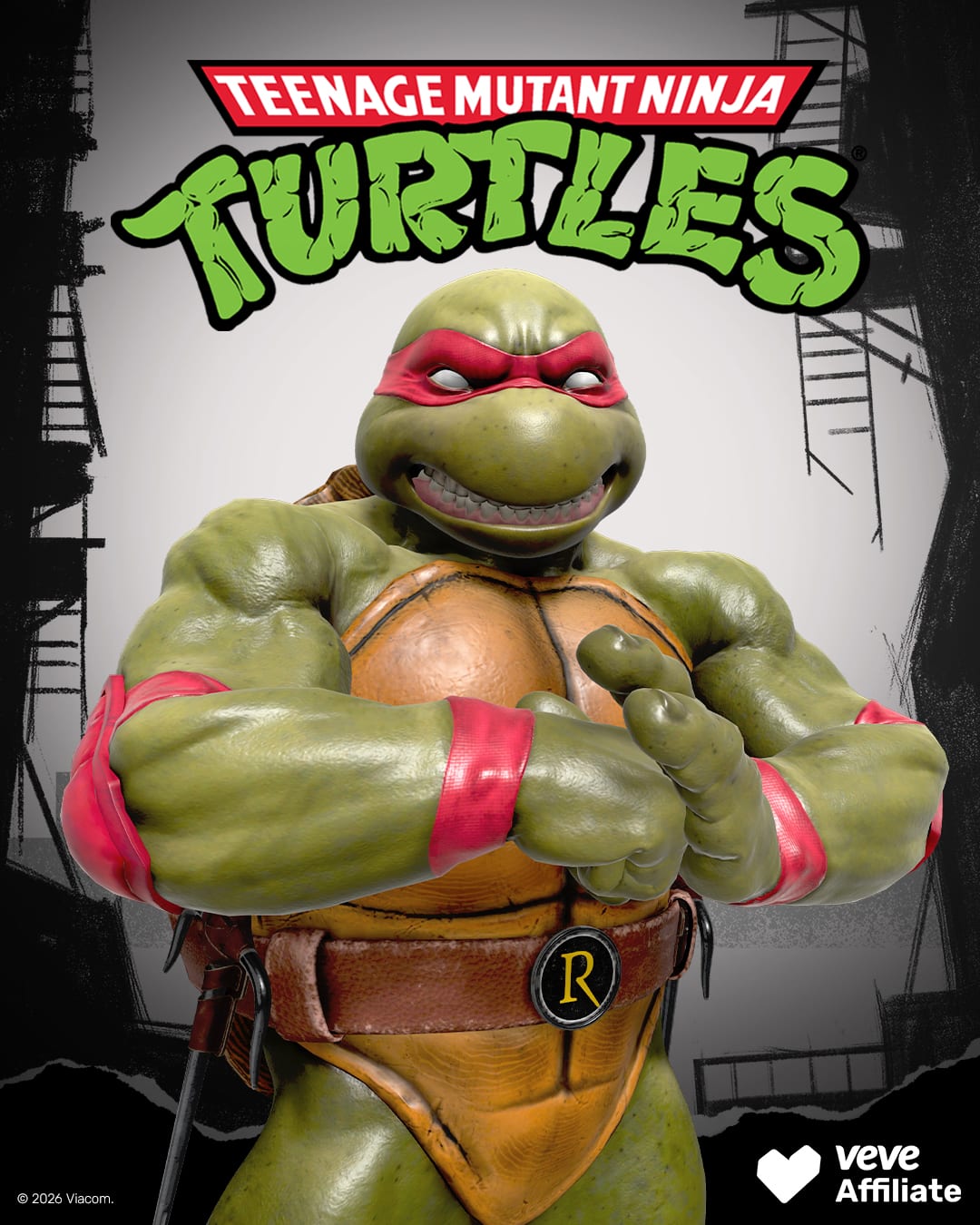
TMNT is the easiest franchise to collect and the hardest one to stop collecting. Easy because the set is defined for you: there are four turtles, everybody knows which four, and a display with three of them in it looks broken in a way that most collections never do. Hard because once the four are done there is Splinter, and then there is the Technodrome, and it turns out the world around the turtles is bigger than the turtles.
Where the turtles actually came from
Worth getting right, because the popular version of the story is wrong in interesting ways.
Teenage Mutant Ninja Turtles #1 came out in May 1984 from Mirage Studios, self-published by Kevin Eastman and Peter Laird on borrowed money. It was black and white, it was printed in a run of a few thousand, and it was a parody. Specifically it was a parody of Frank Miller’s Daredevil and Ronin, plus New Mutants and Cerebus, which is why the origin involves a canister of radioactive ooze and a blind man’s accident.
It was also violent, grim and nothing like what most people remember. All four turtles wore red bandanas. You told them apart by their weapons, not their colours.
The version everyone actually grew up with arrived in 1987 with the animated series, and then in 1988 Playmates launched the toy line that turned the whole thing into one of the biggest merchandising properties of the decade. That is where the colour-coded bandanas came from, where the pizza obsession came from, and where the Technodrome came from. The comic made the characters. The toys made the empire.
If you want the longer version of that story, we wrote it up separately in the comics section.
The four turtles
The team design is genuinely good engineering. Four characters, one silhouette, four completely different personalities signalled by weapon and colour. It is the reason children could tell them apart instantly and the reason collectors still buy all four.
Leonardo, blue, twin katanas. The leader, the one who takes it seriously, and the one Splinter trusts. Leo is the least interesting turtle to most kids and the most interesting to most adults, which is a fairly reliable sign of good writing.
Raphael, red, twin sai. The angry one. Raph is the fan favourite by a wide margin and always has been, because he is the turtle with an actual internal conflict rather than a personality trait. The sai are also the best-looking weapon of the four on a figure.
Michelangelo, orange, nunchaku. The party dude. Mikey carried the comedy load for the cartoon and he is the one whose figure reads happiest on a shelf, which matters more in a display than people admit.
Donatello, purple, bo staff. The engineer. Donnie built the vehicles, the gadgets and most of the plot solutions, and his bo gives his figure the strongest vertical line of the four.
You can see what has surfaced on the turtles character page.
Splinter
The rat sensei, and the reason the team works as a story rather than as four guys in a sewer. Splinter is the father figure, the trainer and the moral centre, and every version of TMNT ever made has kept him even when it has changed everything else.
For a collection, Splinter is the piece that turns four figures into a family. Four turtles on a shelf are a team. Four turtles and Splinter are the actual show. If you have the set and are wondering what to add next, it is this, not a fifth variant of a turtle you already own.
The Technodrome and the Turtle Cycle
Here is where TMNT collecting stops being about characters.
The Technodrome is Krang’s rolling fortress, a giant spherical war machine with an eyeball on the front, and it is one of the most recognisable pieces of eighties cartoon design ever put on screen. It was also a legendary Playmates playset, the one that took up an entire bedroom floor. Owning a digital version of it solves a problem the physical toy never did, which is that it was enormous.
The Turtle Cycle sits at the other end of the scale. Vehicles are a different kind of collectible than figures. They are objects rather than characters, they display at different scales, and in AR they do something a figure cannot, which is sit in your actual room at a size that feels correct.
A collection made only of characters gets samey. Vehicles and locations break it up.
The Origins Diorama
The diorama pieces are worth understanding as their own category. A diorama is a scene rather than a single subject, which means it is a piece you look at rather than a piece you display alongside others.
The Origins Diorama goes back to the start of the story, and for a lot of collectors that is the emotional centre of a TMNT collection. It is also the piece I would recommend to somebody who wants one TMNT item and does not want to commit to the full four-turtle project.
The Dojo Discipline series
Dojo Discipline is a figure series built around training rather than fighting, and it is the most interesting thematic line in the TMNT range because it goes back to what the 1984 comic was actually about. Ninjutsu. Discipline. The bit that the toys and the cartoon sanded down into pizza jokes.
Series lines like this matter for collectors because they are self-contained. A series has a defined membership, so completing it is a real goal with a real end, in a way that “collect the turtles” is not once variants start appearing. The glossary covers series and edition terms if that is new.
Building a full team set
My honest advice, having watched people do this several ways.
Buy the four turtles before you buy anything else, and try to buy them at the same rarity tier. A matched set of four looks deliberate. A mixed set looks like four separate purchases, because that is what it is. Rarity tiers run from Common upward and the rarity tiers guide explains the ladder.
Then Splinter. Then one vehicle or location, for scale contrast. Then series pieces like Dojo Discipline, which is where the collection starts having a personality rather than just being complete.
Do not chase everything in release order. Chase the shape of the display you want. The drop calendar tells you what is coming, and the TMNT franchise page shows what has appeared so far.
Collecting TMNT on VeVe
Start with your turtle. Everyone has one, and it is almost never a rational choice. New collectors get US$10 in free credit with no card required, which is enough to set up an account and see how a figure looks in AR in your own room before spending anything. It is on the free credit page, and the how to start guide covers setup if you want the steps first.