The Spider-Verse, a collector's guide to every spider
The Spider-Verse is Marvel's idea that many versions of Spider-Man exist at once across different realities, formalised in the 2014 to 2015 crossover of that name. For collectors it is one of the best structures in comics, because each version has its own documented debut, its own visual identity, and a clear place in a single display.
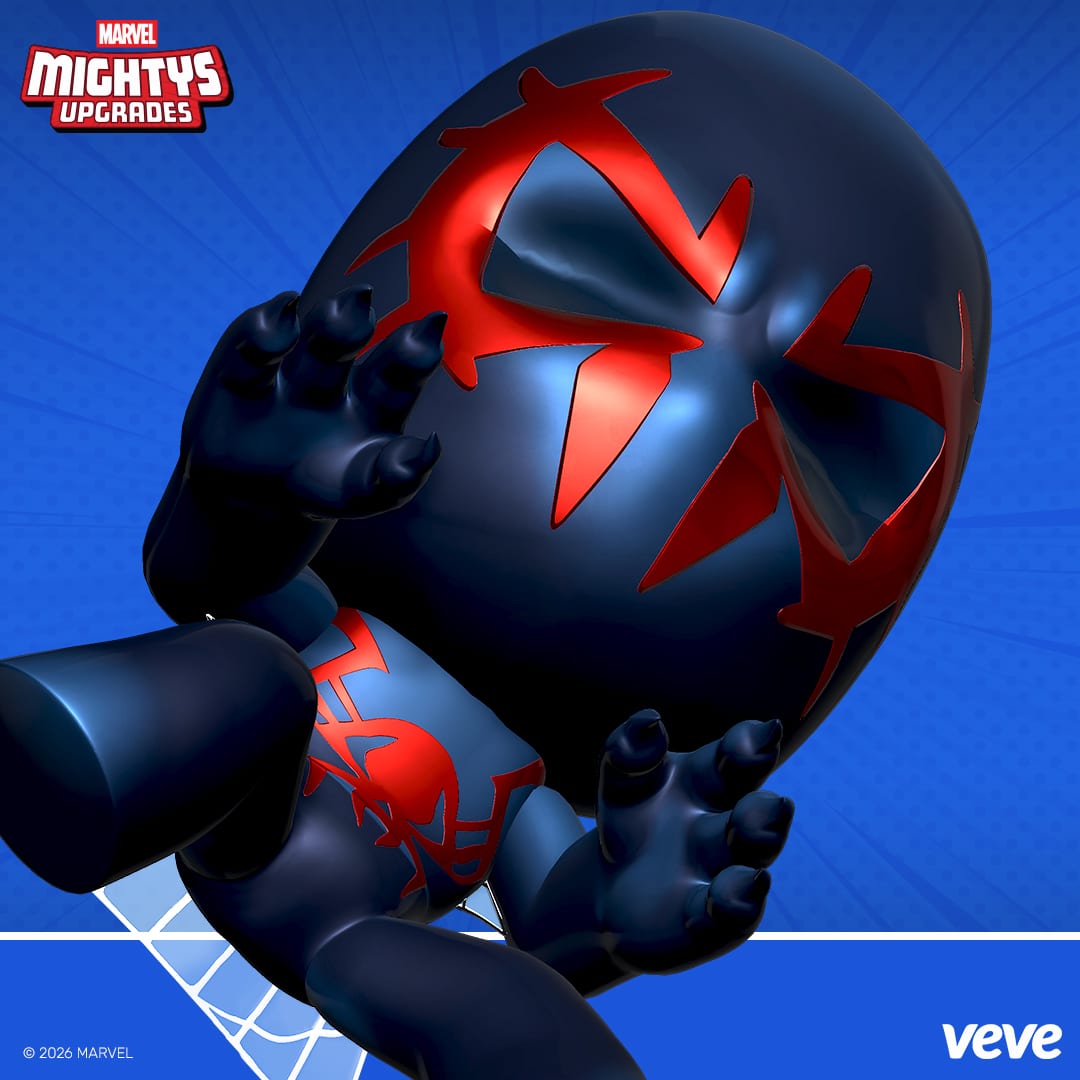
Most characters give you one silhouette and a few costume changes. Spider-Man gives you a dozen people who are all genuinely Spider-Man, each with a first appearance you can look up, a design nobody else could wear, and a reason to exist that is not simply a variant cover. That is an unusually good structure to build a shelf around.
How the idea got formalised
Spider-Verse as a named event ran in 2014 and 2015, pulling every spider-character Marvel could reach into one story. But the versions came first, decades of them, arriving one at a time for their own reasons. The crossover did not invent the multiverse of spiders. It noticed that Marvel had accidentally built one and put a frame around it.
That distinction matters for collecting. These are not alternate costumes dreamed up for a gimmick. They are characters who arrived separately, in different decades, for different editorial reasons, and only later got grouped together. Each one carries its own history with it, which is why a Spider-Verse row has more depth than a costume-variant row of the same size.
Miguel O’Hara, Spider-Man 2099
Miguel first turned up as an insert preview in Amazing Spider-Man #365 in 1992, then launched into his own series the same year. He was part of Marvel’s 2099 imprint, a future-set line with a cyberpunk streak, and he has outlasted every other character from it by a comfortable margin.
The design is the reason. Full mask with no visible eyes, a skull motif, blue and red instead of red and blue, and a cape. He reads as Spider-Man from a distance and as something else entirely up close. Miguel is also the spider who is not a wisecracking teenager, which gives a display a useful tonal change of pace. The Spider-Man 2099 hub has the versions that have appeared as pieces.
Ben Reilly
Ben has the strangest publication history of the lot. He first appeared in Amazing Spider-Man #149 in 1975 as a clone of Peter Parker, in a story that was supposed to be finished when it finished. Nearly twenty years later Marvel brought him back for the Clone Saga, gave him a name, a personality and a life, and spent the mid-nineties asking readers whether the Peter they had been following was the original.
The Scarlet Spider costume that came out of that run is the part people remember. A hoodie over a spider suit, worn because Ben was improvising, which is the only Spider-Man design that looks like a real person put it together in a hurry. It should not work. It works completely. The Ben Reilly hub covers him.
Gwen Stacy, Ghost-Spider
Spider-Gwen debuted in Edge of Spider-Verse #2 in 2014, created by Jason Latour and Robbi Rodriguez, from a premise you can explain in one sentence: what if the spider had bitten Gwen. She was meant to be a one-issue idea.
She was an instant hit instead, and it was mostly the costume. White, black and hot pink, a hood, a design that owed more to contemporary streetwear than to superhero tradition. Rodriguez produced one of the few genuinely new superhero silhouettes of the last twenty years, and it is now on more merchandise than most characters with a fifty-year head start. She is officially Ghost-Spider these days, and her character hub uses that name.
Jessica Drew, Spider-Woman
Jessica predates the modern Spider-Verse framing by decades, having first appeared in 1977, and she was created for reasons that were more corporate than creative at the time. What she became is a different matter. She is the spider with the longest continuous history outside Peter, with a distinctive red and yellow design and underarm webbing that reads unmistakably even in silhouette.
For a collection, she is the piece that proves the category is older than the crossover. The Spider-Woman hub has more.
Spider-Ham
Peter Porker first appeared in Marvel Tails #1 in 1983, as a funny-animal parody at a moment when Marvel was willing to publish almost anything once. He is a spider who was bitten by a radioactive pig, which is a sentence I enjoy typing.
For a long time he was a deep-cut joke. Then the Spider-Verse animated films put him in front of a very large audience and he became a character people genuinely want on a shelf. He is also the tonal release valve. A row of grim spiders with one cartoon pig in it is a funnier and better display than a row of grim spiders. The Spider-Ham hub covers him.
Miles Morales
Miles debuted in Ultimate Fallout #4 in 2011, taking over as the Spider-Man of Marvel’s Ultimate line, and he is the clearest success story of the whole group. Black and red instead of red and blue, a younger character with different powers and a different family, and a suit that photographs beautifully because the palette is so much darker than the original.
He has since become a second lead rather than a replacement, which is the hardest trick in superhero publishing to pull off. The Miles Morales hub has his pieces, and the Spider-Man hub has Peter’s for comparison.
The symbiote suit
The black suit is the odd one out, because it is not a person. It appeared on newsstands in Amazing Spider-Man #252 in 1984, with the story of where it came from told in Secret Wars #8, so for a stretch readers had the suit before they had the explanation. That is a good way to run a mystery and a terrible way to run a licensing department.
The design is one of the great simplifications in comic history. Take the most complicated costume in comics, delete the webbing, delete the colour, enlarge the spider, and somehow end up with something more striking than the original. It also spawned Venom, which is its own long story. The symbiote Spider-Man hub has the pieces.
Why many versions is a good collecting structure
Here is the practical argument. A character with one canonical look gives you a completion problem with no satisfying end state. A character with many documented, distinct, equally valid versions gives you something better:
- Every version is a separate first appearance you can date and cite
- No two pieces look alike, so the row never becomes repetitive
- You can stop anywhere and the collection still reads as intentional
- New versions arrive without invalidating the ones you already own
That last point is the quiet one. In most collecting categories a new release makes your older pieces look dated. In the Spider-Verse, a new spider joins the row and makes the row larger. Nothing gets replaced, because nobody is competing for the same slot.
If you want the origin of the whole thing, Amazing Fantasy #15 is where a nervous teenager got bitten and every one of these characters became possible. The Spider-Man digital collecting guide covers the practical side of the line.
Start a free VeVe account if you want to see the designs at full size rather than as thumbnails. New collectors get US$10 in credit toward a first piece, no card required, which is explained on the free credit page.
Pick the one you actually like
There is no correct starting spider. Start with the one whose design you want to look at, because you will be looking at it, and a row that began with a piece you genuinely wanted grows in a better direction than one that began with the piece everyone said to get first.
The oddest thing about the Spider-Verse is that a company spent fifty years failing to keep one character consistent, and the failure turned out to be the most valuable thing about him.