Spider-Man NFTs: A Collector's Guide
The Spider-Man NFTs worth a collector's attention are officially licensed Marvel digital collectibles on VeVe, including digital first-appearance comics like Amazing Fantasy #15 and 3D Spider-Man figures viewable in AR. Unlike unlicensed NFT projects, these are approved by Marvel, come in published rarity tiers with fixed edition counts, and can be bought with a credit card - no crypto wallet required.
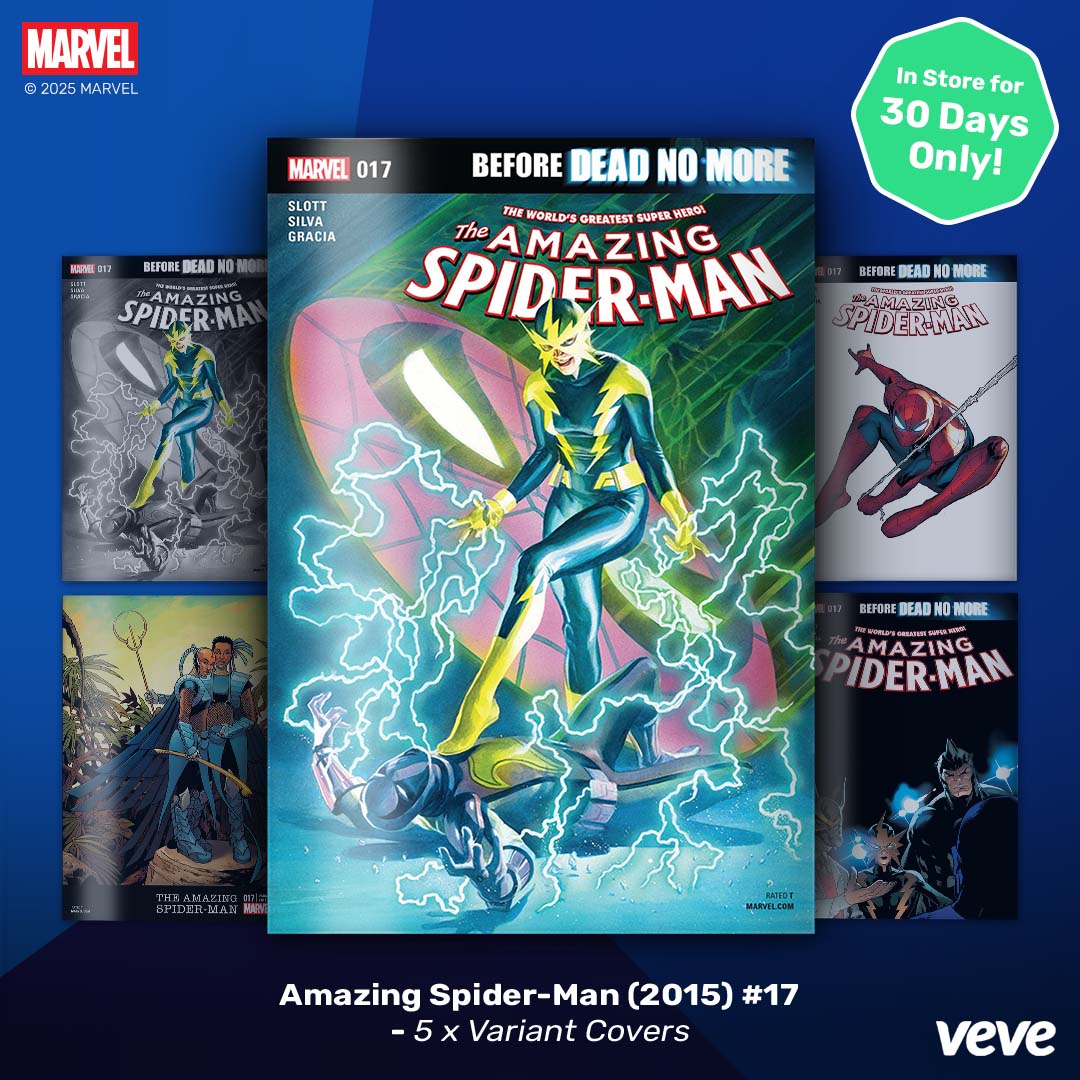
Search “spider-man nft” and you get two very different worlds. One is a swamp of unlicensed projects slapping web patterns on procedurally generated apes. The other is Marvel itself, publishing official Spider-Man digital collectibles through a licensed platform. This guide is about the second world, because that’s the only one a comic collector should care about.
What Spider-Man digital collectibles actually exist?
The home for licensed Spider-Man digital collectibles is VeVe, the platform Marvel chose as its official digital collectibles partner back in 2021. Over the years, the wall-crawler has shown up there in a few distinct flavors:
Digital comics. VeVe’s Marvel comic drops have included some genuinely historic books, and Spider-Man got the crown jewel: Amazing Fantasy #15, the 1962 issue where Peter Parker first appears. Owning the physical version means competing with hedge-fund money for one of the most famous comics ever printed. The digital edition is a licensed, serial-numbered copy of the full readable book - cover variants, interior pages, the works. VeVe’s comic drops have also covered plenty of other Amazing Spider-Man issues and event books along the way.
3D figures. Spider-Man statues and figures, rendered as high-detail 3D models you can pose and photograph in augmented reality. Point your phone at your desk and there’s Spidey mid-thwip on your keyboard. It sounds like a gimmick until you try it, and then it becomes the way you show your collection to people who’d glaze over at a spreadsheet.
Miles Morales. The Miles era is well represented too, which matters because Miles is the Spider-Man an entire generation met first. First-appearance energy isn’t limited to 1962 - Ultimate Fallout #4 vibes carry real weight with collectors who grew up on Into the Spider-Verse. Browse the Spider-Man character hub to see what’s floating around the secondary market.
Why does licensing matter so much?
Here’s the blunt version: an unlicensed Spider-Man NFT is fan art at best and a rug pull at worst. Marvel’s lawyers do not license random Discord projects. When you buy an unofficial Spider-Man token, you’re buying something that could be delisted, abandoned, or memory-holed the moment a cease-and-desist lands.
A licensed collectible flips every one of those risks:
- Marvel approved it. The art, the character likeness, the branding - all cleared through the actual rights holder, the same way a Hot Toys figure or a Funko Pop is.
- The supply is published. Every VeVe edition has a fixed count and a rarity tier you can verify before buying. No stealth minting, no “oops, we made more.”
- The platform has something to lose. VeVe holds licenses with Marvel, Disney, and other giants. Those deals evaporate if the platform pulls anything shady, which is a stronger incentive than any anonymous project founder has ever had.
If you’re weighing VeVe against open crypto marketplaces, we’ve done the full side-by-side in VeVe vs OpenSea. Short version: open marketplaces are where unlicensed Spider-Man projects go to die.
Are first-appearance digital comics the new rookie cards?
Sports card collectors figured out decades ago that the rookie card is the one that matters. First appearance, first season, the card that captures the moment before everyone knew. Comic collecting runs on the exact same instinct: Amazing Fantasy #15 is Spider-Man’s rookie card, and it’s treated with the same reverence.
Digital first appearances inherit that logic cleanly. The digital Amazing Fantasy #15 is a licensed edition with a serial number, a fixed print run, and a rarity tier, not a scan somebody uploaded, and it sits in a collection the same way a slabbed book sits in a case. The scarcity is real and checkable, which is more than you can say for “rare” physical books whose true surviving population nobody actually knows.
Does a digital comic replace the smell of old newsprint? No, and it isn’t trying to. It’s a parallel collectible, the way a graded card and a game-worn jersey are parallel ways of collecting the same player. Some collectors want both. Some want the one that doesn’t require a fireproof safe.
Which Spider-Man collectible should you chase first?
Honest answer: the one attached to your Spider-Man. Collecting works when it’s personal, and Spider-Man has more personal entry points than almost any character in fiction:
- Grew up on Raimi movies? Classic red-and-blue suit figures are your lane.
- Comic reader first? First-appearance and key-issue digital comics scratch the exact itch that longbox diving does.
- Spider-Verse generation? Miles collectibles, no contest.
- Completionist brain? Pick one drop with multiple rarity tiers and chase the set. You’ll pick up the terminology fast - grails, chases, floor listings, all of it.
The nice thing about starting with a character this iconic is that Spider-Man collectibles never lack an audience. Whatever corner of the fandom you’re in, there are thousands of collectors in the same corner, and the trading conversation is always alive.
How do you actually get started?
Mechanically, it’s easier than buying a physical comic online. VeVe runs on a mobile app, purchases go through normal payment methods, and there’s no crypto wallet, seed phrase, or gas fee anywhere in the flow. You buy a collectible, it shows up in your collection, you can flip through the comic or drop the figure into AR immediately. Our getting started guide walks through the whole setup in about five minutes.
New drops land on a schedule, so the classic collector move is to watch the calendar, pick your target, and be ready when it goes live - popular Spider-Man drops have a habit of selling out fast, which tells you everything about the demand side of this hobby.
Collecting Spider-Man on VeVe
If Spider-Man is the character that made you a collector in the first place, this is a low-friction way to add a new shelf to the collection. New collectors get US$10 in free credit when they sign up - no card required - which is enough to grab something from the secondary market and see whether digital collecting clicks for you. Worst case, you own a Spider-Man collectible. There are worse outcomes.