Miles Morales and the first appearance nobody saw coming
Miles Morales first appears in Ultimate Fallout #4, published by Marvel in August 2011, in a short segment written by Brian Michael Bendis and drawn by Sara Pichelli. He is not named in the issue. His full origin arrived the following month in Ultimate Comics Spider-Man #1.
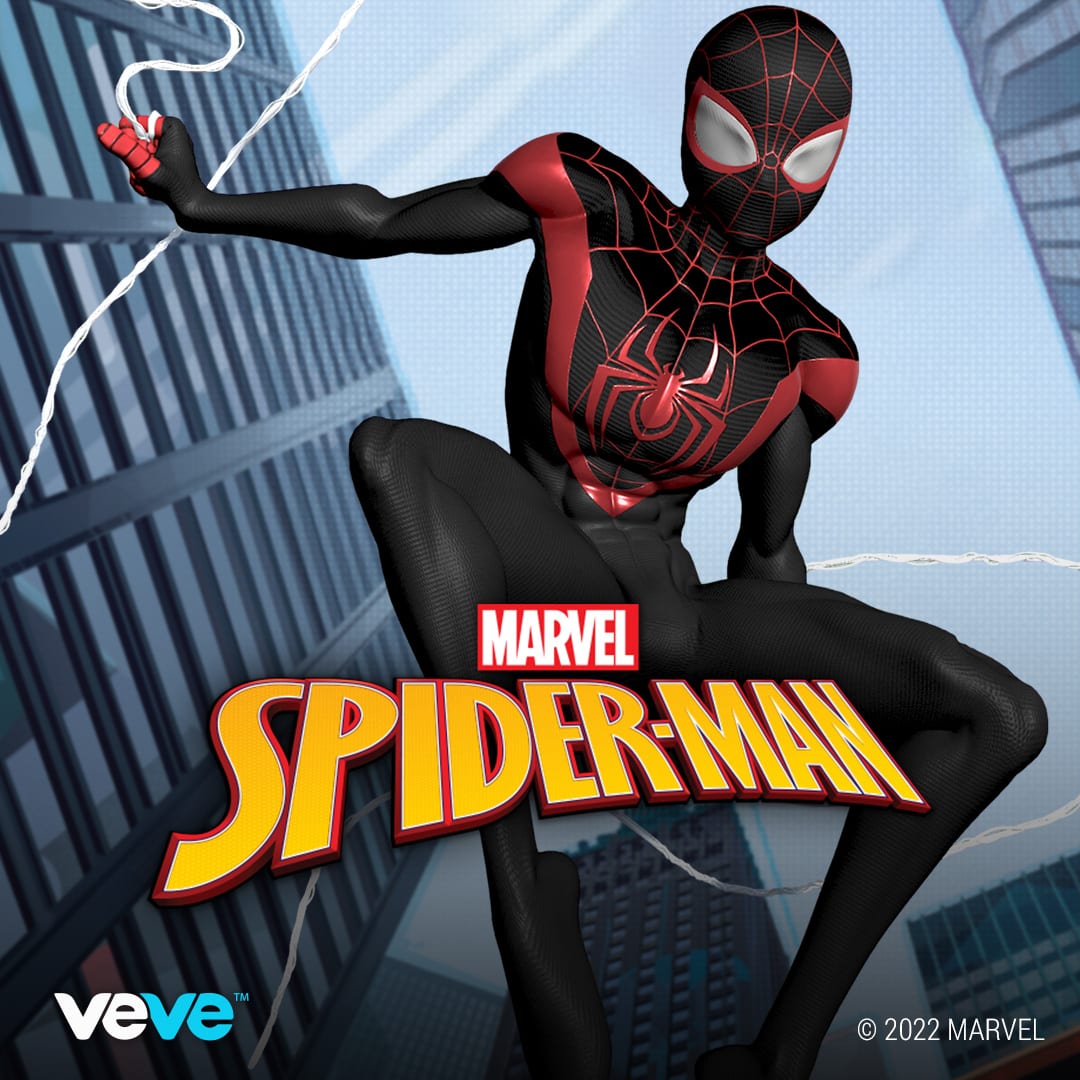
The most valuable modern Marvel key of the last fifteen years is five pages at the back of a tie-in issue that most shops ordered without knowing what was in it. Ultimate Fallout #4 shipped in August 2011 as part of a six-issue miniseries cleaning up after a death nobody had asked for. Somewhere near the end, a figure in an unfamiliar red-and-black Spider-Man suit lands in frame. Brian Michael Bendis wrote it. Sara Pichelli drew it. He does not get a name.
Peter Parker had to die first
The Ultimate line was Marvel’s parallel continuity, launched in 2000 to give new readers a Spider-Man who was actually in high school and an X-Men who were actually current. By 2011 it had been running for a decade and had accumulated the same continuity weight it was invented to escape. So Marvel did the one thing the main line could never really do: it killed Peter Parker, permanently, in Ultimate Spider-Man #160.
That is the structural reason Miles exists and it is worth saying plainly. A new Spider-Man could not be introduced into the main Marvel Universe in 2011 because Peter Parker was there and Peter Parker was not going anywhere. The Ultimate books had already built a universe where consequences stuck. Death of Spider-Man cleared the chair, Ultimate Fallout dealt with the aftermath across six issues, and issue #4 put somebody new in the suit before the mourning was finished.
The debut itself is almost aggressively low-key. No origin, no dialogue explaining who he is, no cover billing. He shows up, he webs, the segment ends. The full origin, the name Miles Morales, the spider bite, the uncle, all of that lands the following month in Ultimate Comics Spider-Man #1. That split is why collectors argue about which book is the real key, and why both of them matter.
A Black and Puerto Rican Spider-Man in 2011
Bendis has said the spark came from watching Donald Glover in Spider-Man pajamas in an episode of Community, which aired after Glover’s fans ran a campaign to get him an audition for the film role. The character that resulted is Afro-Latino: a Black father, a Puerto Rican mother, a Brooklyn kid at a charter school he got into by lottery.
The reaction in 2011 was a mess. Mainstream news outlets picked the story up as a culture-war item rather than a comics story, cable segments got made about it, and a chunk of the online response was straightforwardly ugly. Bendis published some of the mail he received. Fifteen years later that reaction reads like a historical artifact, because the reversal was about as complete as reversals get.
Two things did it. First, the books were good. Bendis and Pichelli wrote a kid, not a statement, and the relationship with Jefferson and Rio carried the run. When the Ultimate universe folded into the main one after Secret Wars in 2015, Miles came with it, and Saladin Ahmed’s ongoing series with Javier Garron kept him there.
Second, and much bigger, was the film.
The Oscar
Spider-Man: Into the Spider-Verse opened in December 2018 and won the Academy Award for Best Animated Feature. It grossed around $384 million worldwide on a story that assumed the audience already accepted a Spider-Man who was not Peter Parker, and it was the rare superhero film where the animation itself was the argument. Across the Spider-Verse followed in 2023 and took roughly $690 million.
Between those, Insomniac released Spider-Man: Miles Morales as a PlayStation 5 launch title in November 2020, which put the character in front of an audience that had never opened a comic. If you want a single measure of how far this went: there are now more people who know Miles Morales from a film or a controller than from a printed page, and that has been true for years. Our Spider-Verse collecting guide covers how that cast expanded into a whole collecting category of its own.
The Miles Morales character hub tracks the licensed art that has come out of all of it, and the Spider-Man hub puts him alongside the version of the suit that came first.
What collectors chase from 2011
Ultimate Fallout #4 is a modern comic, so the collecting story is different from a Silver Age key and worth understanding on its own terms.
- Orders were placed blind. Retailers bought this issue as an event tie-in, before anyone knew a new Spider-Man was inside, which is exactly why the first printing is thin relative to its later demand.
- Marvel went back to press. Later printings carry different covers and are their own separate, much cheaper books. Knowing which printing you are looking at is the entire game here.
- Variant covers complicate everything. Modern Marvel books ship with multiple covers at different retailer incentive ratios, and the market prices them as separate objects.
- High grades are not automatically scarce. This is a direct-market book from 2011 that went straight into bags and boards, so the census skews far higher than any newsstand-era key. Scarcity here is about the print run, not about condition.
The 2021 run-up in modern keys pushed high-grade first printings a long way, and the book has stayed one of the few post-2000 comics that turns up in serious auction catalogs at all. That is unusual. Most modern first appearances do not hold attention once the film cycle passes.
The licensed digital edition
VeVe releases officially licensed Marvel art and comics as numbered digital editions, and Miles is part of that catalog. It is worth being precise about what one of those actually is, because the word “digital” does a lot of unhelpful work in conversation.
A licensed digital edition is a fixed-size run authorized by the rights holder, where each piece carries its own edition number recorded on a public ledger. You open it in the app, view it full-screen or in augmented reality on a table in front of you, and the edition number is a permanent property of the object rather than a label someone typed. If you have never looked at what mint numbers actually mean, that piece explains why collectors care about a four-digit number more than they probably should.
None of that replaces a first printing of Ultimate Fallout #4, and it is not trying to. It is a different object with a different appeal: official art, clean presentation, a numbered slot in a defined run, and none of the storage anxiety. Our Spider-Man digital collecting guide goes through what the licensed Spider-Man catalog actually contains.
Start a free VeVe account if you want to look through it yourself. New collectors get US$10 in credit toward a first piece, no card required, and the free credit explainer covers how it works.
The kid from Brooklyn
Fifteen years is long enough to see a character’s whole arc, and Miles has had an unusual one. He was introduced as a replacement, which is the worst possible start, and the standard fate of a replacement is to hold the suit until the real one comes back. Peter Parker came back. Miles stayed anyway, which almost never happens.
The reason is not complicated. Bendis and Pichelli built a specific kid with a specific family in a specific borough, and once readers knew him the question of whether he was allowed to be Spider-Man stopped being interesting. That is also, more or less, the answer to the people who spent 2011 arguing about him. The argument was never going to be won with an argument. It was going to be won by somebody writing a good comic about a fourteen-year-old who is terrible at telling his parents the truth, and then a film that put the whole thing on a screen the size of a wall.