X-Men #1: The Mutants and Magneto Arrive
X-Men #1, cover dated September 1963, introduced Cyclops, Marvel Girl, Iceman, Angel, Beast, Professor X and the villain Magneto. Stan Lee wrote it and Jack Kirby drew it, and VeVe carries officially licensed X-Men material in its Marvel lineup.
Five teenagers in matching blue and yellow uniforms, trained in secret by a man in a wheelchair, fight another mutant who can bend the Earth’s magnetic field to his will. Marvel had already built a team out of a rocket accident and a scientist caught in a gamma bomb blast. This time the power came from birth, and that single change is what made the concept last.
What the issue sets up
Professor Charles Xavier runs a school in Westchester that is secretly a training ground for young mutants: Cyclops, Marvel Girl, Iceman, Angel and Beast. Magneto, the issue’s antagonist, seizes a missile base and threatens the world with it, and the newly formed team stops him. Stan Lee wrote the script and Jack Kirby drew it, working from the same Marvel Method the two used across the company’s other 1961 to 1963 launches.
The plot itself is a fairly standard team-versus-villain story. What matters is the premise underneath it: mutation as an accident of birth rather than an origin event. Every other Marvel hero to that point had a moment, a lab accident, a bite, a rocket flight, that made them who they were. Xavier’s students were simply born different, and the world around them already knew how to react to that with fear.
The idea that took decades to pay off
Lee has said the mutant premise was partly a shortcut, a way to grant powers to a team without inventing five separate origin stories. Whatever the reason, it gave every writer who followed a metaphor to build on. Magneto’s worldview, that mutants should stop hiding and take power rather than ask for acceptance, is stated plainly in this first issue and has driven the character through sixty years of stories. Xavier’s opposing position, that mutants and humans can coexist, is the other half of an argument the franchise has run on ever since.
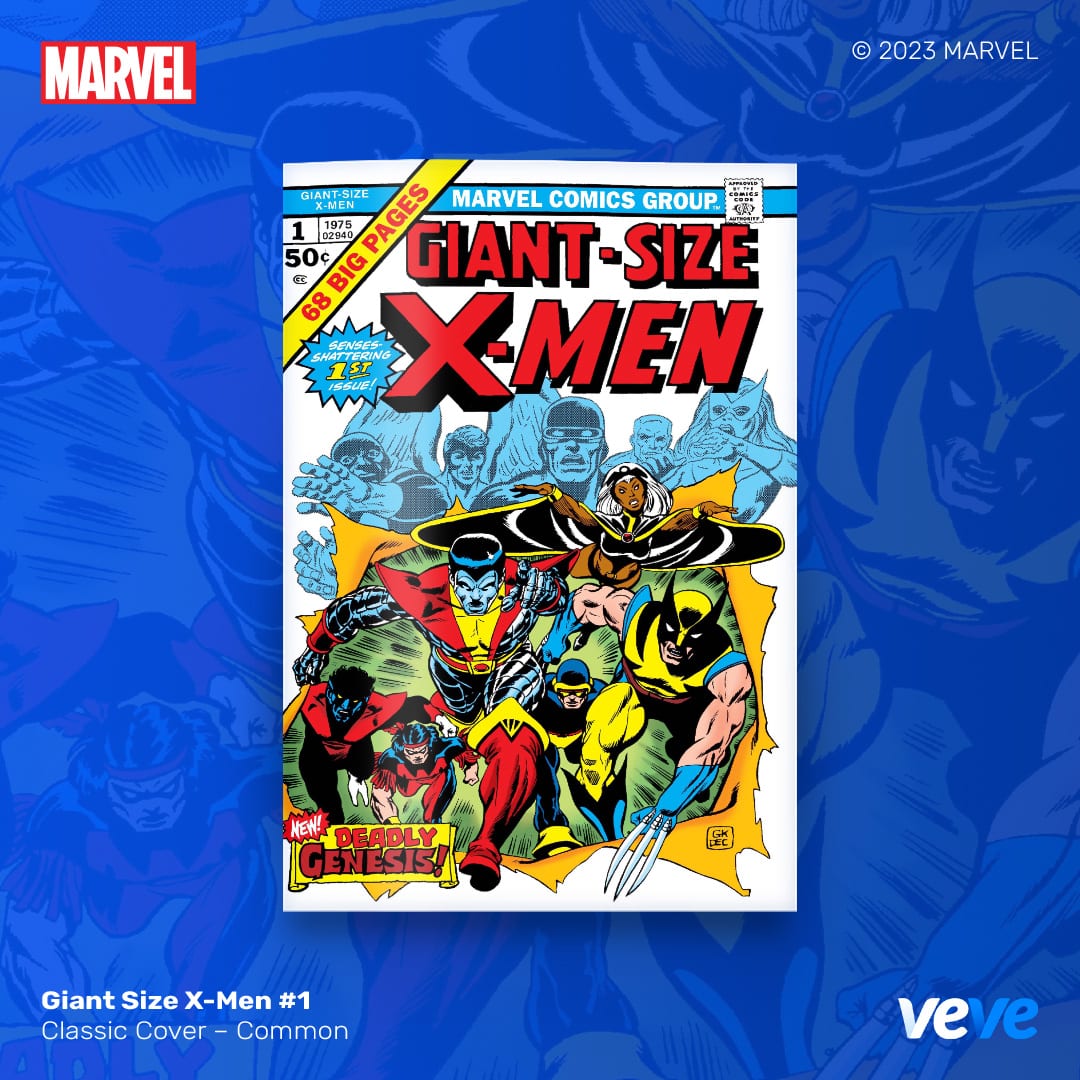
None of that thematic weight is fully present on the page in 1963. X-Men #1 reads as a fairly simple adventure story. The metaphor sharpens over the following years as writers, particularly during the 1970s relaunch with Giant-Size X-Men #1 and the character-driven Claremont run that followed, built out the world Lee and Kirby only sketched here.
Why the team struggled before it caught on
X-Men sold poorly through most of the 1960s and the original series went to reprints in 1970 before Marvel relaunched the concept with a new international roster. That makes X-Men #1 an unusual key issue: it introduced a premise that took roughly a decade to find its audience, rather than one that caught on immediately the way Spider-Man or the Fantastic Four did. Collectors chasing the book today are chasing the concept’s true origin point, not a story that was recognized as important at the time.
The collecting picture
X-Men #1 sits solidly among the top-tier Marvel Silver Age keys, alongside Fantastic Four #1 and Amazing Fantasy #15. Newsstand distribution and a readership that treated comics as disposable mean high-grade survivors are scarce, and the character of Magneto’s growing prominence across decades of X-Men media has kept demand for his debut strong.
High-grade copies have sold for substantial sums at Heritage Auctions in recent years, with top-census 9.4 and above examples reaching well into six figures. As with most books from this period, condition separates the market sharply: a well-read copy from a spinner rack and a pristine top-census book are barely the same collectible in price terms.
X-Men on VeVe today
VeVe’s Marvel lineup includes officially licensed X-Men material. A licensed digital collectible is a numbered edition with its rarity tier recorded publicly, a different kind of object from a graded physical comic but built with the same official licensing behind it. VeVe’s comic store carries officially licensed Marvel digital comics and is the place to check directly for any X-Men issues currently available, rather than assuming this one is among them.
For background on how VeVe’s editions and ownership work before your first purchase, the what is VeVe page is a reasonable starting point. If you want to look around, start a free VeVe account. New collectors get US$10 in credit toward a first piece, no card required, and the free credit page explains how.
A slow start that became the whole franchise
The X-Men took a decade to become the franchise everyone now recognizes, and the argument at its center, hiding versus fighting, coexistence versus supremacy, was present in the first issue before the characters existed to carry it properly. Magneto said his piece in his first appearance. The rest of the mythology spent sixty years catching up to him.