Avengers #57: Ultron builds the Vision to destroy the team
Avengers #57, cover dated October 1968, is the first appearance of the Vision. Roy Thomas wrote it and John Buscema drew it, introducing the android as a weapon built by Ultron to infiltrate and destroy the Avengers from within, before the team recruited him instead in the following issue.
Ultron built a weapon to finish what he could not do himself, and the weapon turned on him instead. Avengers #57, cover dated October 1968, introduces the Vision as exactly that: a synthetic being created by the villainous robot Ultron and sent among the Avengers to destroy them from the inside. Roy Thomas wrote the issue, John Buscema drew it, and between them they built a character whose entire premise depends on the reader not being sure whose side he is really on.
A weapon that thinks for itself
The Vision arrives in the story under Ultron’s direct control, his body one that later stories revealed had belonged to the original 1940s Human Torch, and his mission is straightforward: get inside Avengers Mansion and take the team apart. What Thomas wrote instead was a being capable of genuine independent thought the moment he is exposed to human company, someone who questions his creator’s orders almost as soon as he receives them. By the end of the story the Vision has turned against Ultron and fought alongside the team he was sent to kill.
Why the betrayal worked
Marvel had introduced sympathetic robots and androids before, but rarely let one flip allegiance within his own debut story. The tension in Avengers #57 comes from genuine uncertainty: readers do not know, page to page, whether the Vision’s growing doubts about Ultron are real or a longer con. Thomas resolved it fast, inside the same arc, which is part of why the character stuck. A slower reveal would have played as a mystery box. Thomas played it as a character discovering he has a conscience in real time.
From weapon to Avenger
The team formally inducted the Vision into the Avengers in Avengers #58, the very next issue, making him one of the fastest transitions from villain’s tool to full team member in the book’s history. He went on to become one of the more consistently present Avengers across the following decades, developed a long-running romance and eventual marriage to the Scarlet Witch that became one of Marvel’s signature relationship arcs, and crossed fully into the mainstream through Paul Bettany’s performance across multiple Marvel Studios films and the 2021 Disney+ series WandaVision, which put the Vision-Wanda relationship at the center of a prestige television format for the first time.
The collecting picture
Avengers #57 comes from a well-distributed Silver Age run at a point when Avengers was firmly established as one of Marvel’s flagship titles, so surviving copies exist in real numbers relative to earlier Silver Age books. High grade is still the constraint: 1968 newsprint under normal handling degrades the same way any comic from that decade does, and collector demand for clean copies has stayed strong and durable, tracking both the character’s steady comics presence and the more recent surge of attention from WandaVision and the film appearances that followed it.
The Vision and the wider Avengers lineup on VeVe
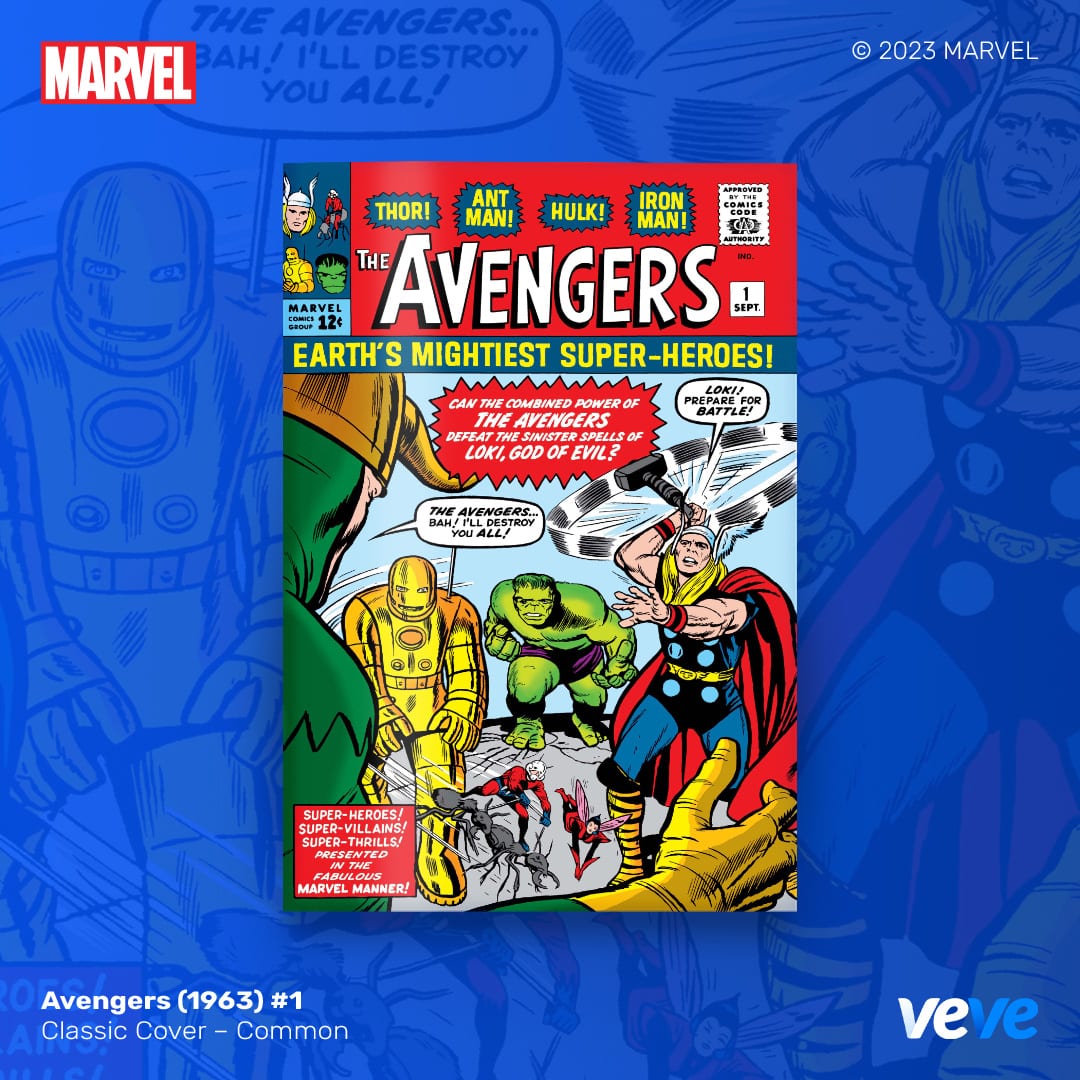
VeVe’s Marvel catalog includes a licensed digital edition of Avengers #1, the team’s founding issue, as part of its comics lineup, alongside figures and artworks for members across the roster on the characters page. A licensed digital comic works as a numbered edition you read full screen in the app, its edition recorded publicly rather than filed in a private database, which what mint numbers mean explains if the concept is new to you.
To see the current Avengers-era catalog, start a free VeVe account. New collectors get US$10 in credit toward a first piece, no card required, covered on the free credit page.
Buscema’s design work
John Buscema is remembered mostly for his run on the Silver Surfer and Conan the Barbarian, but his design for the Vision deserves its own credit. The red, green and gold color scheme, the cape, the gem on his forehead that absorbs solar energy, all of it came together in this one issue as a visual identity distinct from every other android or robot Marvel had introduced before him. Buscema drew him with a stillness other artists picked up on immediately, a deliberate contrast to the more expressive human cast around him, reinforcing the question the story itself kept asking about whether the Vision actually felt anything at all.
The weapon that chose a side
Thomas and Buscema built the Vision to answer a specific question Marvel kept circling in the late 1960s: what happens to a created being once it starts thinking for itself. The answer, worked out across two issues in 1968, is a character who has spent fifty-plus years since proving that a synthetic mind can still choose loyalty over programming.