Fantastic Four #52: Black Panther's Debut
Fantastic Four #52, cover dated July 1966, introduced T'Challa, the Black Panther, ruler of the technologically advanced African nation of Wakanda. Stan Lee and Jack Kirby created the issue, and VeVe carries officially licensed Black Panther material in its Marvel lineup.
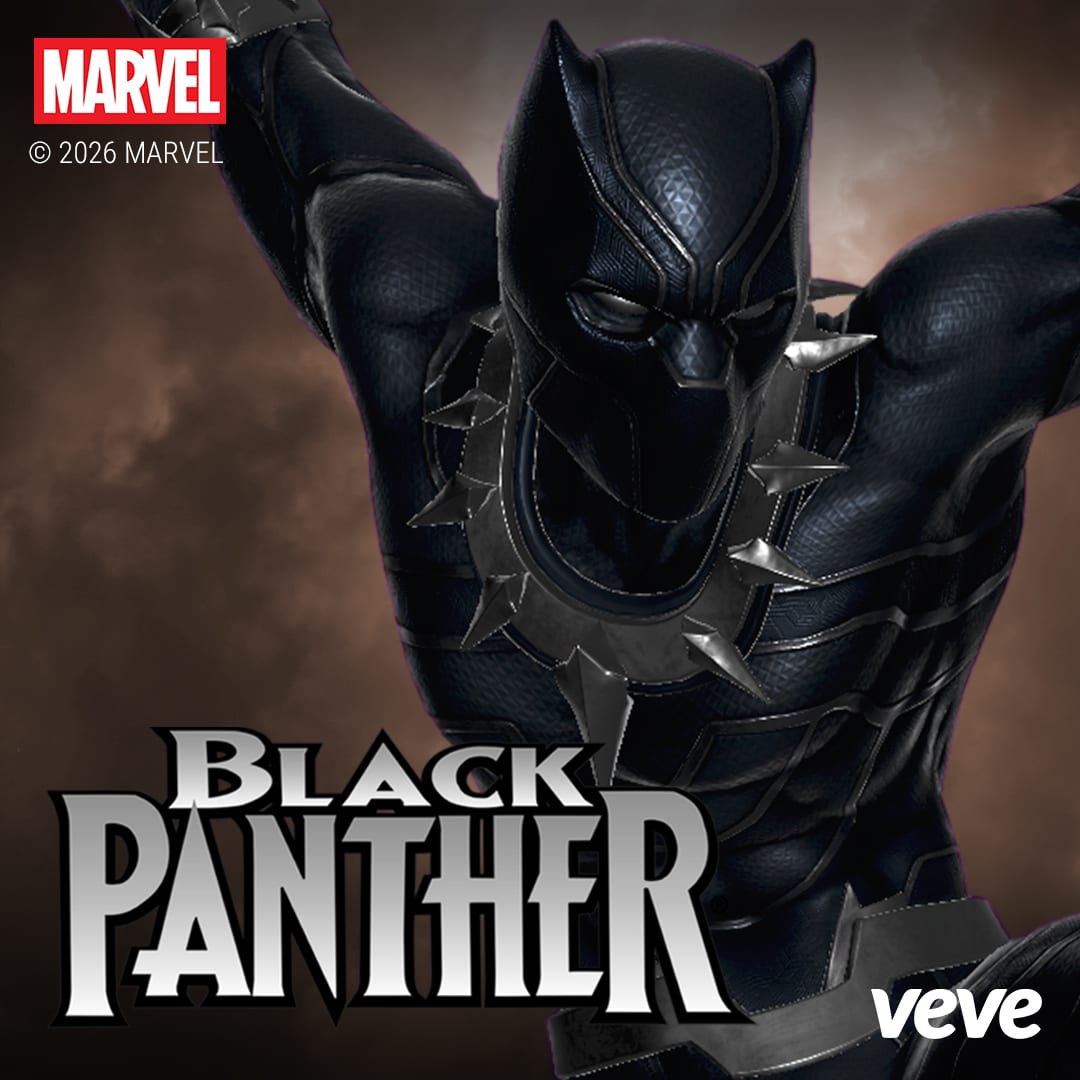
A king lures the Fantastic Four to his country with an invitation disguised as a trap, tests each of them individually in personal combat, and then explains that the test was never really about them. Fantastic Four #52 introduces a monarch, a nation, and a hero all in the same issue, and none of the three had ever appeared in mainstream American superhero comics before.
What the issue sets up
T’Challa, ruler of the fictional African nation of Wakanda, invites the Fantastic Four to visit under the pretense of a personal favor. It is a test. He wants to measure himself against the world’s most capable heroes before revealing his real reason for meeting them: a threat to Wakanda from the villain Ulysses Klaw, a longtime enemy of T’Challa’s family. Stan Lee wrote the story and Jack Kirby drew it, arriving at the tail end of the same extraordinary run that had produced the Galactus trilogy only months earlier.
Wakanda is presented from the first panel as more technologically advanced than the visiting heroes’ own world, a direct reversal of the era’s usual assumptions about Africa in American popular fiction. T’Challa’s vibranium-powered technology outpaces anything the Fantastic Four has access to, and the story treats that as simply true rather than as a twist requiring explanation.
Why this mattered in 1966
Black Panther arrived in mainstream comics before the Black Panther Party took that name later the same year, a coincidence of timing Marvel has had to clarify repeatedly over the decades since. The character predates the political organization and was not created in reference to it.
What Lee and Kirby did put on the page was still significant on its own terms: a Black character written as a king, a scientist, a warrior and a peer to the Fantastic Four, at a moment when Black characters in mainstream American comics were rare and, when present, were almost never drawn as anyone’s equal. T’Challa’s introduction does not treat his competence as remarkable. The story simply assumes it, which was itself unusual for the period.
From guest star to institution
T’Challa’s early appearances kept him largely within the Fantastic Four’s orbit, before he joined the Avengers in 1968. In 1972 Marvel briefly renamed him the Black Leopard to avoid confusion with the unrelated political organization, a name dropped after a short run. The character’s stand-alone identity solidified through the 1970s, and Wakanda grew from a single nation glimpsed in one story into one of Marvel’s most fully developed fictional settings, a status the character’s later film prominence brought to an enormous global audience.
The collecting picture
Fantastic Four #52 sits among the most significant Silver Age keys precisely because of what it represents rather than through print scarcity alone. By 1966, Marvel’s circulation had grown well past its early-1960s numbers, and more copies survive in mid-grade than for the company’s true 1961 and 1962 founding issues. High-grade copies remain genuinely difficult to find, though, and demand for the book has grown substantially over the past two decades as the character’s cultural and cinematic significance has been more fully recognized.
Strong CGC 9.6 and above copies have sold for solid five-figure sums at Heritage Auctions in recent years, with particularly clean examples reaching higher. The book’s importance to comics history, not just to Marvel’s internal continuity, is part of what keeps collector interest in it strong across generations.
Black Panther on VeVe today
VeVe’s Marvel lineup includes officially licensed Black Panther material spanning the character’s comic and film history. A licensed digital collectible is a numbered edition with a publicly recorded rarity tier, distinct from a physical comic but grounded in the same official licensing. VeVe’s comic store is the place to check directly for any officially licensed Fantastic Four or Black Panther digital comics currently available.
If you are new to how VeVe’s ownership and editions work, what a VeVe collectible is is a reasonable place to start. To look around the app, start a free VeVe account. New collectors get US$10 in credit toward a first piece, no card required, and the free credit page explains how.
A king who tested the heroes, not the other way around
Most guest stars in the Fantastic Four’s run exist to be helped or fought. T’Challa arrives already ahead of them, testing their character before he asks for their help, and the story never suggests otherwise. That inversion, the visiting heroes being the ones evaluated, is a small structural choice that says more about the character’s introduction than any single fight scene could.