Avengers #4: Captain America Wakes Up
Avengers #4, cover dated March 1964, brought Captain America back from suspended animation and made him an Avenger. Stan Lee wrote it, Jack Kirby drew it, and VeVe carries officially licensed Captain America material in its Marvel lineup.
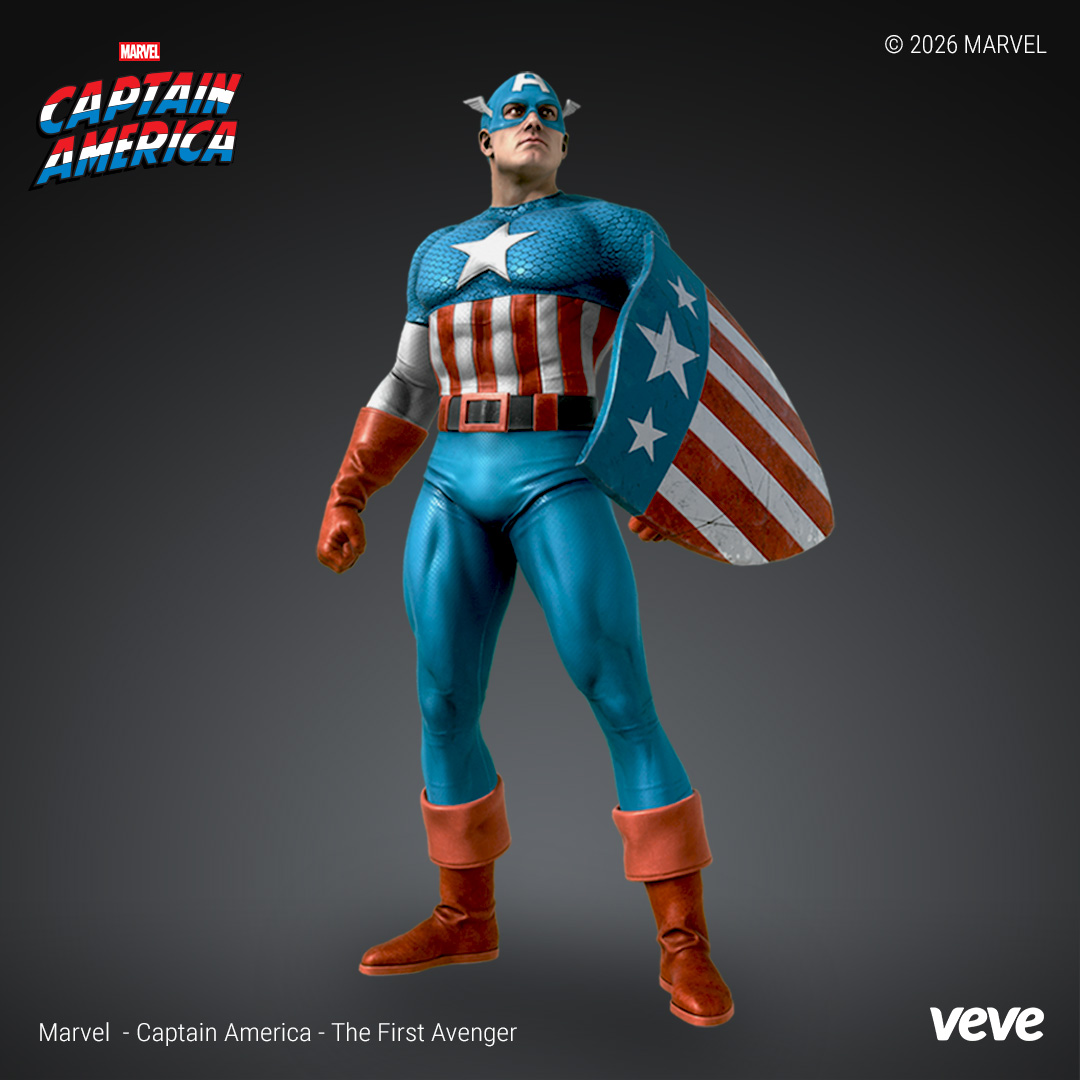
The Avengers find a block of ice floating in the sea with a man frozen inside it, thaw him out, and discover he is a soldier who has not aged a day since the closing months of World War Two. That is the entire premise of Avengers #4, and it turned a team book barely six months old into Marvel’s flagship.
What actually happens in the issue
The Sub-Mariner, still an antagonist to the heroes at this point in Marvel continuity, has thrown the frozen figure into the ocean out of contempt, not realizing what he is discarding. The Avengers, a team formed the previous year without Captain America, recover the ice block on a routine mission and revive the man inside: Steve Rogers, Captain America, presumed dead since 1945. He joins the team on the spot.
Stan Lee scripted the issue and Jack Kirby drew it, the same pairing behind most of Marvel’s early-1960s output. The mechanics of the revival are simple and almost incidental. What matters is the effect: a character who had been dormant in comics for roughly a decade, following the collapse of the superhero market in the early 1950s, was suddenly active again and given a permanent home on Marvel’s premier team book.
Why Cap needed a team to come back through
Captain America had been created in 1941 by Joe Simon and Jack Kirby and published through the war and beyond, but superhero comics as a category nearly disappeared by the mid-1950s. Marvel’s predecessor company tried reviving him briefly in 1953 without lasting success. The character genuinely needed the world built around Avengers #4, an active shared universe with an ongoing team already established, rather than a solo relaunch that would have had nothing to plug into.
That is also why the frozen-soldier premise works as well as it does. Rogers wakes into a world that has moved on without him, disoriented and grieving a war two decades gone, and that displacement became the character’s defining emotional note for the following sixty years. He is a man built entirely around a war that everyone else has stopped thinking about.
The role he took over
Within a handful of issues, Captain America effectively becomes the Avengers’ field leader, the character whose tactical instincts and moral clarity anchor a roster that otherwise rotated constantly. Marvel used him that way for decades afterward: whichever heroes made up the Avengers lineup in a given era, Rogers was reliably the one giving orders in the field. Avengers #4 is the issue where that role starts.
The collecting picture
Avengers #4 trades in the same Silver Age bracket as Marvel’s other early-1960s revival and debut issues, though it postdates the character-founding books of 1961 and 1962 by a couple of years, which puts it slightly later in the collecting hierarchy even as demand for it stays strong. Newsstand comics of this era survive in high grade rarely, since nobody was preserving them at the time, and Captain America’s enormous film prominence since 2011 has kept pulling collector attention back toward his earliest Silver Age appearances.
High-grade copies have sold for substantial sums at Heritage Auctions in recent years, with top-census examples reaching well into five figures and occasionally beyond. As with most Silver Age Marvel, the difference between a mid-grade reading copy and a top-census book is where almost all of the value sits.
Captain America on VeVe today
VeVe’s Marvel lineup includes officially licensed Captain America material spanning decades of the character’s comic and film history. A licensed digital collectible carries a numbered edition and a publicly recorded rarity tier, and VeVe’s comic store is where to check directly for any officially licensed Avengers or Captain America digital comics currently available.
If the concept of digital collectibles is new to you, what a VeVe collectible is is a good place to start before your first purchase. To look around the app, start a free VeVe account. New collectors get US$10 in credit toward a first piece, no card required, and the free credit page explains how.
The block of ice that never really melted
Every version of Captain America since 1964, on the page and on screen, carries some version of that ice. He is the hero who missed everything and came back anyway to serve a country and a team that had already built a life without him. Avengers #4 is where that particular grief became the character’s permanent engine, and nobody has needed to replace it since.