Assassin's Creed Collectibles: Every Assassin on VeVe
Assassin's Creed collectibles on VeVe are officially licensed Ubisoft digital figures covering the series' main protagonists: Altair, Ezio, Connor, Edward Kenway, Bayek, Kassandra, Eivor and Basim. Each is a numbered edition with a published rarity tier, viewable in AR, and drops through the VeVe store.
There is a design trick in Assassin’s Creed that has held up for sixteen years and eight protagonists: the hood. Different centuries, different continents, wildly different personalities, and every one of them reads as an assassin from across a room. That is an unusually generous gift to anyone who collects figures, because a shelf of eight of them looks like a set instead of a pile.
The Ubisoft-licensed figures on VeVe cover the main line, which means you can build that shelf in roughly chronological order of release and watch a game series grow up.
The assassins, in the order they arrived
Altair Ibn-La’Ahad started it in 2007. Third Crusade, 1191, Levant. He is the most austere of the eight by a distance: white robes, red sash, almost no ornamentation. The first game was rough and repetitive, and people forget how strange it felt at the time to have a game about climbing towers and blending into crowds. Altair’s figure is the purist’s pick, and it tends to be the one long-time players reach for first.
Ezio Auditore da Firenze is the one who made the series enormous. He carried three games, Assassin’s Creed II in 2009, Brotherhood in 2010 and Revelations in 2011, which is more screen time than anyone else in the franchise. Renaissance Italy, cape, more visible metalwork, and an actual character arc that runs from spoiled teenager to old man. Most people’s favourite assassin is Ezio, and most people’s favourite assassin is Ezio for the same reason: he is the only one you watched age.
Connor Kenway, or Ratonhnhake:ton, arrived in Assassin’s Creed III in 2012 during the American Revolution. Blue coat, tomahawk, bow. The most visually distinct of the early figures, and historically the one that split players hardest, which is its own kind of collecting appeal.
Edward Kenway is Connor’s grandfather and the star of Black Flag in 2013. Pirate, Caribbean, dual cutlasses, and the game that most people will tell you is the best in the series even when they preface it by saying it is barely an Assassin’s Creed game. The figure has the most personality of the set because the character does.
Bayek of Siwa, from Origins in 2017, is the Medjay of Ptolemaic Egypt and, in the fiction, effectively where the Brotherhood begins. Origins was the reset that turned the series into an open-world role-playing game, so Bayek marks a genuine dividing line in the franchise for collectors who care about eras.
Kassandra leads Odyssey in 2018, set in Greece during the Peloponnesian War. The broken spear of Leonidas rather than a hidden blade, which purists grumbled about and everyone else got over quickly. She is one of the two most requested characters in the modern half of the series.
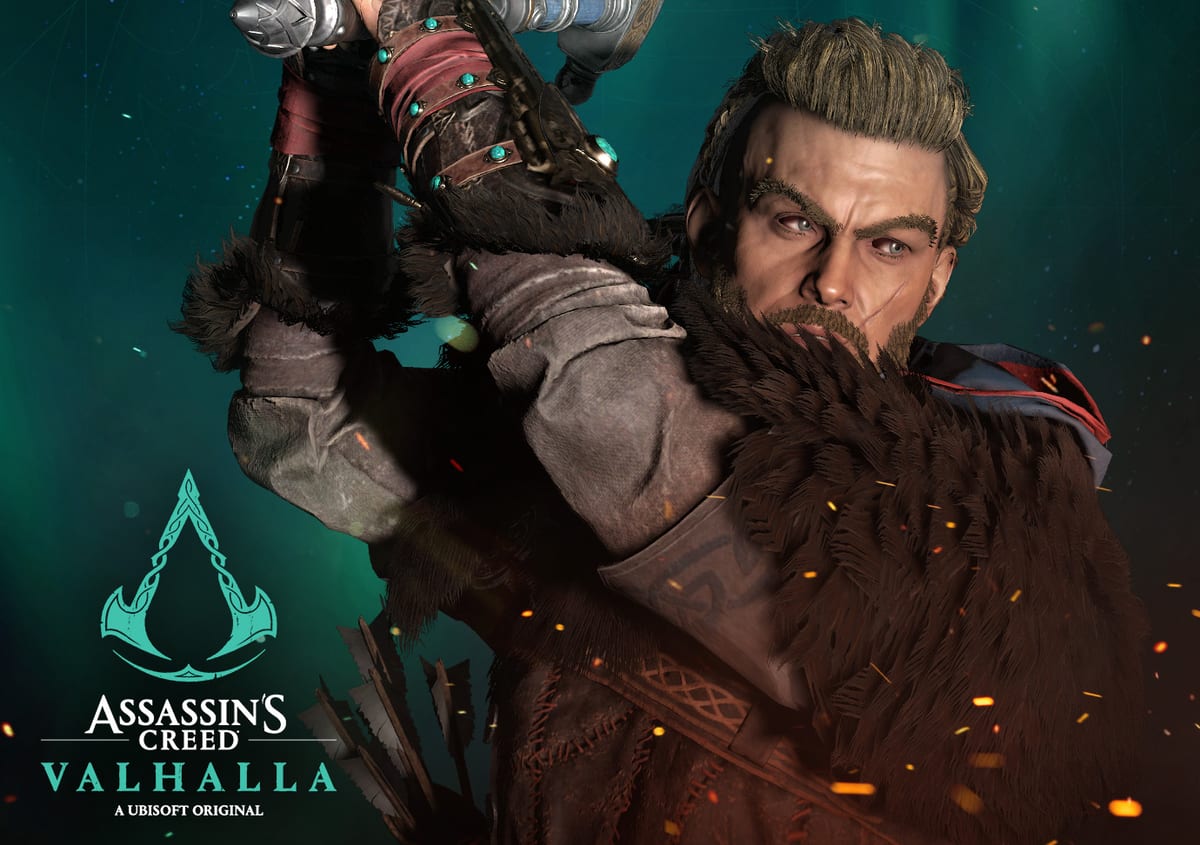
Eivor Varinsdottir comes from Valhalla in 2020, ninth-century Norway and England, the Viking entry. Heavier armour, axes, raven. Valhalla was the biggest of the modern games, so Eivor pulls a large audience that arrived after the classic era entirely. If that is your entry point, the Eivor character page is the place to start.
Basim Ibn Ishaq headlines Mirage in 2023, set in ninth-century Baghdad, and the game was deliberately built as a return to the compact, stealth-first structure of the original. Fitting, then, that the newest assassin is the one most obviously in conversation with Altair.
Each figure drops as a numbered edition with a published rarity tier, so the supply is visible rather than something you have to infer.
A sixteen-year timeline you can actually shelve
Here is what makes this franchise unusual as a collecting subject. Most licences give you one setting. Assassin’s Creed gives you the Crusades, the Italian Renaissance, colonial America, the golden age of piracy, Ptolemaic Egypt, classical Greece, Viking England and Abbasid Baghdad, all wearing the same silhouette.
Displayed together, that becomes a history shelf that happens to be made of assassins. Displayed apart, each figure still reads as a complete character from its own period. Very few licences do both.
There is a practical consequence for new collectors too: you do not need to have played all of them. Nobody has played all of them. Pick the era you already like and the game will make sense backwards.
How video game figures became a real category
Game merchandise used to mean a T-shirt and a poster. The shift happened in stages, and Assassin’s Creed is genuinely part of the reason.
Ubisoft set up Ubicollectibles as an in-house line producing high-end statues and figures of its own characters, rather than licensing the work out and hoping for the best. That mattered because the sculpts had access to the actual game assets and the art direction that produced them. Collector-grade statues of Ezio, Edward and Bayek followed, sized and priced for display cases rather than desks.
Around the same time, the wider statue market matured. Sideshow, Prime 1 Studio and others had proven that adult buyers would treat a licensed statue as a piece of display art, and game characters stopped being second-class to film characters in that market. The Assassin’s Creed line landed right in the middle of that shift.
Digital figures are the newest chapter of the same story, and the appeal is close to the statue appeal: a fixed edition, official licensing, and a character rendered at a level of detail the original games could not hold. The difference is that display happens in AR and storage takes no shelf space, which for a series with eight protagonists is not a small thing. If digital game collecting is new to you, we wrote up the basics in video game collectibles, what collectors should know.
Which one to start with
Two honest approaches, and they pull in opposite directions.
Start with your assassin. Whichever game you actually played, whichever hood you spent forty hours inside. That figure will mean something to you in five years. A figure chosen because it is the important one will not.
Or start with the bookends. Altair and Basim, first and newest, the original Levantine assassin and the Baghdad assassin built to echo him. Two figures that frame the whole series, which is a better-looking display than three figures chosen at random.
What I would avoid is trying to complete the set immediately. Eight protagonists is a collection you build across drops, not in one afternoon, and the ones you wait for tend to be the ones you remember buying.
The full lineup lives on the Assassin’s Creed franchise page, and new releases show up on the drop calendar as they are announced.
Collecting Assassin’s Creed on VeVe
VeVe gives new collectors US$10 in free credit, no card required, which is enough to set up an account, look around the store properly and see how the AR display actually works before you decide which assassin is yours.