Video Game NFTs: What Collectors Should Know
Video game NFTs come in two very different flavors: licensed digital collectibles - like Ubisoft's Assassin's Creed Valhalla collectibles on VeVe, which are memorabilia you collect for the IP - and play-to-earn game economies, most of which collapsed when their token rewards proved unsustainable. For collectors, the licensed memorabilia model is the one that survived, because it works like game merchandise always has: fans owning artifacts of games they love.
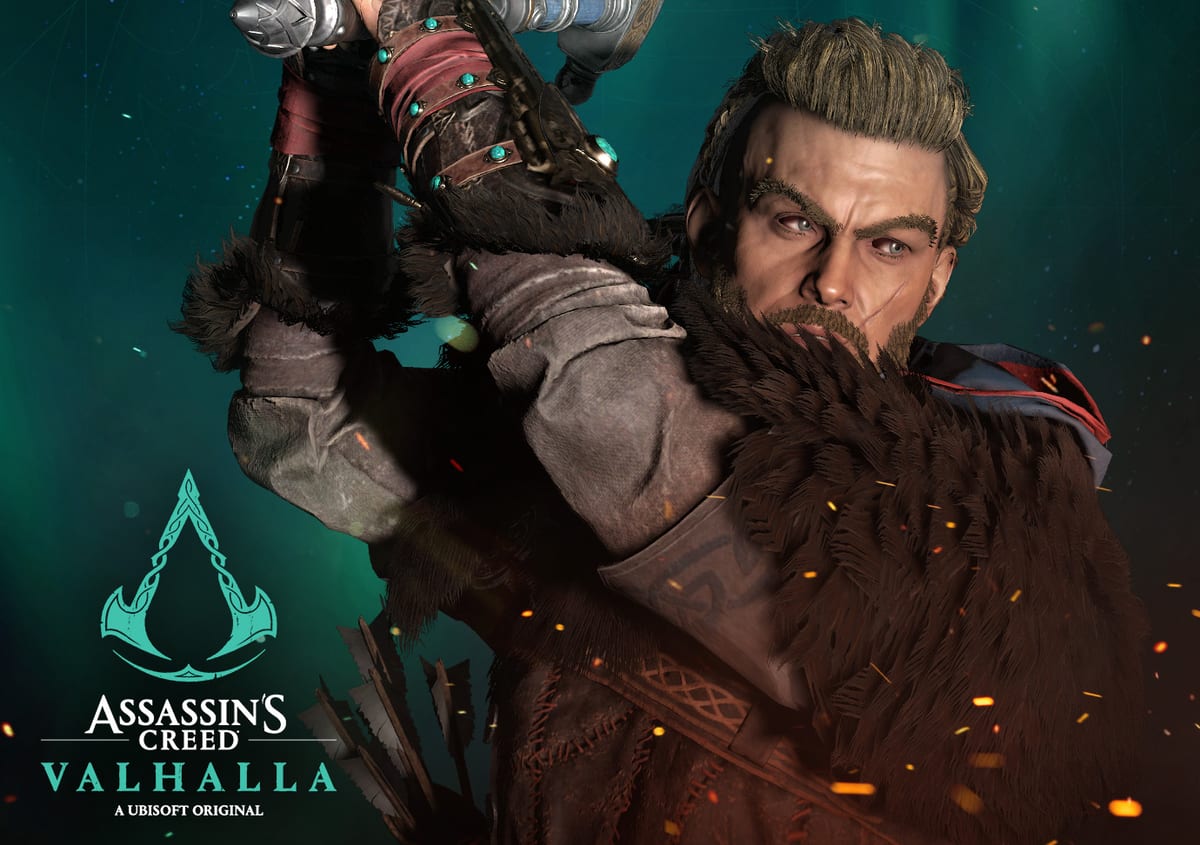
“Video game NFT” might be the most confused phrase in collecting. It gets used for two things that have almost nothing in common: licensed game collectibles - digital memorabilia, the descendant of the poster and the statue - and play-to-earn game economies, the “earn crypto by grinding” experiments that mostly went the way you’d expect. If you’re a collector trying to figure out what’s real here, the distinction is everything. Let’s take them one at a time.
What does a licensed video game collectible look like?
The cleanest example is Ubisoft’s Assassin’s Creed Valhalla on VeVe. Ubisoft - an actual AAA publisher, licensing actual game IP - released Valhalla digital collectibles on the platform, featuring Eivor, the game’s Viking raider protagonist. These are collectible art pieces of a character from a game people sank 100 hours into, with published edition sizes and rarity tiers, displayable in AR.
Notice what that is: it’s merchandise. It’s the digital sibling of the collector’s edition statue on your shelf. You don’t play it, it doesn’t earn anything, it doesn’t promise anything. You collect it because Valhalla mattered to you and owning a numbered piece of it feels good - the same reason anyone has ever owned a Master Chief helmet or a framed map of Hyrule.
If VeVe is new territory: it’s a licensed digital collectibles platform (Disney, Marvel, DC-adjacent brands, and yes, game publishers), covered in our what is VeVe primer and, more skeptically, in the full VeVe review. The mechanics that make it work for game memorabilia are simple: real licenses, transparent rarity tiers with published supplies, and drops announced ahead of time on the calendar.
What was play-to-earn, and what happened to it?
Play-to-earn (P2E) was the other thing, and honesty requires saying it plainly: most of it collapsed.
The pitch, circa 2021: play a game, earn tokens or NFT items, sell them. Axie Infinity was the flagship - at its peak, people in the Philippines were playing it as a job, and the game’s economy briefly looked like a new labor market.
The problem was structural. P2E economies needed a constant flow of new players buying in to fund the earnings of existing players. When new-player growth stalled, token values fell, which made playing unprofitable, which drove players out, which pushed values down further. The spiral was fast and brutal. Axie’s economy cratered in 2022 (a nine-figure bridge hack didn’t help), and the hundreds of smaller P2E projects that copied its model mostly died with less ceremony - many were barely games at all, just token faucets with a game-shaped UI.
The lesson wasn’t “digital ownership is fake.” The lesson was that an economy is not a reason to play a game, and earning is not a reason to collect. Games are fun or they’re nothing. Collectibles are meaningful or they’re nothing. P2E tried to substitute income for both and got neither.
That’s why the distinction at the top of this post matters so much. Licensed memorabilia never made the P2E promise. Nobody bought an Eivor collectible expecting a yield. It’s a fan object, priced and collected like a fan object - which is exactly why that model is the one still standing.
Hasn’t game memorabilia always been a collecting scene?
Enormously so, and the digital version makes a lot more sense once you see the lineage.
Sealed games are the headline act - graded, sealed copies of classic Nintendo-era cartridges became six- and seven-figure auction items, because a sealed Super Mario Bros. is a time capsule of 1985.
Strategy guides, manuals, and inserts - the paper ephemera that shipped with games - became collectible precisely because everyone threw them away. Scarcity through neglect, the oldest story in collecting.
Collector’s editions and statues. Publishers have shipped premium physical editions for decades: steelbooks, art books, figurines. The Valhalla collector’s edition came with an Eivor figurine - the VeVe drop is that instinct, digitized.
Promo items and event exclusives - E3 swag, launch-night trinkets, staff jackets. Provenance and story are the whole value.
Arcade preservation - cabinets, marquees, PCBs, rescued and restored by people who refuse to let the arcade era die.
Game fans, in other words, have always collected artifacts around games, not just games. A licensed digital collectible is a new artifact class in an old tradition - with one genuinely new trick, which is that a 3D Eivor stands in your actual room via AR, and one old guarantee made explicit: the edition size is published, so scarcity is stated up front instead of discovered decades later. (More on how digital editions work in what are digital collectibles and the VeVe NFT explainer.)
So what should a collector actually do?
Four rules of thumb for the video game corner of digital collecting:
- Licensed or skip it. If the publisher isn’t involved, it’s fan art at best wearing the game’s name, not game memorabilia. Real licenses (like Ubisoft’s on VeVe) are the line between collectible and counterfeit.
- Collect games you love. The Valhalla collector who spent 120 hours raiding Northumbria is collecting their game. That connection is the entire value proposition, and it’s the one thing no market cycle can touch.
- Ignore anything promising earnings. If a “game NFT” pitch mentions yield, passive income, or earning while you play, you’re looking at the model that already failed. Collecting is spending on joy, not investing. The speculation era ended; the hobby is what remains, and the hobby is better for it.
- Learn the structure before drop night. Edition sizes, rarity ladders, drop formats - all published in advance. The glossary covers the vocabulary if terms like “chase” and “FA” are new.
Collecting Video Game NFTs
If a game ever meant enough to you that you kept the map, the manual, or the collector’s edition box, digital game memorabilia will make immediate sense - it’s the same shelf, minus the dust. VeVe gives new collectors US$10 in free credit, no card required, which is enough to pick up a first licensed piece and try the AR for yourself. The how to start guide covers setup in a few minutes. Skol.