X-Men NFTs & Digital Collectibles
Legitimate X-Men NFTs are officially licensed Marvel digital comics and collectibles on VeVe, including landmark books like Giant-Size X-Men #1 and Incredible Hulk #181, Wolverine's first full appearance. Each is a serial-numbered digital edition with a published rarity tier and fixed supply, approved by Marvel - a different species entirely from unlicensed mutant-themed NFT projects.
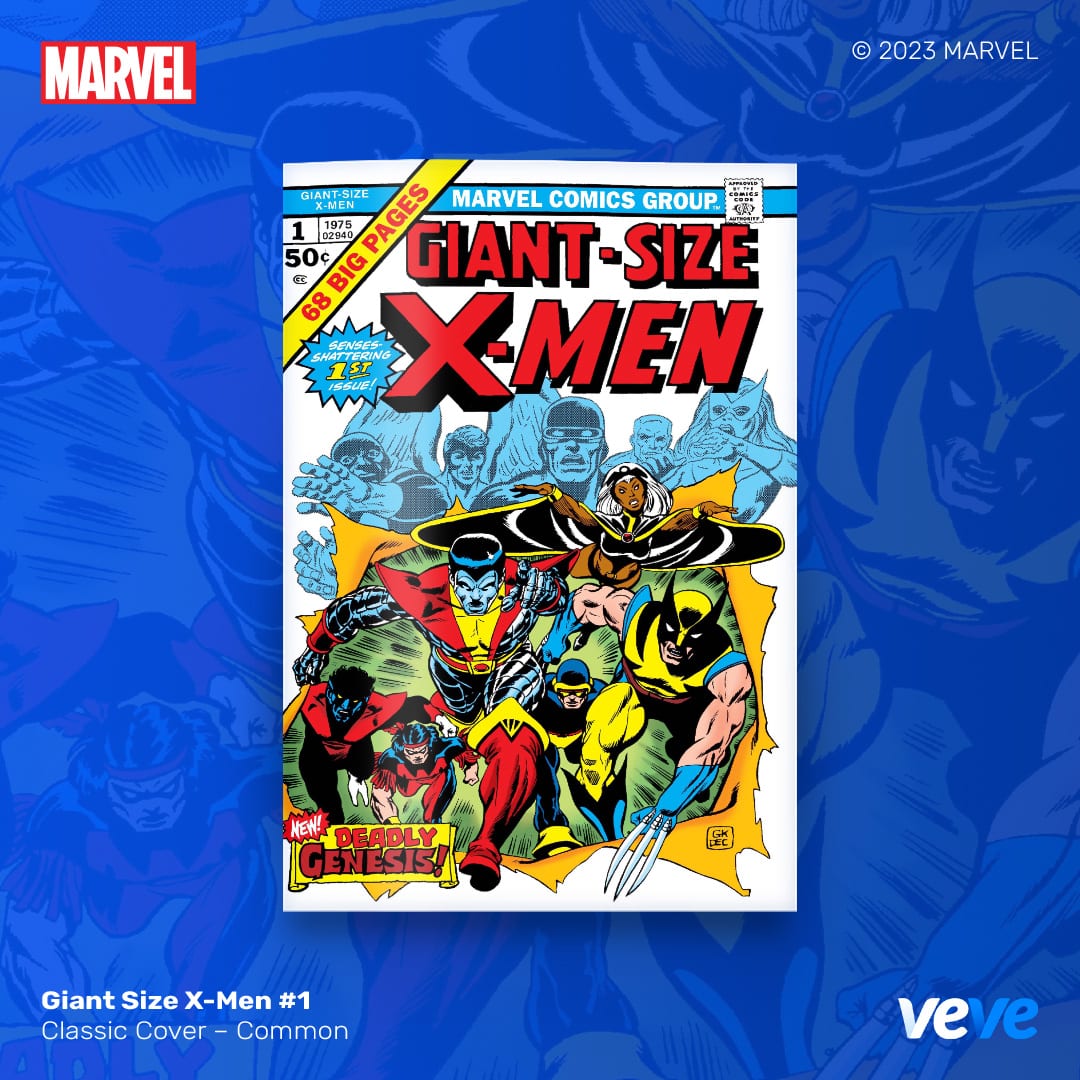
X-Men collectors are a specific breed. Ask a Spider-Man fan about their grail and you’ll get one answer. Ask an X-Men fan and you’ll get a lecture: which era, which team roster, which artist run, whether Jean was Marvel Girl or Phoenix at the time. The franchise has fifty-plus years of tangled continuity, and the collecting culture around it is just as deep. So when mutant grails started appearing as licensed digital comics, the X-Men crowd paid attention.
What X-Men digital collectibles exist on VeVe?
VeVe is Marvel’s official digital collectibles platform, and its Marvel comic program has hit several of the books that define X-Men collecting:
Giant-Size X-Men #1. The 1975 book that rebooted the franchise and introduced the all-new, all-different team - Storm, Colossus, Nightcrawler, and Wolverine joining the roster that would carry Marvel through the Claremont era. In physical comic collecting, this is a top-tier Bronze Age key. On VeVe it exists as a licensed digital edition: the full readable book, serial numbered, with a published print run.
Incredible Hulk #181. Technically a Hulk book, spiritually an X-Men grail. This is Wolverine’s first full appearance, the single most chased Bronze Age comic in existence, and the Wolverine collector’s white whale. The digital edition means owning a numbered copy of the book without competing with slabbed-comic auction madness.
Jean Grey and cover keys. X-Men collecting has always been cover-driven - the Phoenix saga alone produced some of the most iconic images in comics - and VeVe’s comic drops lean into that with variant covers across rarity tiers. Pulling a scarce cover variant of a key X-book scratches the same itch as owning a rare printing.
Beyond comics, mutants have appeared in VeVe’s Marvel figure drops too - 3D collectibles you can pose in augmented reality, which turns “let me show you my collection” into an actual party trick.
Why is Hulk #181 the mutant grail?
Because Wolverine broke the rules. Most iconic characters debut in their own book or a flagship title. Wolverine showed up unannounced in the last panel of someone else’s comic, a Canadian government agent sent to fight the Hulk, designed as a one-off antagonist. Nobody at Marvel in 1974 thought they were creating the most popular X-Man of all time.
That’s exactly what makes the book special. First appearances are lightning strikes - the moment before anyone knew - and Hulk #181 is the purest example in Bronze Age comics. Every Wolverine fan eventually wants some version of that moment in their collection. The physical book at high grade is functionally out of reach for normal humans. A licensed digital edition with a verifiable serial number is a way to own the moment that doesn’t require winning an auction against a grading-company shill war.
If the vocabulary here is new - keys, grails, first appearances - our glossary untangles all of it.
How does X-Men collecting history feed into digital?
The X-Men were the collector’s franchise before collecting was cool. The 1963 originals limped along near cancellation. The 1975 relaunch turned the book into Marvel’s engine. By the early 90s, X-Men #1 by Claremont and Jim Lee became the best-selling comic of all time - a book bought in fives by kids convinced they held their college fund, which, well, that generation learned some things about print runs.
That history taught X-Men collectors a lesson the hard way: scarcity that isn’t real isn’t scarcity. Eight million copies of X-Men #1 exist. Meanwhile the genuinely scarce books - Giant-Size, Hulk #181, early Uncanny issues in grade - stayed scarce and stayed chased.
Digital editions answer that exact lesson. Every VeVe edition has a fixed, published supply and a rarity tier - Common through Secret Rare - that you can verify before you buy. Nobody can quietly print eight million more. For a fanbase that lived through the 90s speculator glut, checkable supply isn’t a nice-to-have. It’s the whole point.
Are X-Men NFTs different from random NFT projects?
Completely, and the difference is the license. Marvel does not hand the X-Men to anonymous founders. Any mutant-themed NFT project you find on an open marketplace is unlicensed by definition, which means it can vanish, get delisted, or draw legal fire at any moment. What we’re describing here - the actual books, published through Marvel’s actual digital partner - is closer to a digital comic shop than a crypto project. Buying happens in an app with a normal payment method, no wallet or gas fees, and the thing you own is the licensed book itself, readable cover to cover. If you want the deeper explanation of how that model works, start with what digital collectibles are.
Where should an X-Men collector start?
Same advice we’d give at a comic shop counter: start with your era.
- Claremont devotee? Watch for the Bronze Age keys - Giant-Size and its descendants are the heart of it.
- Wolverine person? Hulk #181 and anything with the mask. You know who you are.
- 90s animated series kid? Jim Lee-era covers and team lineups will hit you directly in the childhood.
- Set builder? Pick a drop with multiple cover variants and chase the run across rarity tiers.
Secondary market listings float constantly, so you don’t need to wait for a fresh drop to start - plenty of collectors trade the existing X-books daily.
Collecting X-Men on VeVe
The X-Men have always been about finding your people, which is fitting, because the collector community around these books is one of the more welcoming corners of the hobby. If you want to test the waters, new collectors get US$10 in free credit at signup - no card required - which is enough to pick up a first digital comic and see if the mutant shelf of your collection deserves a digital wing. Fair warning: it usually does.