What happens if a collecting platform shuts down
If a digital collecting platform shut down, the chain record and the token itself would survive, because they exist independently of the company. The app, the 3D viewer, the augmented reality mode, the marketplace and the hosted artwork might not, since most platforms store media off-chain. The risk is real, it applies to every digital good anyone owns, and the sensible mitigation is licence quality and issuer longevity.
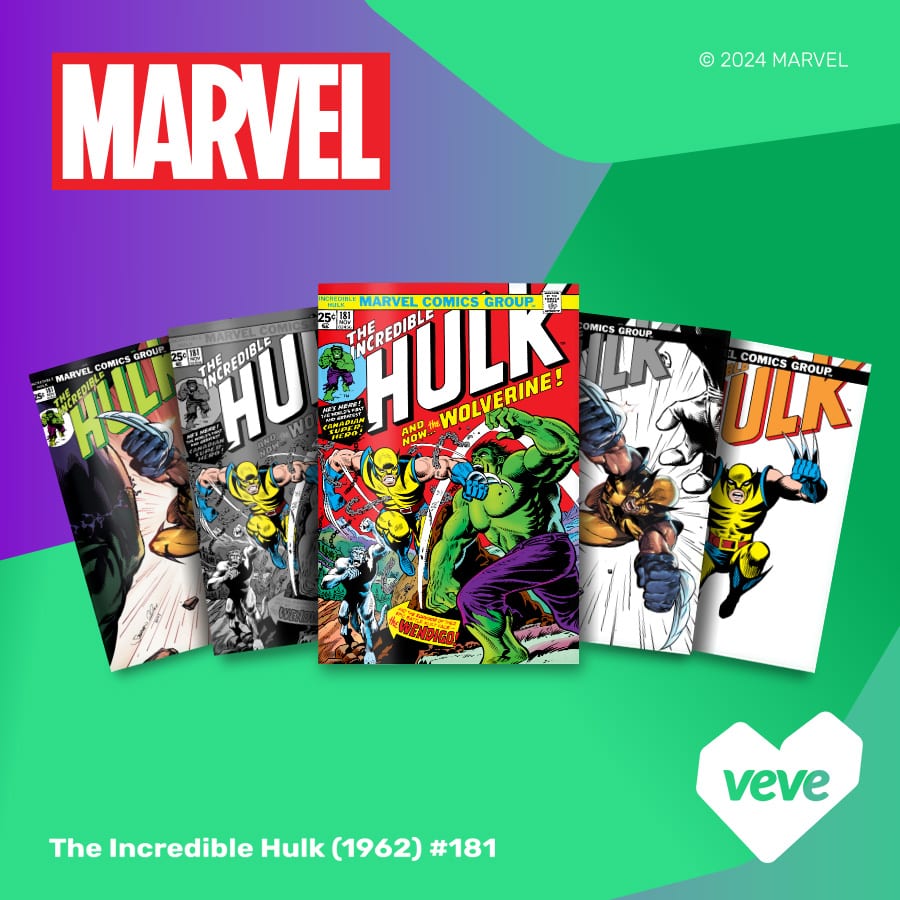
This is the question a sceptical friend asks first, and it deserves a straight answer rather than a deflection. The short version: some of it survives, some of it very likely does not, and anyone who tells you the whole thing is permanent and untouchable is selling something. Let us work through which parts fall on which side, because the split is more specific than most discussions of it manage.
What genuinely survives
The ledger entry does not live on a company’s servers. It lives on a blockchain, maintained by a network that has no idea which company created the entry and no ability to remove it if that company disappears. A record saying edition 412 of 5,000 belongs to a given account would still be there, still readable, still carrying its full transfer history, as described in the piece on how provenance works.
The token itself survives too, as an entry with an identifier and whatever metadata was written alongside it. If another interface were built that could read those tokens, it could in principle show you what you hold. That is a real property and it is more than any closed digital store has ever offered.
That is the durable part, and it is worth being precise about how much it is. It is a record and a claim, not an experience.
What probably does not survive
Almost everything you actually interact with is a service, and services end when companies do.
The app is a service. The 3D renderer that lets you turn a figure over and look at the sculpt from below is code running in that app. The augmented reality mode that puts the piece on your kitchen table is a feature of that app. The marketplace where people buy and sell is infrastructure the company operates, with its own matching, escrow and payment rails. None of that is on a chain anywhere.
And then there is the artwork. As covered in the piece on what digital collectibles are, most platforms store media off-chain because storing a large animated 3D asset on a blockchain would be ruinously expensive. The chain holds a pointer. If the servers behind that pointer go dark and nobody has mirrored the files, the pointer points at nothing. You would hold a provable claim to an item whose visual form is no longer being served to anyone.
That is the honest worst case and I am not going to dress it up. A perfect certificate for a picture nobody can load is not the hobby anyone signed up for.
This has happened before, to physical and digital things alike
The instinct to treat this as a novel crypto risk is wrong, and the history is instructive.
In July 2009, Amazon remotely deleted purchased copies of Nineteen Eighty-Four and Animal Farm from customers’ Kindles after a rights dispute with the publisher that had uploaded them. People woke up to find books they had paid for gone from a device in their hands. Jeff Bezos publicly called the decision stupid and out of line with the company’s principles, and Amazon refunded everyone, but the demonstration stood: a purchased digital book was a licence that could be revoked at a distance.
Game services have gone the same way. OnLive, an early cloud gaming platform, shut down in April 2015 after its assets were acquired by Sony. Google Stadia announced its closure in September 2022 and switched off in January 2023. Stadia handled it about as well as a shutdown can be handled, refunding hardware, games and add-on purchases, which is worth noting because it shows a well-capitalised operator can wind down responsibly. It also shows that a library of things you bought can stop existing because a company changed its mind.
Physical collecting is not exempt either, it just fails differently. When the speculative card and comics boom of the early 1990s collapsed, companies folded and distribution networks vanished with them. Marvel itself filed for Chapter 11 bankruptcy protection in December 1996, the same Marvel whose characters now anchor half of popular culture. The cards and comics themselves survived in people’s boxes, but the ecosystem around them, the shops, the price guides, the buyers, thinned out badly for years. A collection is never just the objects. It is also the community and the infrastructure that give the objects a context.
That is the fair comparison, and it is the one I would make to a sceptical friend. Physical things survive a company failure better than digital things do. Neither survives unharmed.
Reading the risk properly
So what should a collector actually do with this? A few things, in order of how much they matter.
- Weight the issuer, not the technology. Long-running companies with real licensing agreements have obligations, revenue and reasons to keep the lights on. The technical design of the token barely moves the needle by comparison.
- Weight the licence. A platform holding genuine agreements with major rights holders is a different kind of business from an anonymous mint. Licensors audit their partners, and that scrutiny is worth something to you even though you never see it.
- Assume nothing about permanence. Any claim that a digital item is guaranteed forever is either marketing or ignorance.
- Spend at a level that would not hurt. The single most reliable protection is not owning anything you would be distraught to lose.
The platform-dependency argument is real, and it deserves to be taken seriously rather than argued away. It is also the argument against every digital good anyone owns: a Steam library, a music collection, a shelf of e-books, every film purchased through a streaming store. If platform dependency is disqualifying, it disqualifies most of the digital economy, and very few of the people making the argument have actually stopped buying digital games.
The consistent position is to take the risk seriously and price it into how you collect, not to pretend one category carries it and the others do not. The comparison piece on digital versus physical collecting goes through the differences in more detail, and if you are weighing platforms at all, the alternatives page covers who else is doing this.
The answer I actually give people
Collect things you enjoy owning now.
That is not a dodge, it is the only framing that survives contact with every failure case above. If your enjoyment is in reading the comic, looking at the sculpt, filling out a run of a character you have loved since you were nine, then you get that enjoyment continuously, starting immediately, and a shutdown five years out does not retroactively remove it. If the enjoyment was contingent on something in the future, then you were exposed to every risk in this article and several others besides.
This is how healthy collecting has always worked, incidentally. The people who came out of the 1990s card bust happiest were the ones who liked the cards. That has not changed because the objects moved.
The rest is diligence you can do in an afternoon. Read an honest review of the platform, read the piece asking directly whether it is a scam, read the one asking whether the collectibles are worth collecting, and then decide with your eyes open. A sceptical friend who asks this question is not being difficult. They are asking the right question, and the correct response is a specific answer rather than enthusiasm.