Star Wars NFTs: What Collectors Should Know
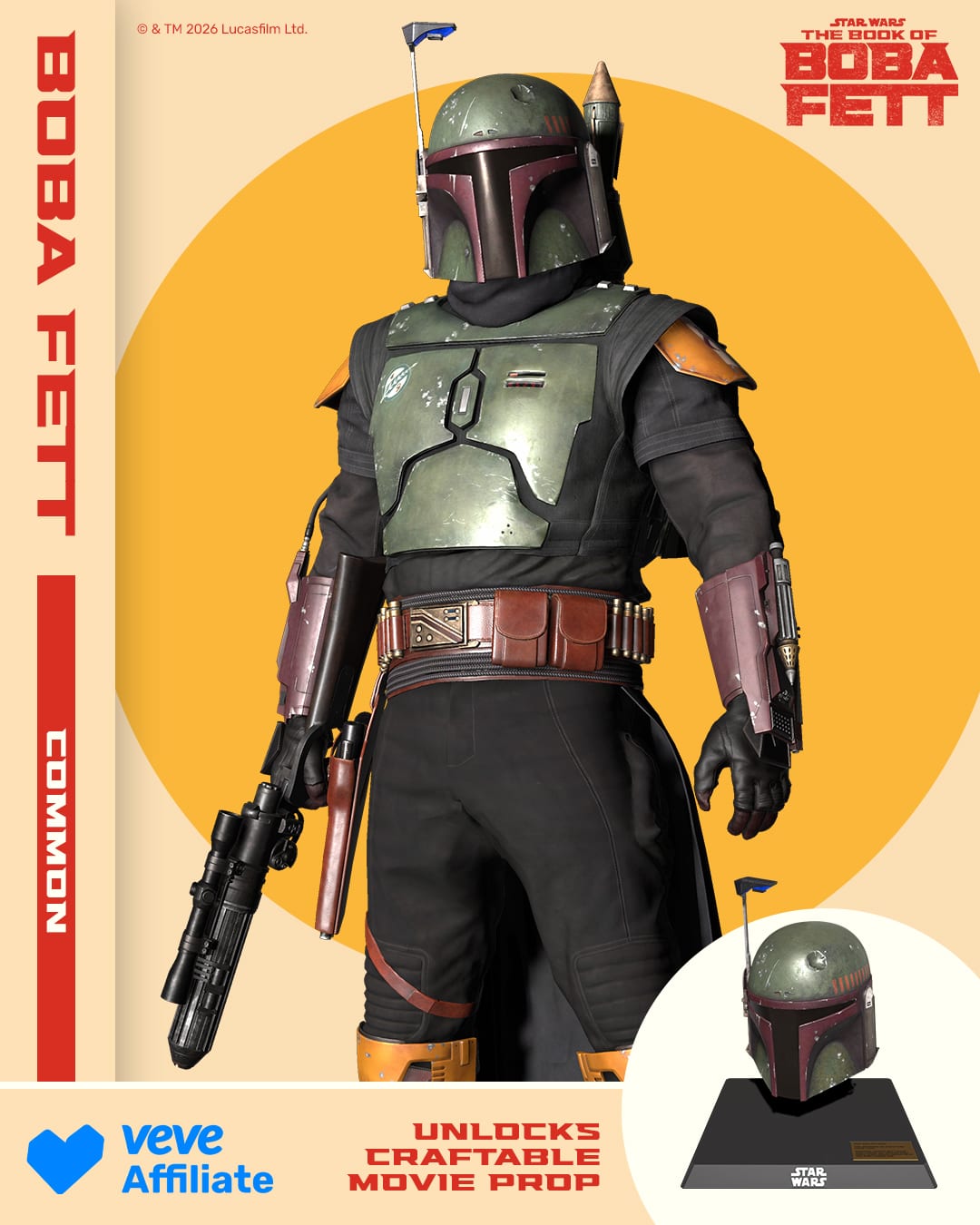
The only Star Wars NFTs collectors should consider are officially licensed digital collectibles on VeVe, Lucasfilm's authorized digital collectibles partner. Drops have featured characters like Boba Fett, Darth Vader, Grogu, and Yoda as 3D figures viewable in augmented reality, each with a fixed supply and published rarity tier. Any Star Wars NFT sold outside an official license is unauthorized and should be treated as a scam risk.
Star Wars fans have been collecting since 1977, when Kenner famously sold an empty box - the Early Bird Certificate Package, an IOU for action figures that didn’t exist yet - and people bought it by the truckload. This is a fandom that will collect anything with the right logo on it. Which is exactly why the words “Star Wars NFT” need sorting out, because the gap between the official stuff and the garbage is a Sarlacc pit.
Is there an official Star Wars NFT platform?
Yes. VeVe holds a license with Lucasfilm to produce official Star Wars digital collectibles, the same way Hasbro holds the license for action figures and Sideshow holds it for high-end statues. That word - license - is the entire story. Lucasfilm is owned by Disney, and Disney’s licensing operation is arguably the most aggressive intellectual property machine on Earth. Nothing wears the Star Wars name with permission unless a contract says so.
VeVe’s Star Wars drops have covered the heavy hitters: Darth Vader, Boba Fett, Grogu, Yoda, stormtroopers, and more, mostly as detailed 3D figures with multiple poses and rarity variants. If you’ve ever owned a Star Wars Black Series figure, the collecting logic is identical - character, sculpt, variant, chase - just rendered digitally and displayable anywhere your phone can point. The Boba Fett hub and Darth Vader hub track what’s out there.
Why does the license matter more for Star Wars than almost anything else?
Because Star Wars is the most counterfeited fandom in collecting, full stop. Bootleg figures, fake vintage cardbacks, reproduction stickers on Palitoy boxes - the physical side has decades of fraud built into its folklore. The NFT era just gave the bootleggers a new format.
Unofficial Star Wars NFT projects follow a pattern: anonymous team, Discord hype cycle, art lifted from movie stills or fan renders, promises of a “community,” then either a quiet death or a loud rug pull. Lucasfilm will never bless these, which means they exist on borrowed time from day one. A collectible that can be erased by a single cease-and-desist letter is not a collectible. It’s a countdown.
The licensed version inverts every part of that:
- The art is real. Official character models, approved by Lucasfilm’s brand team, the same approval pipeline a Hasbro sculpt goes through.
- The supply is published. Every edition has a fixed count and a rarity tier you can check before buying. Vintage collectors spend careers arguing over how many of something exist. Digital editions just tell you.
- The platform is accountable. VeVe’s business depends on keeping Disney, Marvel, and Lucasfilm happy. That is a compliance leash no anonymous project has.
We keep a longer breakdown of the trust question at is VeVe a scam? - short answer, no, and the licensing deals are the reason why.
How does AR display actually work?
This is the part that surprises people who assume a digital figure just lives in an app menu. VeVe collectibles are full 3D models, and the app’s AR mode uses your phone camera to place them in physical space - life-size if you want.
In practice: you stand in your living room, open the app, and put a full-scale Darth Vader by the bookshelf. Walk around him. He stays put, lightsaber and all. Photograph Grogu on your dashboard. Pose Boba Fett on the office desk between your monitor and your coffee. The model holds its position in space, so you can shoot it from angles like it’s really there.
Is it the same as a shelf of Black Series figures? Different, not lesser. A physical shelf is permanent and touchable. An AR collection is infinite and portable - no dusting, no shelf space math, no explaining to anyone why the Slave I doesn’t fit in the cabinet. Most of the Star Wars collectors we know who tried AR expected a gimmick and ended up with a camera roll full of Vader photos. It gets you.
What should a new Star Wars collector actually do?
Three moves, in order:
- Ignore everything unlicensed. If a Star Wars NFT isn’t on an officially licensed platform, close the tab. There’s no edge case where the anonymous Discord project turns out fine.
- Pick your character, not “a good drop.” Collecting sticks when it’s personal. If Fett has been your guy since the Special Editions, chase Fett. Mandalorian-era fan? Grogu exists in digital form and yes, it’s exactly as charming as you’d expect.
- Watch the calendar. New drops land on a schedule via the drop calendar, and popular Star Wars releases move fast. Missing a drop isn’t fatal - the secondary market inside the app trades daily - but drop day is half the fun. It’s the digital version of lining up outside the toy store, minus the weather.
The buying flow is deliberately un-crypto: mobile app, normal payment methods, no wallet, no seed phrase, no gas fees. If you can order a t-shirt online, you can own a licensed Vader.
The Kenner lesson, one more time
The empty-box story from 1977 gets told as a joke, but the punchline is usually missed: the Early Bird kit worked because Kenner delivered. The certificate was backed by a real company with a real license that shipped real figures. Star Wars collectors trusted the logo because the logo was earned.
That’s the entire framework for judging Star Wars NFTs in one sentence. The license is the promise, and only Lucasfilm gets to make it.
Collecting Star Wars on VeVe
If a pocket-sized Grogu or a life-size Vader in your hallway sounds like your kind of nonsense, the entry cost is genuinely zero: new collectors get US$10 in free credit at signup, no card required. That’s enough to pick up a first collectible from the secondary market and take it for an AR spin. The Force is optional. The fun isn’t.